How to Read Silver Hallmarks, Dating Vintage Jewelry and Verifying Authenticity
A tiny 925 stamp can tell you if a brooch is sterling, plated, or a later copy. Britain’s hallmark system has tracked silver since 1300.
Start with the small marks that do the most work
A silver piece rarely announces itself loudly. The clues are usually hidden in a clasp, the back of a brooch, the inside of a ring band, or the underside of a spoon handle, where a few millimeters of stamping can separate solid sterling from plate, and a true antique from a later reproduction. The most useful habit is simple: read the marks before you judge the shine.
For collectors sorting inherited jewelry, flea-market finds, or estate-sale silver, hallmarks are not decoration. They are a record of what the piece is made of, who submitted it, where it was tested, and often when it was assayed. In the United Kingdom, that record is also a legal safeguard.
First 3 marks to check
1. The fineness mark
The fastest confirmation of silver content is the fineness mark. On modern sterling pieces, “925” means the item is 92.5% silver, with the remaining 7.5% usually made up of other metals for strength. That small number matters because pure silver is too soft for most jewelry and hollowware, while sterling has the durability collectors expect from wearable silver.
If you do not see 925, do not assume the piece is not silver. British and international marks can use different conventions, and older items may carry different fineness indicators. Still, 925 is the clearest modern shorthand for sterling, and on a ring, bracelet, or chain, it is the first clue that the piece belongs in the solid-silver category rather than the plated one.
2. The sponsor’s mark
The sponsor’s mark identifies the person or company that submitted the item for hallmarking. It is the signature that ties the piece back to the maker, importer, or dealer responsible for presenting it to an assay office. That makes it especially useful when you are trying to distinguish a genuine period piece from a later copy, because the mark can be matched against known trade names and workshop records.
A missing sponsor’s mark is a warning sign in the British system, where the hallmark is built from compulsory parts. If the other marks look convincing but the sponsor’s mark is absent, uneven, or crudely struck, the piece deserves a closer look. Authenticity often lives in the quality of the stamping as much as in the stamp itself.
3. The assay office mark and date letter
The assay office mark tells you where the piece was tested, while the date letter helps narrow the year. Together, they make hallmarking far more than a purity check. They become a way to place the object in time and geography, which is exactly what a collector wants when comparing one silver brooch to another or deciding whether a ring belongs to a specific era.
Birmingham’s date-letter system changes in July up to 1974, and from 1975 all UK assay offices used the same date letter. That detail may sound minute, but it is the difference between vague speculation and a meaningful date range. In 2025, the UK date letter changed from Z to A, a reminder that the system is still active rather than frozen in the past.
Why British hallmarks matter more than most people realize
In the United Kingdom, hallmarking is not just a collector’s aid. The Hallmarking Act 1973 governs the composition, assaying, marking, and description of precious-metal items, and its consumer-protection purpose is central to how silver is sold. Silver items over 7.78 grams must be submitted for hallmarking before sale, and manufacturers or importers cannot apply the hallmarks themselves.
That legal structure changes how you should read a piece. If a silver bracelet over the weight threshold is being offered as sterling but lacks proper marks, caution is warranted. If a piece bears a clean, correct set of hallmarks from an independent assay office, it carries a level of accountability that plated jewelry cannot match.
The hallmarking tradition in England goes back to 1300 under Edward I, which makes it one of the oldest consumer-protection systems still in use. That longevity is not just a charming historical footnote. It explains why British silver remains so legible to collectors today: the system was designed to preserve trust.
Sterling, plated, or later reproduction
The practical value of hallmarks is that they help answer the question every buyer asks: what is this really? Sterling silver should usually show a clear fineness mark, and in the British system, the other compulsory elements strengthen that identification. Plated pieces, by contrast, often rely on wording or symbols that can mislead at a glance, but they lack the same assay-backed structure.
Later reproductions can be trickier. A convincing old-style pattern is not the same thing as an old piece, and fake hallmarks have long been part of the problem. The Goldsmiths’ Company says its Hallmark Authentication Committee has been tackling fake hallmarks and spurious antique silver since 1939, which tells you how persistent the issue has been. A reproduction may mimic the silhouette of an antique, but it often fails under close scrutiny of mark placement, depth, and consistency.
How hallmarks help date and value a piece
Date letters are where hallmarking becomes a dating tool rather than a simple authenticity check. They help collectors estimate age, compare pieces from different assay offices, and place a jewel or serving piece within a clearer historical range. That matters because a Victorian brooch, an early-20th-century bangle, and a modern reproduction may all share a similar style, yet the marks will tell very different stories.
Value follows identification, not the other way around. A correctly marked sterling piece from a known assay office will usually carry more credibility than an unmarked example of the same design. Likewise, a piece with a clean date letter and identifiable maker’s mark is easier to research, easier to compare, and easier to trust than one that only looks old.
What to do when a piece is in front of you
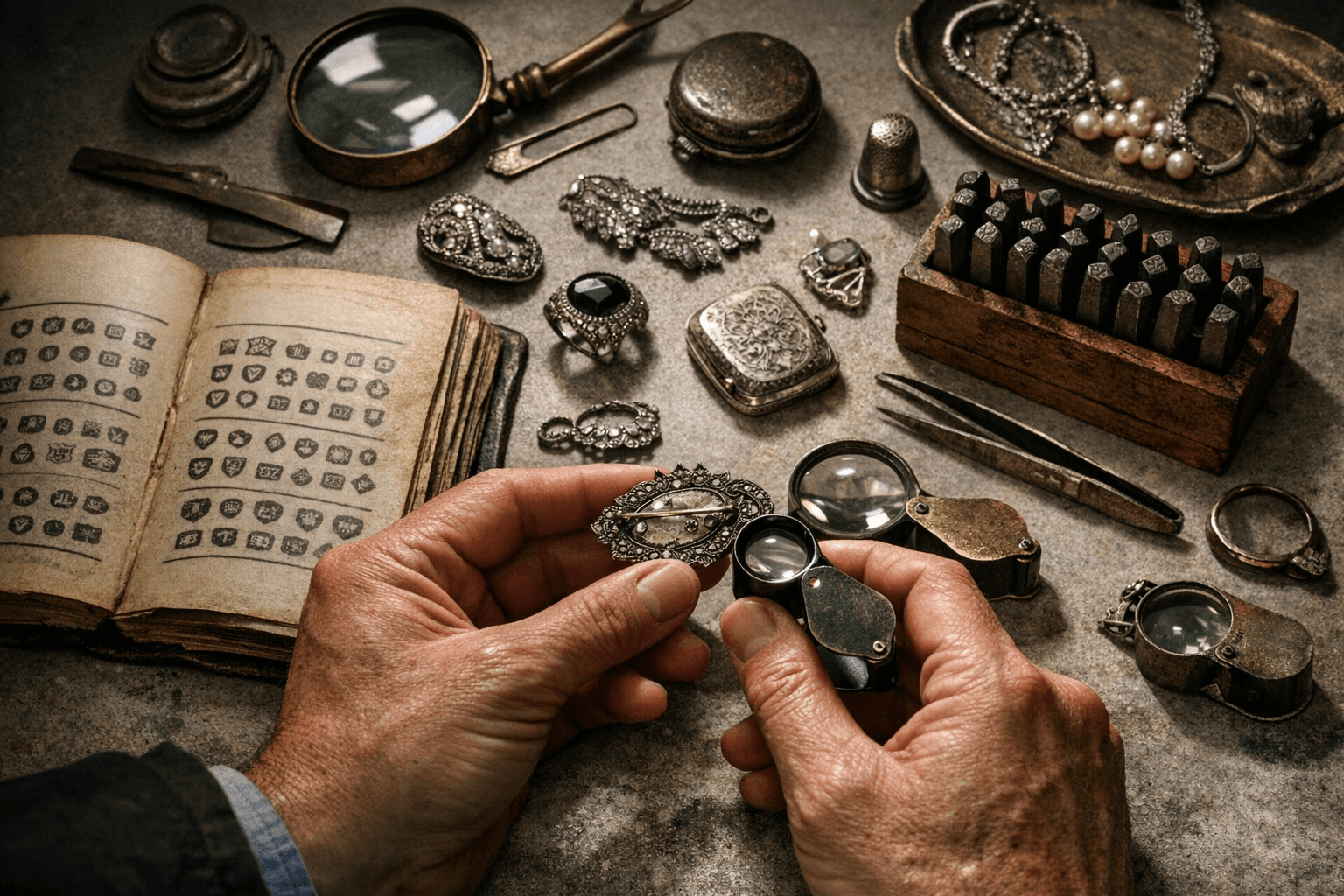
A practical reading of silver starts with a magnifier and patience. Look for the stamps in less obvious places first: the inside of bands, the backs of clasps, the underside of handles, and any flat surface where a small punch could be struck cleanly. Then read the marks in sequence, not as isolated symbols.
1. Find the fineness mark, especially 925 on modern sterling.
2. Identify the sponsor’s mark, which tells you who submitted the item.
3. Locate the assay office mark and date letter, which anchor the piece in place and time.
If those marks are crisp, consistent, and appropriate to the object’s weight and form, you are probably looking at a properly hallmarked piece. If the stamping seems softened, inconsistent, or oddly placed, the object may be plated, altered, or a later reproduction.
Silver hallmarks are tiny, but they are not decorative trivia. They are the paper trail of a piece of jewelry or silverware, compressed into metal. Once you learn to read them, the object in your hand becomes something richer than an ornament: it becomes evidence.
This article was produced by Prism’s automated news system from verified source data, official records, and press releases, then run through automated quality and moderation checks before publishing. The system is built and supervised by the people who set the standards it runs under. Read our full AI policy.
Did this article answer your question?