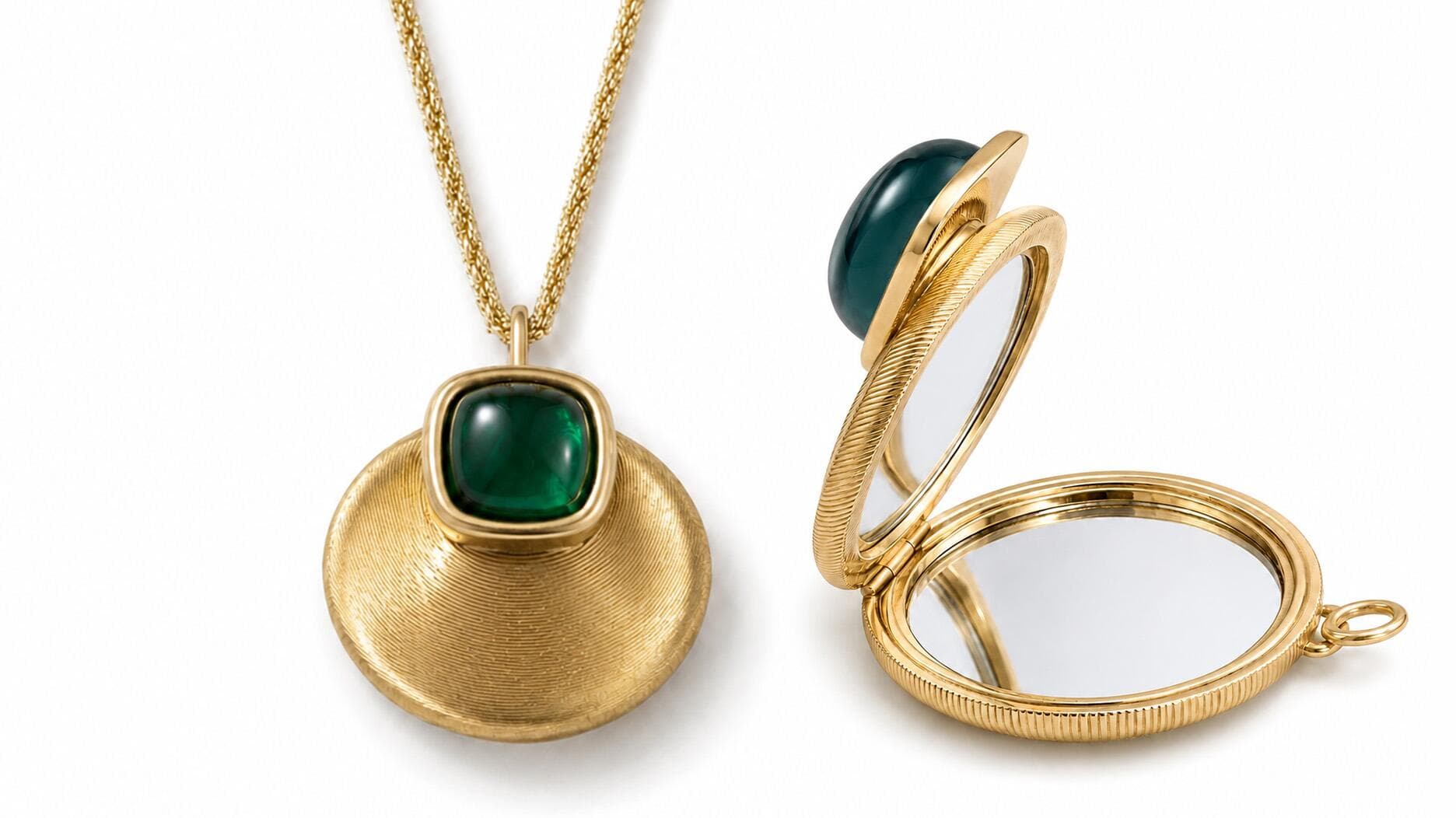
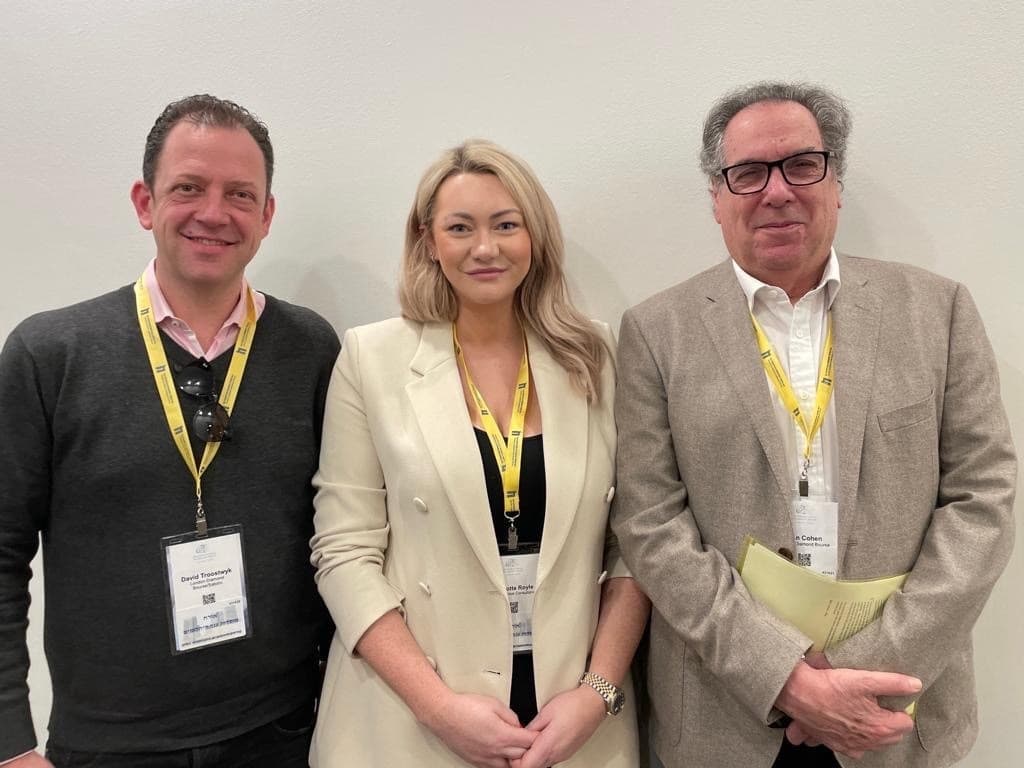
IIJS Bharat Tritiya 2026 Draws 15,000 Buyers, Signals Shift Toward Lightweight Gold
India's third-largest B2B jewelry show drew 15,000 buyers to Bengaluru and exposed a clear pivot toward 9K/14K gold that will reshape estate inventories for decades.
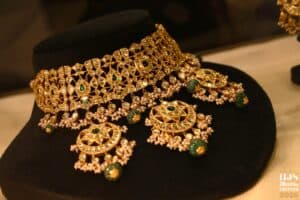
Every piece of jewelry is, at its core, an archive. The weight of a 22-karat bangle from a 1970s Indian trousseau, the deep saturation of a hessonite in a South Indian temple-style mount, the precise milgrain edging on a Bombay goldsmith's work from the 1960s: these objects carry within them the manufacturing economics, cultural priorities, and metal supply chains of their exact moment. Understanding where the market is heading today tells you precisely what kind of archive tomorrow's estate sales will hold.
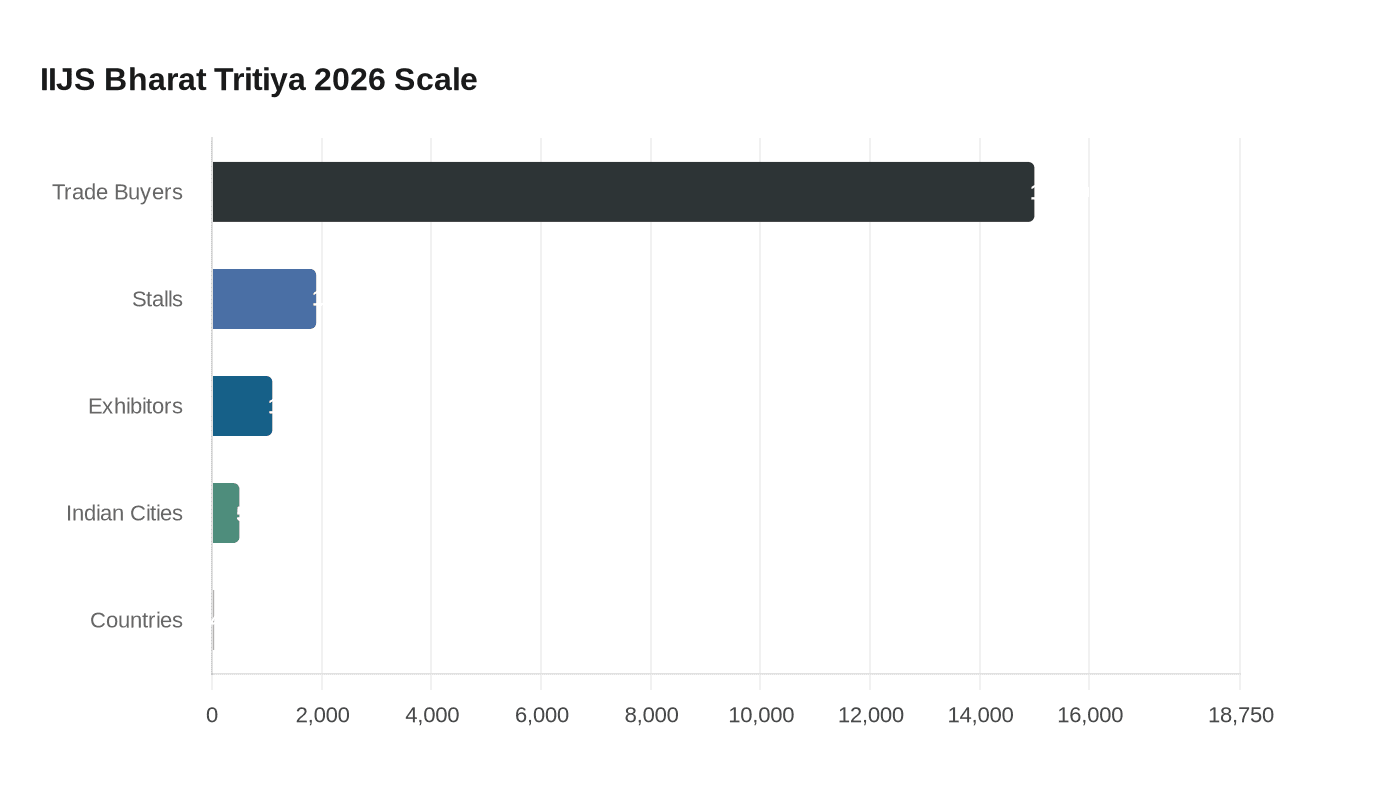
That is why what happened at the Bengaluru International Exhibition Centre matters for anyone tracking estate and vintage Indian jewelry. The 4th edition of IIJS Bharat Tritiya, organized by the Gem & Jewellery Export Promotion Council (GJEPC), concluded on March 26, 2026 after drawing approximately 15,000 trade buyers from 500 Indian cities and 40 countries to over 1,100 exhibitors spread across roughly 1,900 stalls at BIEC. The show is now recognized as India's third-largest B2B jewellery exhibition, a designation earned through rapid growth across just four editions. Its footprint confirms the status: buyers from every significant Indian jewelry market, alongside international sourcing delegations, converging on Bengaluru in a single March window to prepare for the Akshaya Tritiya and wedding seasons.
The most closely watched signal from the show floor was a pronounced and deliberate move in gold karatage. Confronting sustained fluctuations in metal prices, manufacturers showcased expanded collections in 9-karat and 14-karat gold, a departure from the 22-karat standard, hallmarked 916, that has historically defined Indian fine jewelry at the commercial tier. Lightweight constructions dominated the accessible segment: hollow-form bangles, machine-finished chain links, CAD-engineered pendants that achieve the visual density of heirloom pieces at a fraction of the metal cost. This is not fringe production responding to a niche demand. With 15,000 trade buyers confirming orders ahead of the spring buying peak, the shift from 916 to lower-karat alloys is now a mainstream commercial trend, not an experiment.
The 916 hallmark became a reliable proxy for quality in Indian fine jewelry over several decades, embedded in consumer trust and retail vocabulary across the subcontinent. That shorthand is now splitting: 916 at the bridal and heirloom tier, 9K and 14K at the occasion-gift and fashion-fine tier. For estate and vintage jewelry watchers, that split carries a layered implication. The 22-karat gold sets that fill today's Indian estate market represent decades of manufacturing consensus. As 9K and 14K production scales up and enters the retail pipeline at volume, 22-karat bridal sets and occasion pieces from the current window will become more clearly datable by their alloy alone. Within a generation, a 916-hallmarked piece with construction techniques from the early 21st century will carry a specific timestamp, distinct from the newer lower-karat production that now sits alongside it in retail cases. The archive gets easier to read precisely because the standard is shifting.
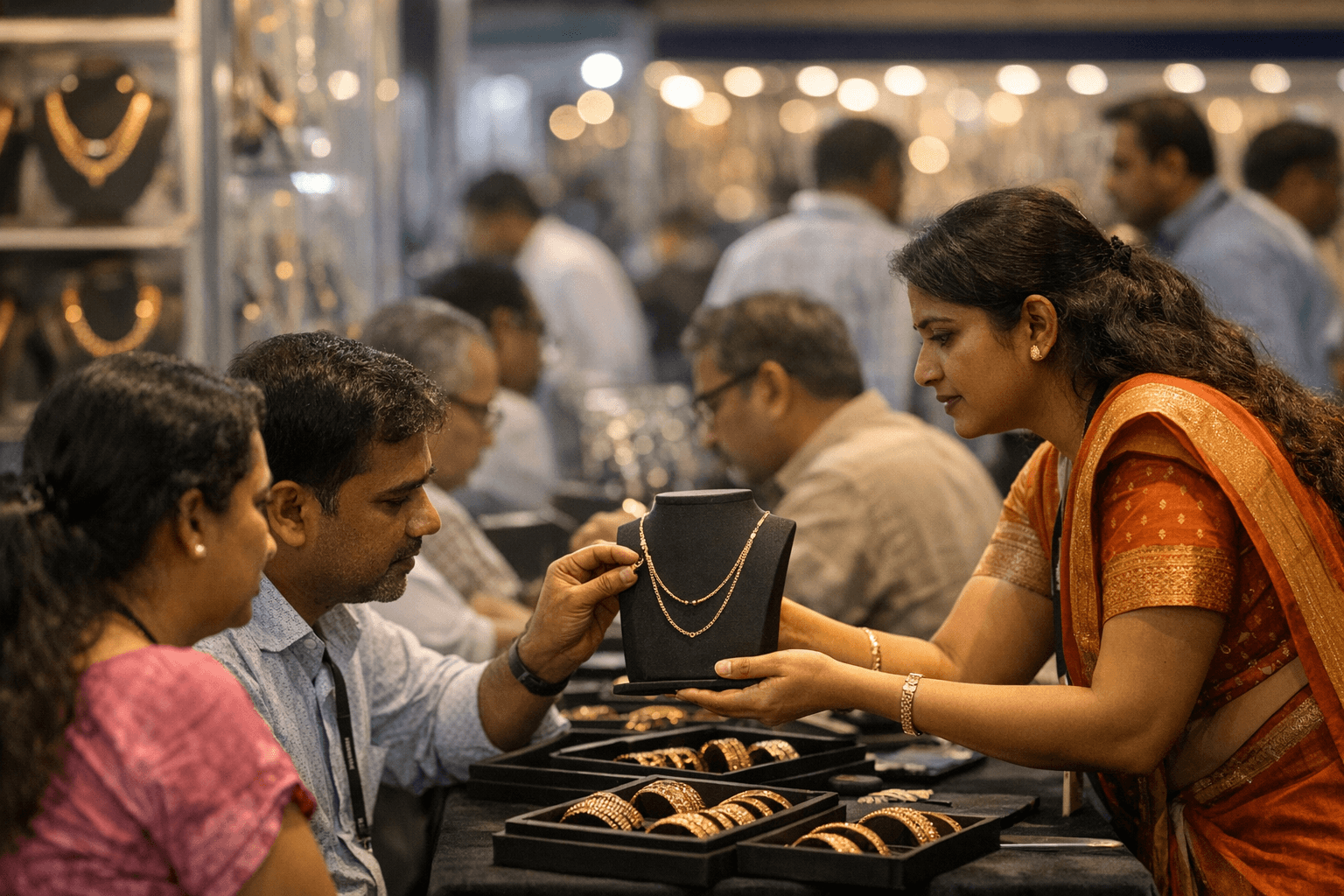
The reproduction risk calculation also changes. Lightweight, lower-karat pieces are more economically viable to fabricate convincingly than high-karat heirloom constructions. As that product category expands across Indian commercial production, the volume of lightweight contemporary work in circulation rises sharply. Authentication discipline around estate pieces in the same alloy range needs to sharpen correspondingly. Not every 9K or 14K Indian-style piece is a recent production, but the expanding commercial baseline makes provenance verification more consequential than it was when the 22-karat standard made period attribution more straightforward.
At the high end, the show told a different story. Statement diamond sets and fancy-colour diamonds remained strong in buyer demand, with exhibitors presenting high-end couture collections alongside the lower-karat accessible tier. Fancy-colour diamonds, natural stones in yellow, orange, brown, and pink tones, have been accelerating in collector interest within the estate market over recent years. Their continued prominence in current Indian B2B sourcing confirms that the category has genuine market depth, not just short-cycle trend momentum. In the estate context, this sustained demand matters because the volume of contemporary fancy-colour production entering retail channels now will eventually surface in estate inventories. Distinguishing period-correct estate pieces, often featuring old mine or old European cut stones in natural fancy colour, from newer productions requires close attention to cut geometry, girdle treatment, setting architecture, and construction evidence. The proliferation of precisely calibrated machine-cut fancy-colour stones in contemporary production, distinct from the more irregular cutting patterns common in pre-1980s Indian estate work, offers one reliable diagnostic.
The bridal emphasis at IIJS Bharat Tritiya was inseparable from the show's Akshaya Tritiya positioning. Retailers and wholesalers sourced specifically for the spring wedding season, and the exhibition floor reflected that demand directly. What gets purchased in March 2026 will be worn at weddings in April and May, and a portion of those pieces will begin appearing in estate inventories within a generation. The specific construction decisions made this season, which stones receive bezel settings versus prong settings, how textured surfaces are achieved, which polishing and finishing technologies leave their signatures on the metal, become the authentication benchmarks that future dealers will use when those pieces eventually come up for evaluation.
The show's Crafts Pavilion and Innov8 Talks programming addressed this intersection of traditional craft and new technology directly. Both initiatives connected artisans with newer production and finishing methods, creating exactly the kind of manufacturing hybrid that complicates later authentication. Pieces that carry the visual vocabulary of handcraft but incorporate machine-produced elements or laser-finished surfaces can be difficult to date without metallurgical analysis or close examination of tool marks. That hybridization is not new to Indian jewelry production, but its deliberate acceleration through programs like Innov8 Talks means the authentication landscape for contemporary Indian production is becoming more layered, not less. For collectors and dealers building expertise in Indian estate jewelry, the trajectory announced at this show is worth tracking closely.
Shri Kirit Bhansali, Chairman of GJEPC, described the show's significance in terms that reach beyond a single trade calendar: "The 4th edition of IIJS Bharat Tritiya has exceeded our expectations, proving that despite shifting global dynamics, the Indian gem and jewellery sector remains a beacon of innovation and craftsmanship. By bringing over 15,000 global buyers to Bengaluru, we have created a platform that transcends mere transactions; we are building a sustainable ecosystem for future growth. The energy witnessed here proves that our industry continues to shine stronger by innovating and finding new avenues for trade, leaving the community with renewed confidence for the year ahead."
The geographic spread of the buyer pool offers a final indicator of where current Indian production will surface in estate contexts over the coming decades. Buyers from 500 Indian cities and 40 countries placed orders at BIEC in March 2026. The pieces sourced during those days will travel to retail cases in Mumbai, Melbourne, New York, and Nairobi. In twenty years, some will return as estate inventory in those same cities. Understanding what IIJS Bharat Tritiya's 4th edition signaled about product mix, karat range, and construction technique gives collectors and dealers a meaningful advantage when those pieces eventually come up for evaluation.
The Akshaya Tritiya buying surge that follows this show is more than a commercial peak. It is the opening entry of a new archival chapter.
This article was produced by Prism’s automated news system from verified source data, official records, and press releases, then run through automated quality and moderation checks before publishing. The system is built and supervised by the people who set the standards it runs under. Read our full AI policy.
Did this article answer your question?