Inherited estate jewelry: why appraisal values can differ
No paperwork does not mean no value. Estate jewelry can appraise differently for insurance, resale, or inheritance, so the first step is careful documentation.
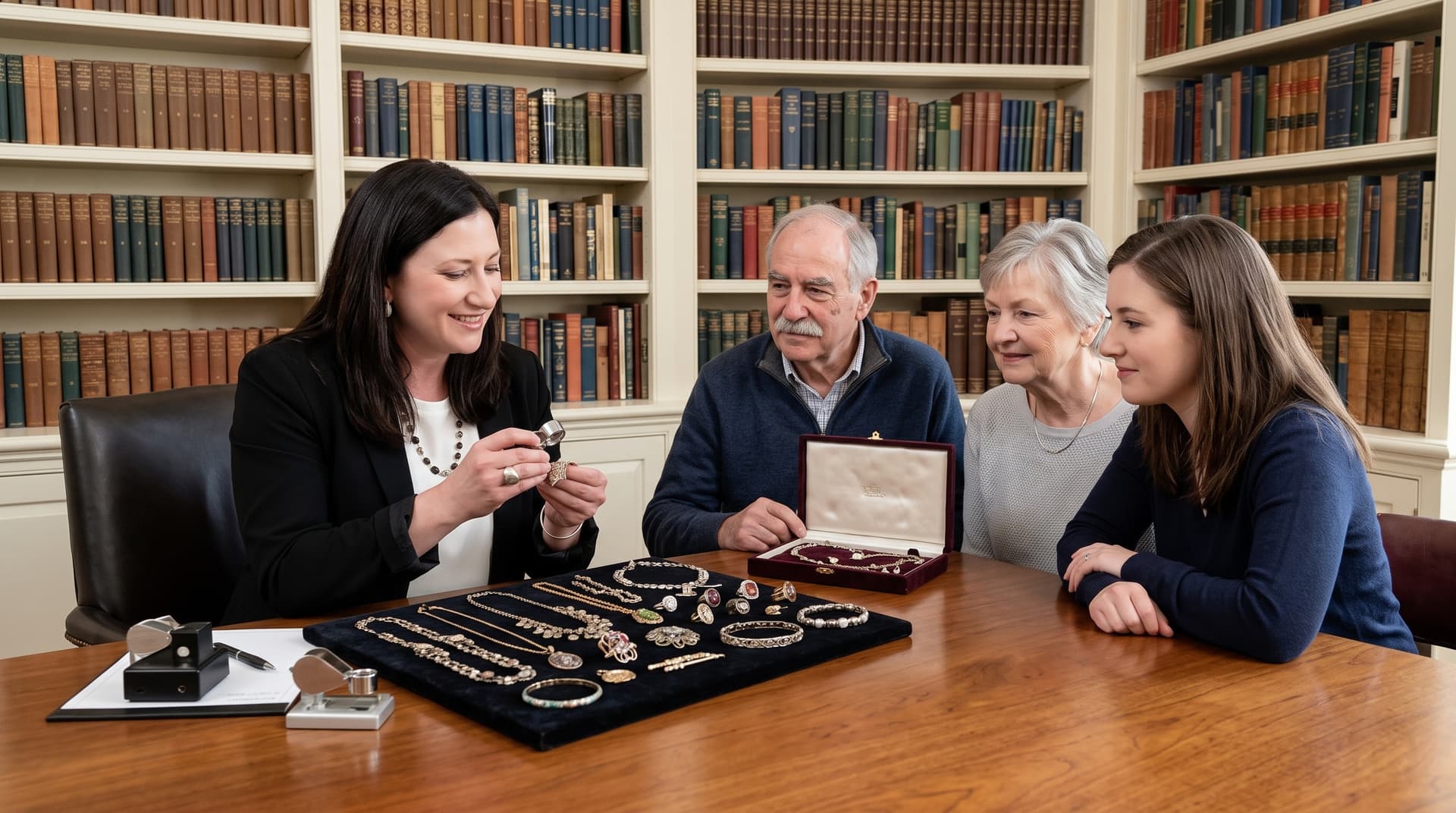
You inherited a box of jewelry with no paperwork and one urgent question: what do you do first? Before anyone cleans, guesses, or divides the pieces by instinct, document what is there and decide why you need a value. A ring that is being insured, sold, split among heirs, or kept as a family heirloom can land on very different numbers, and that difference starts with the purpose of the appraisal.
Why appraisal values can split in different directions
A jewelry appraisal is not one universal price. In a video posted Aug. 14, 2024, Jewelers Mutual Group identified resale, insurance, estate planning, and current market value as common reasons for an appraisal and urged owners to use a qualified appraiser. An insurance appraisal, a resale estimate, a fair-market figure, and an equitable-distribution value answer different questions.
The value written on an appraisal is not necessarily what a buyer will pay. Insurance often looks at what it would cost to replace a comparable piece, while resale reflects what a dealer or buyer will actually offer. Jewellers of America’s appraisal guide and estate-focused guidance from Heritage Appraisals and Federal Way Custom Jewelers distinguish among replacement, resale, and estate values.
What affects value when the history is unclear
When a piece arrives without receipts or a clean chain of ownership, condition and documentation rise in importance fast. Condition, quality, authenticity, craftsmanship, and documentation are the main value drivers. That means a well-made piece with strong stones, intact settings, and clear marks can appraise differently from one with heavy wear, missing stones, poor repairs, or uncertainty about what it actually is.
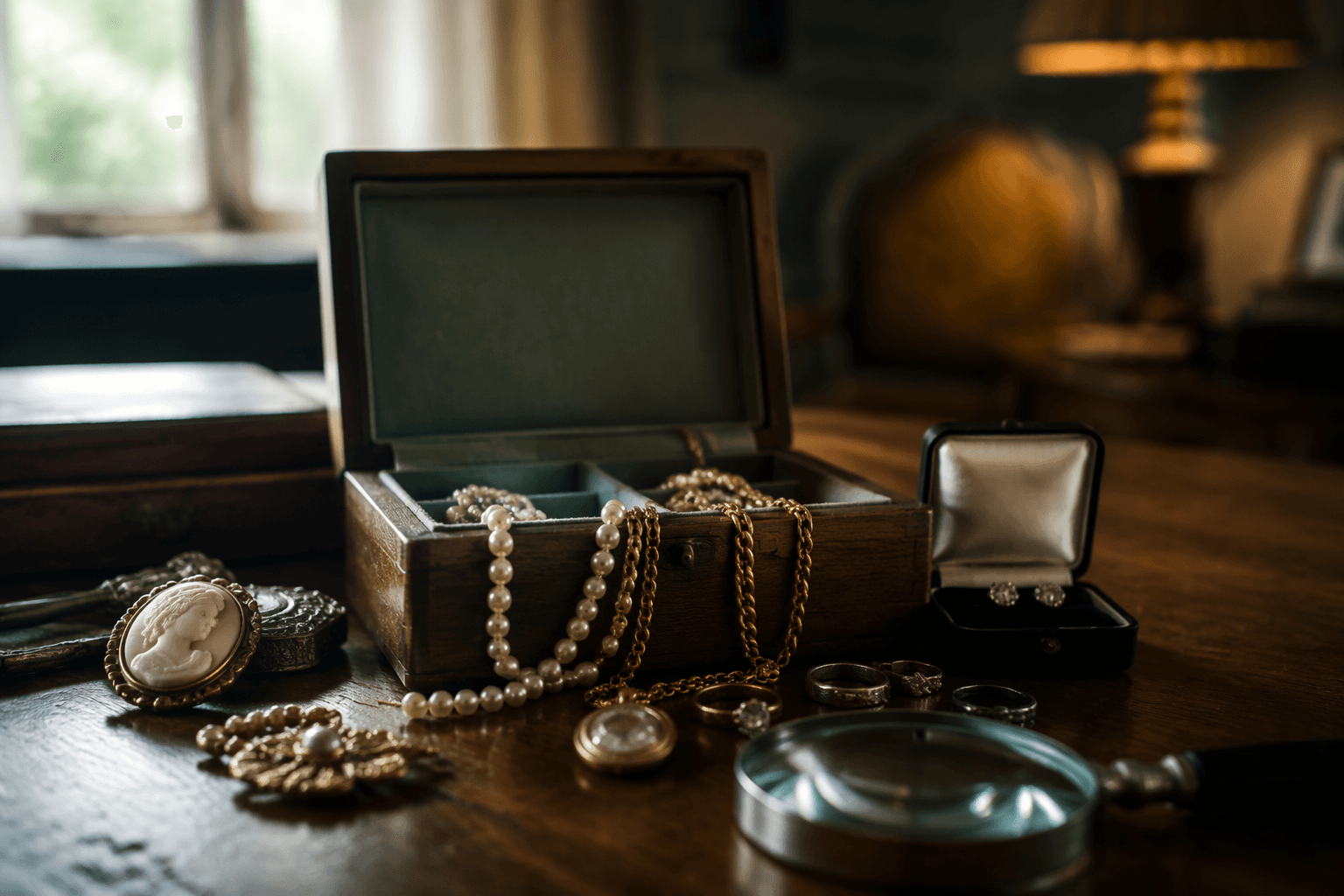
Missing paperwork does not make a piece worthless, but it does make a professional review more important. Inherited estate jewelry often comes out of a drawer with no receipt, no original box, and no clear provenance, which is exactly when a qualified appraiser can separate family lore from market evidence. A brooch may feel priceless because it belonged to your grandmother; the market still needs to know who made it, what it is made of, how original it is, and how it has held up over time.
What to gather before you book the appointment
Start with the jewelry itself, then assemble every scrap of paper you can find. Louis Martin Jewelers advises bringing the piece along with any previous appraisal reports and sales receipts. If the jewelry has been in storage for decades, the old paperwork may be as valuable as the piece for identifying stones, makers, or prior descriptions.
1. Bring the jewelry exactly as it is, without repairs or polishing first.
2. Gather any previous appraisal reports, receipts, insurance schedules, or estate records.
3. Take clear photographs before the appointment, especially if the piece is fragile or you are comparing several items.
4. Photograph the front, back, clasp, setting, and any marks, signatures, or repair work.
5. Make a brief note of what you know, such as who wore it, when it was last seen, and whether any stones have ever been replaced.
The photographs preserve details before anything changes. A close image of a worn hinge, a maker’s mark, a prong, or a stone mounting can help the appraiser understand condition and construction even before the piece is placed under magnification. If the jewelry has been inherited, photos also create a visual record for siblings or co-heirs who may need to compare the same piece later.
When a formal appraisal is worth the cost
A formal appraisal becomes essential whenever the number will affect a decision with consequences. The Appraisers Association brochure on gems and jewelry lists acquiring an important piece, donating an item to charity, and distributing family treasures among heirs as common reasons to seek an appraisal. Those are exactly the moments when an informal guess can cause trouble later, especially if the jewelry will be insured, sold, divided, or reported in an estate.
Estate planning and equitable distribution deserve special care because the same necklace can be treated very differently depending on who needs the valuation. For insurers including Chubb and Jewelers Mutual Group, the focus may be replacement value. For an estate, the question may be fair market value or division among heirs. For a sale, the number may be lower still, because a buyer has to leave room for profit, repair risk, and market demand.
How to avoid the mistakes that blur the value
The easiest mistake is cleaning too much. Old polish, abrasive cloths, and rough scrubbing can remove patina, erase surface detail, or damage settings before an appraiser has a chance to read them. If a piece has the soft sheen of age, a slightly irregular hand-fabricated setting, or visible wear on a clasp, those details can help tell its story and support its value.
The second mistake is guessing provenance. A family story may be meaningful, but an appraiser needs evidence: maker’s marks, materials, construction, and condition. The third mistake is confusing sentimental value with market value. A piece can carry enormous emotional weight and still have a modest resale price, while a signed Art Deco ring or a well-preserved estate diamond can be worth more than its family legend suggests.
This article was produced by Prism’s automated news system from verified source data, official records, and press releases, then run through automated quality and moderation checks before publishing. The system is built and supervised by the people who set the standards it runs under. Read our full AI policy.
Did this article answer your question?