Maker’s marks unlock the maker, age and origin of vintage jewelry
A tiny stamp can reveal who made a jewel, when it was assayed, and whether the story it tells still holds up under scrutiny.
Read the stamp first, but never stop there
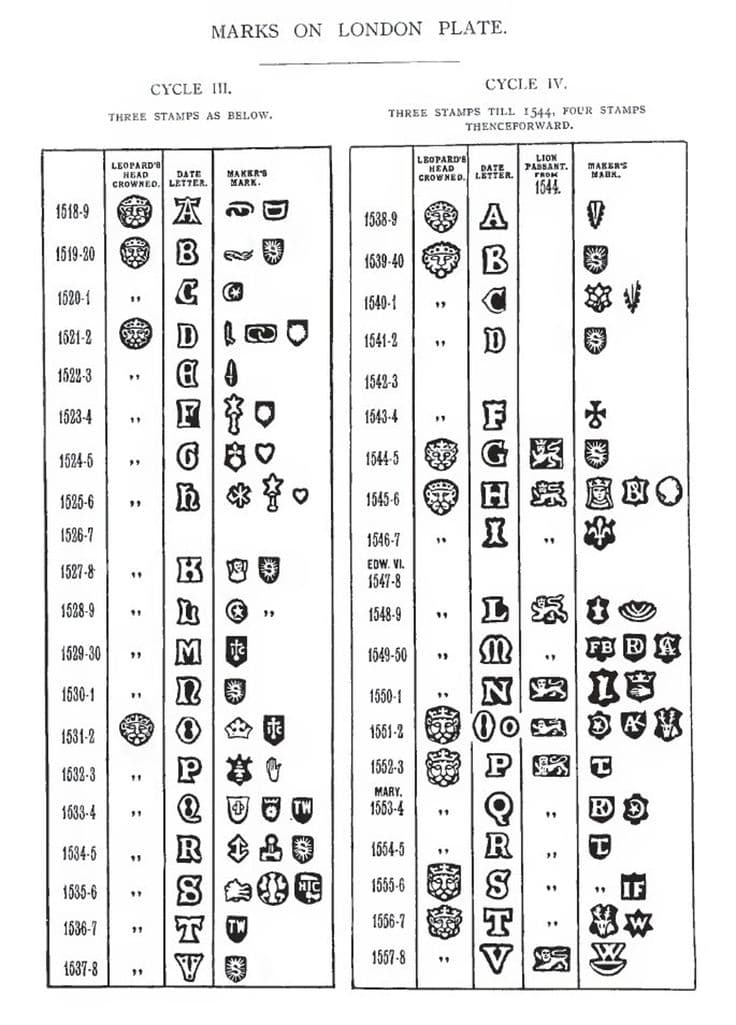
The smallest mark inside a ring band or beside a clasp can turn an heirloom into evidence. Maker’s-mark databases are most useful when you need quick answers to three questions at once: who made this, when was it made, and does the piece behave like an authentic vintage jewel rather than a later copy or misread stamp. In Britain, hallmarking has been tied to Goldsmiths’ Hall since 1478, while the maker’s mark itself goes back to a statute of 1363 and date letters have long helped pinpoint the year silver or gold was assayed.
Why a mark is powerful, and why it is not enough
A proper UK hallmark is built from several parts: the sponsor’s mark, the fineness mark, the assay office mark, and an optional date letter, with optional additional marks also allowed under the Hallmarking Act 1973. That structure matters because it separates maker, metal content, and place of assay into different clues, which is exactly why a single stamp can be so revealing when you are sorting an estate ring from a jewelry box. It also explains the limit of the mark alone: a stamp may point you toward a maker, but it does not prove the entire object without support from construction, testing, and provenance.
A step-by-step verification workflow
The most efficient way to use a maker’s-mark database is to move from observation to confirmation. The goal is not simply to read a name, but to build a case that the piece’s mark, materials, and workmanship belong together. Antique Jewelry University’s archive is built for that kind of search, with hundreds of maker’s marks that can be browsed by alphabet, symbol, and country, and it is continuously updated as new makers and marks are added.
1. Find the mark where makers actually hide it. Look inside a ring shank, near a clasp, or on the back of a pendant.
Those discreet placements are typical, and they are often the first clue that a piece is signed rather than merely styled to look old.
2. Search the database by shape as well as by name. A maker’s mark may be initials, a full name, or a symbol, so the best databases let you search by alphabet, symbol, and country instead of forcing you to guess the exact wording first.
That matters when a stamp is worn, partial, or compressed by age and resizing.
3. Read the date letter, if it is present. Britannica notes that date letters can identify the year silver or gold was assayed, and the British system has used lettering to encode time for generations.
In London, the hallmarking tradition dates to 1478, and Goldsmiths’ Company history makes clear that the leopard’s head, maker’s mark, and date letter were among the core elements that became established there.
4. Cross-check the mark against the object itself. A useful identification does not stop at the stamp.
GIA’s jewelry reports include a photo, metal testing results, total item weight, markings, and an overall description, which is the right way to think about authentication: the stamp is one piece of evidence, not the verdict.
Where collectors get tripped up
The most common dead end is assuming that a missing date letter means the piece cannot be dated. In London, the date letter has been voluntary since 1999, so its absence is not unusual and does not automatically weaken a piece that otherwise reads consistently. Another trap is trusting a familiar maker’s name without checking whether the mark evolved over time, because maker’s marks can change across production periods and partnerships, and a signed jewel is only convincing when the style, construction, and stamp agree.
Misleading stamps can also come from repair. A resized band, replaced clasp, or later-added component may carry a mark that belongs to one part of the jewel rather than the whole object, which is why metal testing and physical examination matter so much. If the stamp says one thing and the workmanship says another, trust the contradiction enough to keep digging.
Why maker names matter in the archive
Historical maker names are more than decorative signatures. The Metropolitan Museum of Art records Unger Brothers as a Newark, New Jersey firm founded in 1872 and listed by 1892 as manufacturing jewelers and silversmiths, a paper trail that makes a mark far more than a logo. On a die-stamped silver brooch or fob, that name connects the object to an identifiable workshop, an era, and a production style, which is exactly the sort of anchor collectors need when they are trying to understand whether a piece belongs to the late 19th century, the Art Nouveau moment, or a later revival.
The collector’s final test
If the mark, the metal, the construction, and the historical record all point in the same direction, you have something sturdier than a hunch. If they do not, the jewel is still worth studying, but not yet worth believing on faith alone. Maker’s-mark databases are most valuable when they sharpen judgment: they turn a hidden stamp into a point of origin, then ask the rest of the piece to prove the story.
This article was produced by Prism’s automated news system from verified source data, official records, and press releases, then run through automated quality and moderation checks before publishing. The system is built and supervised by the people who set the standards it runs under. Read our full AI policy.
Did this article answer your question?