Meeting Art's Vercelli Auction Features Tiaras, Diamond Bracelets, and Vintage Parures
A Vercelli auction house offered a 20ct old-cut diamond tiara for €20,000 alongside three headlined lots worth scrutinizing stone by stone.
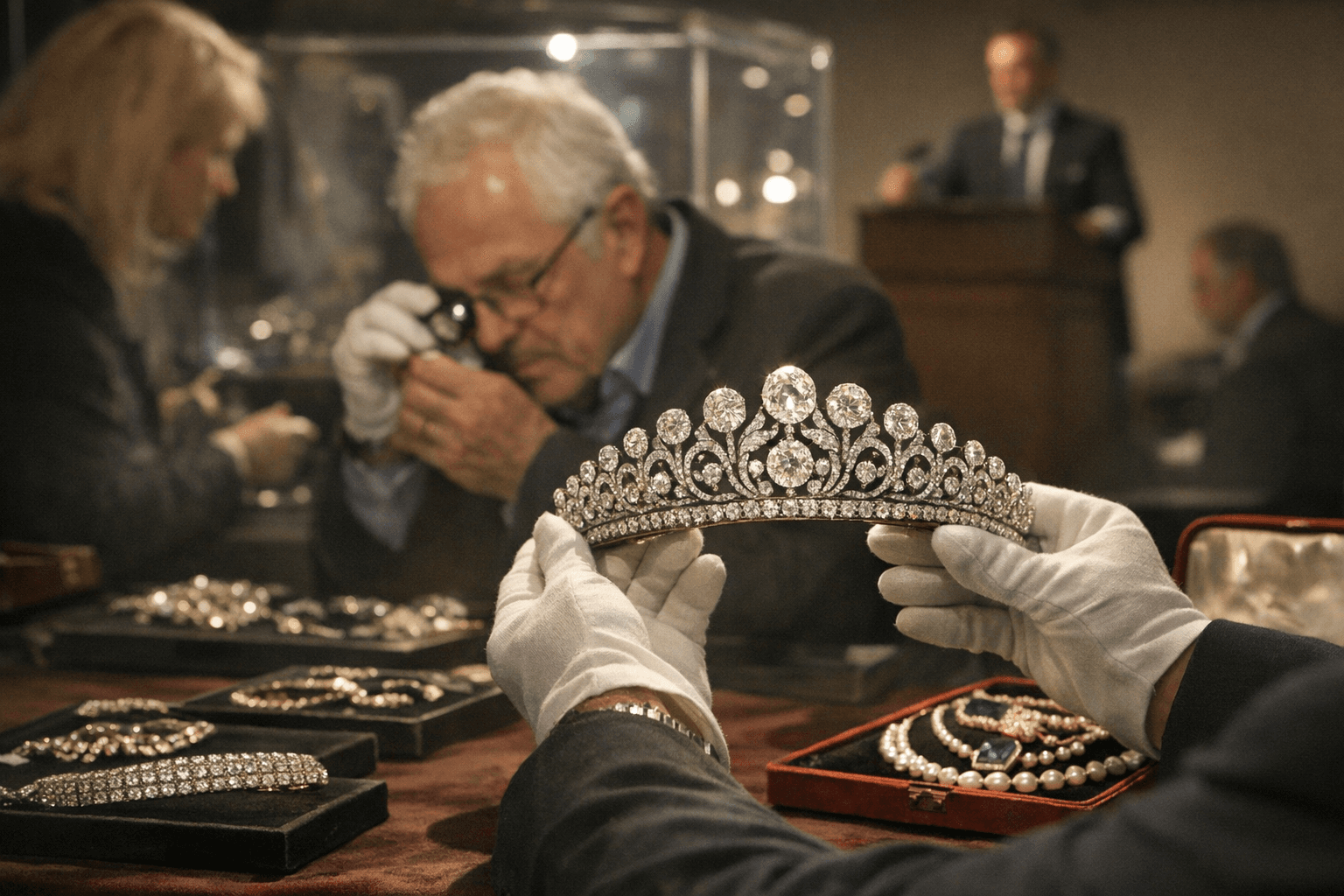
A tiara doesn't sit still in a catalog photograph. An early 20th-century piece in rose gold and silver, set with approximately 20 carats of old-cut diamonds, carries in its construction a kind of chronological testimony: the hand-set milgraining, the transition from mixed-metal mounts characteristic of the Edwardian period, the faceting geometry of pre-modern-cut stones shaped for candlelight rather than the fluorescent overheads of a contemporary gemological lab. When that tiara lands in an auction listing with a €20,000 estimate, it becomes less a decorative object and more an archive you can bid on. The question is whether you know how to read it.
That tiara anchored Meeting Art's Modern and Vintage Jewelry session on March 29 in Vercelli, Italy, alongside two other headlined lots: an 18-karat white-gold bracelet set with approximately 29 oval diamonds totaling roughly 22 carats, estimated at €35,000, and a solid 18-karat yellow-gold demi-parure described in the catalog as inspired by Bulgari, carrying a €20,000 estimate. The session also brought rings, multi-stone tennis bracelets, and additional period pieces including further early 20th-century tiaras and Art-period mounts, with certain gemstones carrying IGI certification notes. Meeting Art, a casa d'aste established in 1979, is now among Italy's most active specialist auction platforms for fine jewelry; its February 2026 Modern and Vintage Jewelry session logged 204 lots with total sales of approximately $342,000. The March headline lots, with estimates starting at €20,000, sit well above that session's per-lot average, signaling that the house positioned these as genuine collector targets.
For bidders who missed the floor or who want a framework for the next comparable regional Italian session, three lots from this catalog offer precise case studies in evaluation.
The tiara requires understanding what old-cut diamonds actually are. Unlike modern round brilliants, engineered to a standardized 58-facet geometry for maximum light return, old-cut stones were shaped to perform under softer illumination. They carry flatter tables, higher crowns, and a larger culet, the small flat facet at the base, that creates a distinctive dark eye visible from above in daylight. In a tiara mount of this period, stones were typically set in silver for its white reflective backing over a structural gold base; the combination of rose gold and silver the Vercelli catalog described is precisely accurate to circa 1900 to 1910 construction. At approximately 20 carats total across a tiara frame, the piece almost certainly carries multiple stones ranging from roughly half a carat to two carats each, meaning a single hero photograph tells you very little.
Condition red flags on a tiara of this age are specific. The prongs and collets holding old-cut stones loosen over a century of thermal cycling; request close-up images of each setting from multiple angles and look for visible gaps between stone and metal. Check whether the frame shows repair solder, which appears as a subtly different color or texture at joints, particularly along the base wire that arcs over the head. Rose-gold alloys of the Edwardian period typically used 18-karat gold with elevated copper content, making them warmer in color and more susceptible to stress fractures in the wire elements. Ask the house to confirm whether the karat has been tested, as early Italian goldsmith marks can wear smooth over a hundred years of handling. On the estimate itself: a comparable early 20th-century natural pearl and diamond tiara sold at a Phillips Geneva sale for approximately $28,000, according to Galerie Magazine's coverage of that result, with fewer diamond carats and no documented provenance. The Meeting Art tiara at €20,000, roughly $21,700, represents a 23 percent discount to that comparable Swiss result for a more stone-intensive piece. That differential is why collectors who systematically track regional Italian auctions consistently find them worth the administrative overhead.
The 18-karat white-gold diamond bracelet, set with approximately 29 oval diamonds totaling roughly 22 carats and estimated at €35,000, is a modern-construction piece requiring an entirely different evaluation framework. Oval diamonds carry a style premium for their elongated silhouette, but they introduce what the trade calls the bow-tie effect: a dark shadow across the center of the stone caused by the geometry of light return in a non-round cut. In a tennis-style bracelet with 29 stones, the bow-tie in each individual diamond can vary considerably based on cut proportions, and a bracelet with consistently strong cut quality looks materially different from one where several stones show deep shadowing. For this lot, the IGI certification note in the catalog is the pivotal detail. Request the actual certificate, not just the certification reference, and check the cut-quality notation for each stone or for the parcel as a whole.
A basic sanity check on the math is also warranted. At 22 carats across 29 oval diamonds, the average stone is approximately 0.76 carats. Oval diamonds in the 0.5-to-1-carat range with Very Good cut, VS2 clarity, and G-H color trade at meaningful wholesale premiums per carat. If the IGI documentation confirms that grade profile across the bracelet, the €35,000 estimate may look conservative. If the certificate is absent, partial, or covers only total parcel weight without individual stone grades, treat the estimate as an upper-bound for what the quality can support, not a lower-bound. Confirming what the IGI coverage actually includes is the single most important due-diligence step before this lot.
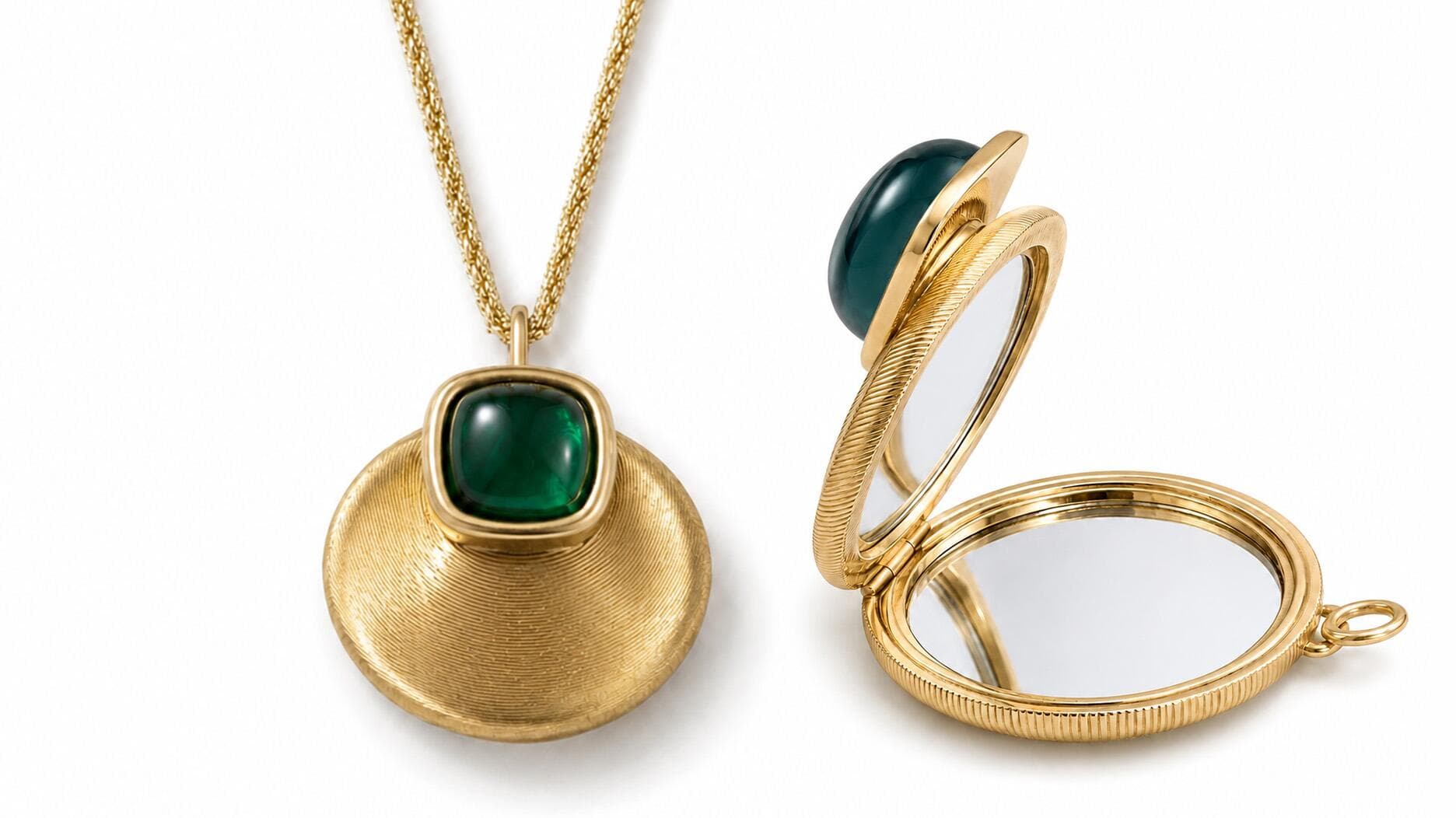
The third headline piece demands the most careful reading of one word in the catalog description. The 18-karat yellow-gold demi-parure was described as inspired by Bulgari, estimated at €20,000. A demi-parure, classically a coordinated set of two or three pieces combining a brooch or necklace with earrings, or a bracelet with earrings, carries inherent collector appeal as a matched set. The Bulgari association adds further appeal. But "inspired by" is not "by Bulgari." Authenticated Bulgari pieces from the house's mid-century yellow-gold period, particularly the bold cabochon-and-gold combinations made between the 1950s and 1970s, carry engraved signatures and punched maker's marks, and they sell at auction with provenance documentation accordingly. Before bidding this lot against its estimate, establish whether any maker's mark is present on each component, whether the catalog is describing a formal resemblance or a direct attribution to the house's design vocabulary, and whether the €20,000 estimate reflects intrinsic yellow-gold value, a style premium, or both. An 18-karat yellow-gold demi-parure with no maker attribution is a different purchase than one tied to Bulgari's workshop, and the estimate should be interrogated with that distinction in mind.
For collectors bidding from outside Italy, Meeting Art operates online bidding through its website with prior registration required, and the house lists on Invaluable, which allows international participation in live sessions. Italian auction purchases carry VAT on the buyer's premium for EU-resident buyers; non-EU buyers who formally export their purchases may be eligible to reclaim that component, but doing so requires coordinating with a licensed shipping agent and presenting export documentation before leaving Italian customs jurisdiction. Shipping fine jewelry internationally from Italy requires declared-value customs paperwork and insurance at replacement value; on a €20,000 to €35,000 purchase, these logistics can add meaningfully to the landed cost and should be factored into any maximum bid calculation.
The broader lesson from Meeting Art's March session is about the spread between estimate and verifiable material value at regional houses. The February 2026 session's per-lot average of roughly $1,678 tells you where the floor sits at this house. The March headliners, ranging from €20,000 to €35,000, are exceptions that signal genuine collector-grade material, not catalog filler. Whether the tiara's old-cut diamonds justify the estimate depends on condition photographs no press preview can provide. Whether the bracelet's 22 carats hold up depends on what the IGI certificate actually says. And whether the Bulgari-inspired parure earns its price depends on a maker's mark that may or may not be there. These are answerable questions, all of them, before the next hammer falls.
This article was produced by Prism’s automated news system from verified source data, official records, and press releases, then run through automated quality and moderation checks before publishing. The system is built and supervised by the people who set the standards it runs under. Read our full AI policy.
Did this article answer your question?