Mix Vintage and Modern Jewelry With These Expert Layering Tips
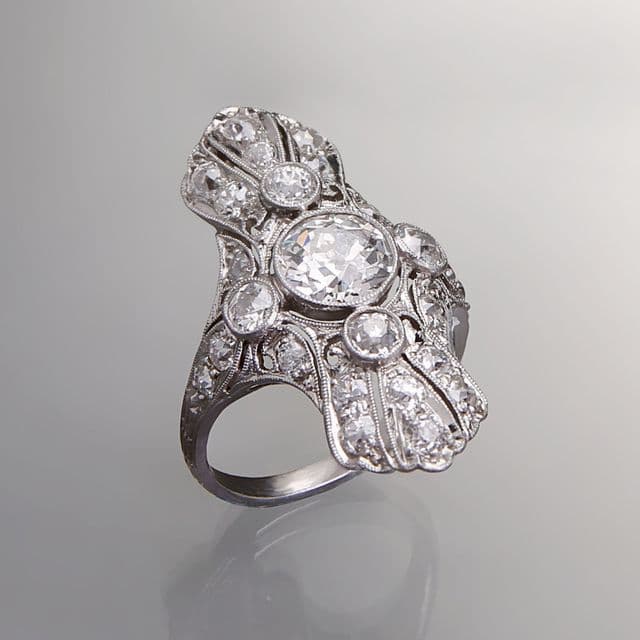
A pearl necklace over a black turtleneck, a filigree ring with a blazer: layering vintage and modern jewelry is easier than you think.

Pick up an heirloom pendant and hold it next to a clean, modern chain. The contrast is immediate: one carries the weight of its era in every engraved detail, the other reads as a blank slate. That tension is exactly what makes mixing vintage and modern jewelry so compelling, and so worth learning to do well.
Start With One Focal Piece
The single most consistent piece of advice from jewelers and stylists is also the simplest: choose one vintage piece and build everything else around it. As the styling team at Robinson's Jewelers puts it, "Vintage jewelry is all about bold expressions. If you own an ornate chandelier earring or an intricately designed filigree ring, let it take center stage." Everything else in your look, the other rings, the secondary chains, the garments themselves, should recede into a supporting role.
Finks makes this principle concrete: "Let one vintage piece take center stage when you style heirloom jewelry. If you're wearing a bold necklace, keep other jewelry understated, or pair delicate vintage rings or earrings with more modern silhouettes and tailored clothing." A plain black turtleneck or a well-cut blazer, according to styling guidance from Mvraki, "provides a neutral field where intricate textures, engraving, filigree, milgrain, and old-cut stones, can read clearly." The garment becomes the frame; the jewelry becomes the painting.
Layering Necklaces Without Clutter
Necklace layering is where most people either succeed spectacularly or end up with a tangled mess. The good news is that the mechanics are learnable, and three distinct approaches work depending on your focal piece and neckline.
The first method, recommended by Solvang Antiques, starts long: "Begin with a long, simple chain as your base. Gradually add shorter necklaces of varying lengths, ensuring each piece gets its moment to shine. The key is balance: mix delicate chains with heavier pieces." A bold, vintage squash blossom necklace worn against a minimalist modern silver chain is their suggested pairing, a juxtaposition that creates what they describe as "a harmonious blend of past and present."
The second approach reverses that logic. Start close to the neck with a thin, short chain or choker, then add length progressively. This works particularly well when the vintage piece you want to highlight is shorter and more graphic.
The third method, from Mvraki, centers the focal piece at mid-length: "Combine a vintage locket on a mid-length chain with a shorter, smoother modern piece; allow the locket to sit at the quietest point on your neckline." Their rule for adding a third chain is precise and worth memorizing: "If you add a third chain, make it either finer or bolder than the other two so each layer has a reason to be there." For necklines that need a vertical anchor, they recommend a lariat or Y-necklace, which "can serve as the directional element that pulls the eye down, creating a long line that complements V-necks and open collars."
All three approaches converge on the same underlying principle: vary chain texture and length intentionally, and ensure every layer earns its place.
Stacking Rings and Bracelets
The same logic applies below the neck. Stacking vintage rings with clean, contemporary bands is one of the most approachable entry points into mixing eras, because the scale is small and the commitment is low. Robinson's Jewelers recommends trying "stackable rings featuring vintage and modern designs for a contemporary yet eclectic look," while Finks suggests "stacking an antique ring with clean, simple bands," noting that "the contrast highlights the uniqueness of each piece while keeping the overall look fresh."
For bracelets, mixing delicate chains with a statement charm bracelet or a bold vintage cuff achieves the same layered depth at the wrist as necklace stacking does at the neckline.
Mixing Metals and Textures
The old rule that metals must match has been retired. "Gone are the days when mixing metals and colors was considered a faux pas," as the team at Solvang Antiques notes. "Today, it is seen as a bold expression of individuality and style." Pair a silver Art Nouveau necklace with a gold Edwardian bracelet, or set sapphire blue against emerald green; the combinations that once seemed discordant now read as considered.
For those who want specific starting points, the guidance from Jordans Jewellers (based at 29 South Street, Dorchester) is particularly actionable:
- Pair an antique yellow gold Victorian ring with a sleek platinum or white gold band for a timeless look.
- Combine oxidised silver antique pieces with polished rose gold modern designs for a striking contrast.
- Layer different textures, such as matte finishes with high-polish pieces, for a rich, varied aesthetic.
That said, a more cohesive, quieter approach is equally valid. As Jordans notes in a pro tip: "If you prefer a cohesive style, try to keep to one metal family, either all gold or silver. However, mixing metals can also create a beautiful contrast if done thoughtfully." If you do mix, their FAQ offers a practical rule: look for pieces that already combine both metals, or wear them in roughly equal proportions so neither dominates by accident.
Coordinating Colors With Your Outfit
Vintage jewelry often features warm gold tones and natural gemstones, which respond predictably to what you wear beneath them. Finks points out that yellow gold jewelry set against a bright white shirt creates a sharp, classic contrast, while vibrant colored gemstones read best against neutral clothing, where they have room to do the talking. A classic pearl necklace layered over a sleek black turtleneck, as Robinson's Jewelers describes it, "strikes a balance between old-world charm and modern minimalism." Antique rings with intricate filigree, meanwhile, "can add romance to a structured blazer and jeans." The outfit is always part of the composition.
Evening and Formal Occasions
For evening wear, the calculus simplifies: one showpiece, quiet everything else. "Chandelier earrings illuminate the face and work well with open necklines; a large cocktail ring creates a focal point against the clean lines of a slip dress; a 1940s bib necklace sits beautifully on a deep-V silhouette." Keep fabrics sleek and patterns minimal so the craftsmanship, the stone cuts, the metalwork, the age of the piece itself, can take center stage.
A Note for Men
Men's vintage styling has its own set of moves. Mvraki's advice is direct: "leverage contrast. Mix a vintage gold necklace with a modern sterling-silver bracelet if the finishes and scales harmonize." For formal occasions, an Art Deco signet ring or a pair of antique cufflinks anchors a simple tee-and-trousers combination while echoing geometric themes for visual cohesion. And the pairing that "always reads sharp," according to Mvraki: a vintage wedding band alongside a contemporary watch, "balanced, personal, and unfussy."
The Principle Beneath All of It
Personal style is the real starting point, not era or metal type or gemstone palette. Finks frames it clearly: "Start with your personal wardrobe. Whether your style leans classic, contemporary, or eclectic, vintage jewelry should feel like a natural extension of who you are. Choose pieces that stand out to you and fit with your style rather than following rigid rules." From Art Deco diamond rings to squash blossom necklaces to an Antique Edwardian Diamond Négligée Necklace, vintage pieces carry accumulated meaning that no new production run can replicate. The skill is not in following a formula but in learning which details, a milgrain edge, a filigree tendril, an old-cut stone's distinctive softness, deserve the space to be seen.
This article was produced by Prism’s automated news system from verified source data, official records, and press releases, then run through automated quality and moderation checks before publishing. The system is built and supervised by the people who set the standards it runs under. Read our full AI policy.
Did this article answer your question?