NAJA Webinar Tackles Complexities of Antique and Period Jewelry Appraisal
Applying modern cut grading to an old mine diamond isn't just imprecise — it's a valuation error. NAJA's March 21 webinar addresses exactly that.

Antique jewelry appraisal has always demanded a different intellectual toolkit than contemporary work, and on Saturday, March 21, 2026, the National Association of Jewelry Appraisers is dedicating four hours to proving why. The organization's webinar, "The Complexities of Appraising Antique and Period Jewelry," runs from noon to 4:00 PM EST and brings together five credentialed specialists whose sessions collectively address the discipline's most stubborn professional hazards.
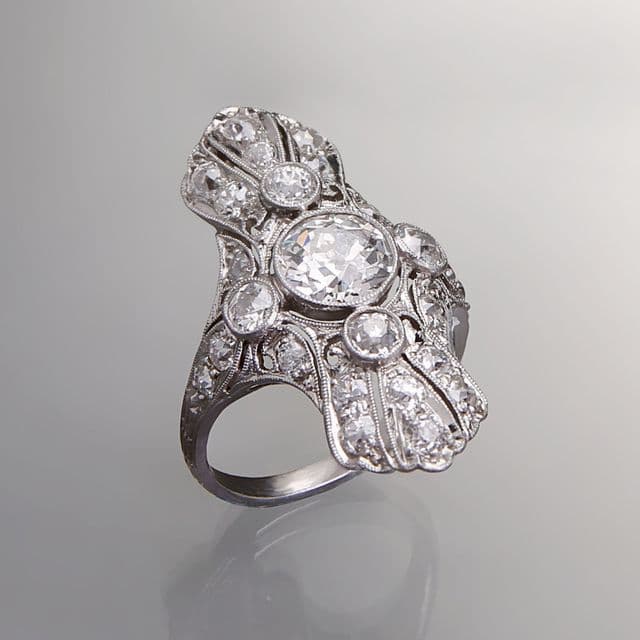
The program opens with what may be its most technically urgent presentation. Celine Rose David, FGA, tackles the persistent problem of applying modern cut standards to antique diamonds, a practice that leads to misidentification, distorted valuations, and what the session describes as "compromised appraisal integrity." The argument is straightforward but consequential: an old mine cut or rose cut cannot be evaluated against GIA's modern brilliant-cut benchmarks without distorting the result. Understanding these cuts requires situating them within their historical, technological, and aesthetic contexts — not measuring them against criteria that did not exist when they were made.
Duncan Parker, FGA, follows with a session titled "Jewelry – Back to Front," which examines how maker attribution, country of origin, condition, provenance, documentation, and alterations can each shift a piece's value in significant ways. The session's alternate working title from earlier NAJA programming — "Births, Deaths and Marriages?" — captures the same idea with more wit: the life story of a jewel is inseparable from what it is worth.
Jessie English, GIA GG, brings the argument down to a granular level. Her session, "When the Little Things Mean a Lot: The Effects of Minor Details on Value," makes the case that subtle construction techniques, functional components, material choices, and small design embellishments can have an outsized impact on value precisely because they are easy to overlook. The implication for appraisers is that fluency in the minor vocabulary of period jewelry is not optional.
The webinar closes with Gail Brett Levine, GIA GG, whose presentation, "Coins Transformed: Art, Identity and Sentiments," traces a niche category that sits at the intersection of numismatics and jewelry history. Engraved coins appeared in the United States during the Civil War as a form of soldier identification; by the 1870s they had crossed into the jewelry market, where they circulated as intimate personal objects now known as love tokens. Deborah Finleon, GIA GG, rounds out the program with a methodologically focused session on researching comparables for antique jewelry, covering what constitutes a close comparable and how to adjust valuations when differences exist between the comparable and the subject property.
Registration is open to all. NAJA members pay $25; nonmembers pay $50. A recording will be available to all registrants until midnight on April 4, 2026. For education-related inquiries, NAJA can be reached at 301-335-6687; for membership and general questions, the headquarters line is 718-896-1536.
This article was produced by Prism’s automated news system from verified source data, official records, and press releases, then run through automated quality and moderation checks before publishing. The system is built and supervised by the people who set the standards it runs under. Read our full AI policy.
Did this article answer your question?