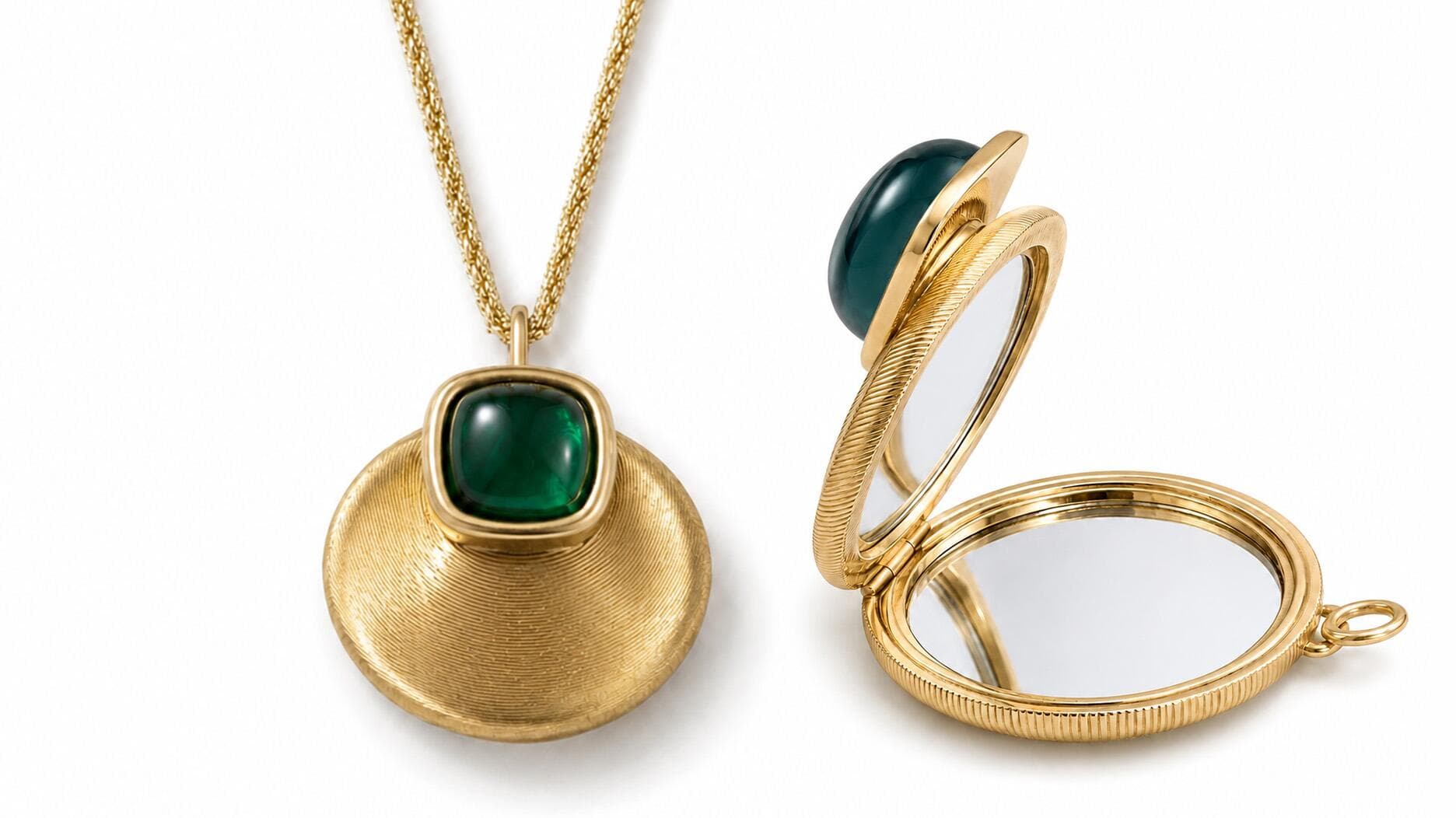
Newark Museum's Lore Ross Jewelry Gallery Showcases Centuries of Dazzling Adornment
Newark's Lore Ross Jewelry Gallery opened in March 2026 as one of only a handful of U.S. museums with a permanent jewelry gallery, spanning centuries of adornment.
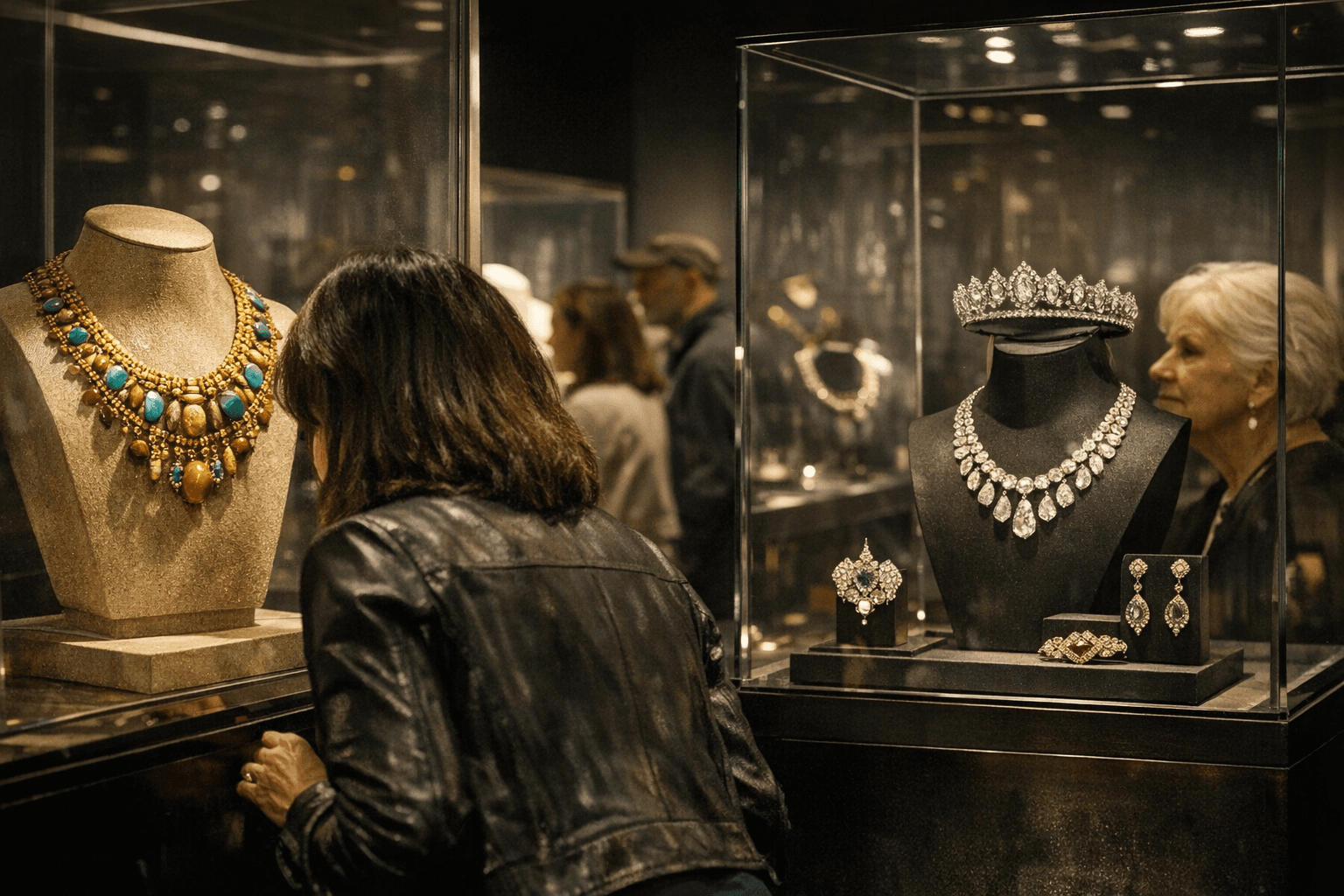
Pick up a lavaliere set with labradorite, its iridescent grey-blue stone caught against silver, and you are holding more than a necklace. You are holding a piece of American museum history. That piece, purchased in 1929 by Newark Museum director Beatrice Winser at Georg Jensen's Manhattan shop, was the first Jensen jewelry to enter any U.S. museum collection. It now anchors a larger story told inside the Newark Museum's Lore Ross Jewelry Gallery, which opened in March 2026 as one of only a handful of institutions in the country to maintain a dedicated permanent jewelry gallery.
The gallery's inaugural exhibition, titled "The Glitter & The Gold: Jewelry From the Newark Museum," brings together a collection built across more than a century of acquisition. That history begins in 1911, when an eighteenth-century gold watch from New York became the first piece of jewelry to enter the museum's collection, donated by a trustee. For nearly two decades, that watch stood largely alone. The collection grew slowly and entirely by donation until Winser made her 1929 purchases, acquiring not one but two necklaces from Jensen's shop: the labradorite lavaliere and a choker set with moonstones. Both pieces went on to become the last jewelry purchases the museum would make until 1991.
The gallery as redesigned in 2015 displayed over 150 pieces spanning the fifteenth century to the present day. Its organizing principle was material rather than chronology or cultural origin, a deliberate curatorial choice that placed pearls beside platinum beside plastic and asked visitors to consider what those materials share rather than where or when they were made. The walls and fabric throughout the gallery were rendered in deep aubergine, a richly saturated backdrop that draws out the tonal range of the objects displayed against it.
The curatorial rationale behind that approach reflects a broader collecting philosophy. "The unifying theme in collecting jewelry for the Newark Museum through the past decade has been to find objects that resonate in multiple ways with the vast global collections already under our stewardship," the museum has stated. That cross-referencing ambition extends to the objects themselves: "Jewelry is an ancient form of human adornment which, for all its cultural specificity, is remarkably universal in its meanings and in the ways it is worn. It offers opportunities for cross-cultural interpretation and generates a broad public interest like few other art forms."
That claim, that jewelry cuts across cultural difference in ways other objects do not, is easier to believe standing in front of Winser's 1929 moonstone choker than reading it on a wall label. The choker's stones, with their blue-white adularescence, belong to no single tradition. They have been worn in South Asia and Scandinavia, by brides and by modernists. Georg Jensen's silversmiths understood that. So, it seems, did Beatrice Winser, who spent museum funds on them at a moment when acquiring jewelry was not yet standard institutional practice. Her purchases were the exception, surrounded on either side by decades of curatorial inertia.
The Newark Museum can be reached at newarkmuseum.org or by phone at 973.596.6550.
This article was produced by Prism’s automated news system from verified source data, official records, and press releases, then run through automated quality and moderation checks before publishing. The system is built and supervised by the people who set the standards it runs under. Read our full AI policy.
Did this article answer your question?