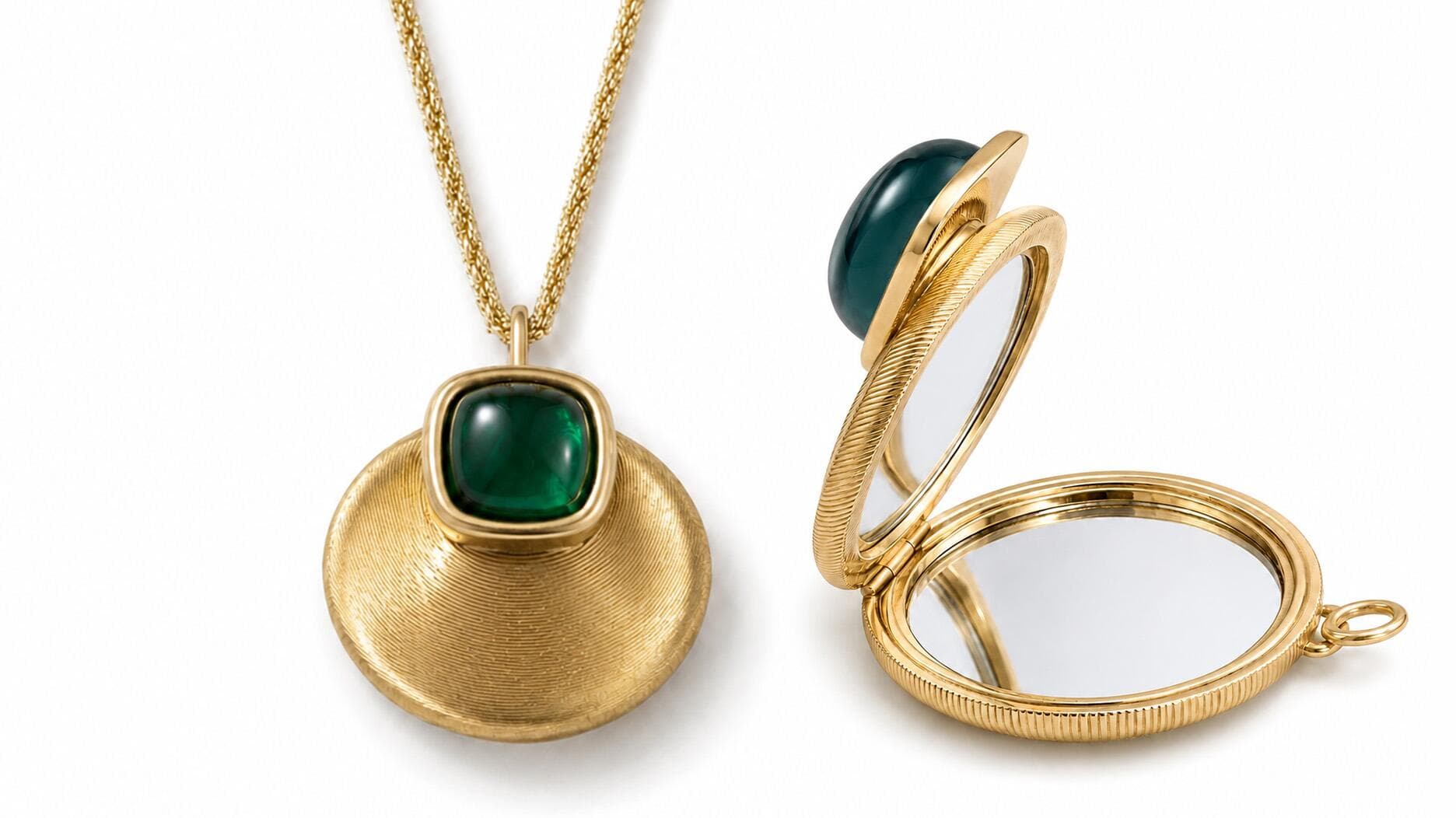
Nine Global Exhibitions Unite Historic Jewelry With Decorative Arts This Spring
ArtReview's spring 2026 global round-up spotlights nine exhibitions where historic jewelry meets decorative arts — here's what collectors need to know.

When ArtReview published its March 2026 international exhibition round-up on February 27, the list read like a field guide for anyone who has ever stood in front of a vitrine and wondered whether a brooch belongs in a museum or on a lapel. Nine shows, spread across institutions worldwide, place wearable objects and decorative arts in the kind of curatorial company usually reserved for paintings and sculpture. For collectors and enthusiasts who care about provenance and material history, this spring's exhibition calendar offers something rare: a chance to see historic jewelry treated not as accessory but as argument.
What follows is a close look at what these nine exhibitions mean for anyone who reads jewelry as a primary document of its era.

Why This Moment Matters for Wearable Objects
Decorative arts have long occupied an awkward position in the museum hierarchy, valued by specialists and underestimated by everyone else. The ArtReview round-up signals a shift. When a publication with serious critical standing dedicates its March feature to shows that include wearable and decorative objects alongside fine art, it reflects a broader curatorial reckoning: that a Georgian mourning ring or an Art Deco platinum-set bracelet carries as much historical weight as a canvas of the same period.
For vintage jewelry researchers and collectors, that reckoning has practical consequences. Exhibitions that contextualize historic jewelry within decorative arts programs tend to surface documentation, maker attributions, and material analyses that don't appear in auction catalogues. They are, in short, some of the most useful research environments available.
The Nine Exhibitions: A Global Spread
The ArtReview round-up spans museum and gallery institutions across multiple countries, reflecting a genuinely international curatorial conversation rather than a single regional trend. Each of the nine entries was selected because it sits at the intersection of decorative arts and wearable objects, a pairing that places jewelry in dialogue with furniture, ceramics, textiles, and metalwork from the same periods and cultural contexts.
That cross-material framing matters enormously when you are trying to authenticate or understand a piece. A brooch does not exist in isolation from the silversmithing traditions of its city of origin, the textile fashions that governed how it was worn, or the trade networks that supplied its stones. Exhibitions that assemble these contexts together give researchers and collectors access to comparative material that is difficult to replicate through catalogues alone.
What Curatorial Context Does for Provenance Research
Seeing jewelry in exhibition alongside documented decorative arts objects from the same workshop tradition or geographic region can be transformative for provenance research. Maker's marks on a silver casing, for instance, become far more legible when shown adjacent to stamped metalwork from the same guild or city assay office. Hallmark systems, which vary significantly across British, French, German, and Russian traditions, are easier to decode when examples are displayed comparatively rather than in isolation.
For anyone actively buying or authenticating vintage pieces, the practical checklist when visiting these shows includes:
- Photograph display labels closely, noting any workshop attributions, assay marks, or donor provenance listed
- Cross-reference dates on decorative arts objects with the jewelry displayed in the same room or case
- Ask gallery educators whether maker documentation or conservation reports are available for the wearable objects on view
- Note stone treatments or metal alloy descriptions in wall text, which often reflect the material standards of the specific decade of manufacture
Jewelry as Decorative Arts, Decorative Arts as Jewelry
The curatorial logic of placing jewelry within a decorative arts framework rejects the hierarchy that has kept wearable objects out of fine art discussions for decades. An enamel-on-gold pendant made in the sixteenth century requires the same level of attribution rigor as a contemporaneous piece of goldsmiths' metalwork made for a table or altar. The technical skills overlap; in many historical workshops, they were identical.
This spring's exhibitions take that premise seriously. By presenting historic jewelry within the broader material culture of its period, the shows create space for reattribution, new scholarship, and the kind of close looking that changes what a collector thinks they know about a piece they have owned for years.
What to Bring to These Exhibitions
Attending with intention makes a significant difference. A few practical notes for making the most of any of the nine shows on the ArtReview list:
- Bring a jeweler's loupe if the institution permits close-access viewing; even through glass, a 10x loupe can clarify surface treatments and setting styles on displayed pieces
- Review the institution's published catalogue or online collection notes before your visit so you arrive with specific attribution questions rather than general curiosity
- If the exhibition includes loans from private collections, those pieces are often the most research-rich: private lenders sometimes share provenance documentation that institutional collections have long since separated from their objects
- Take time with the decorative arts objects adjacent to any jewelry cases. A dated and attributed piece of ceramic or lacquerwork in the same display can anchor the jewelry's period attribution more firmly than the jewelry's own label
The Broader Signal
Nine exhibitions in a single spring season, all touching the intersection of historic jewelry and decorative arts, is not coincidence. It reflects sustained institutional interest in material culture as a serious subject of scholarly and public attention. Museums that once divided their collections rigidly by medium are increasingly presenting cross-material shows that restore the original context in which objects were made, sold, and worn together.
For collectors, that trend has a direct implication: pieces that were dismissed as decorative rather than fine are being reappraised with new scholarship behind them. A Victorian parure that spent decades in a glass case labeled simply "19th century metalwork" may now be the subject of maker attribution research, gemological analysis, and comparative study that adds substantially to its documented history.
The ArtReview round-up is a starting point, not a complete guide. But as a map of where serious curatorial attention is landing this spring, it is one of the more useful documents a vintage jewelry researcher could have on their desk right now.
This article was produced by Prism’s automated news system from verified source data, official records, and press releases, then run through automated quality and moderation checks before publishing. The system is built and supervised by the people who set the standards it runs under. Read our full AI policy.
Did this article answer your question?