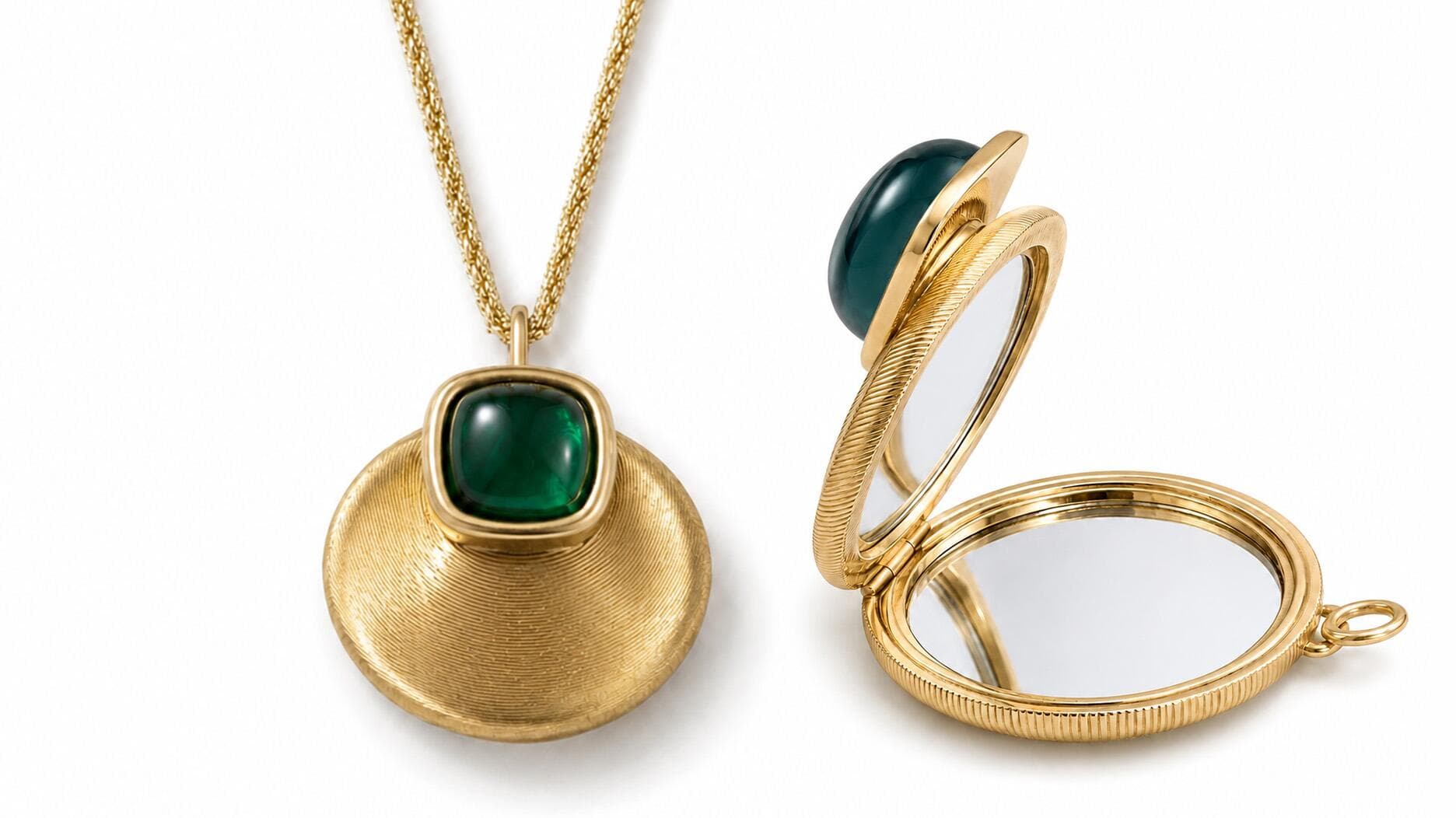
Period designs and signed jewels achieved strong results at Bonhams Fine Jewellery sale in London
Bonhams' London sale cleared 98% by value, with a 1925 aquamarine brooch selling for nine times its estimate and a Cartier necklace more than doubling its high.
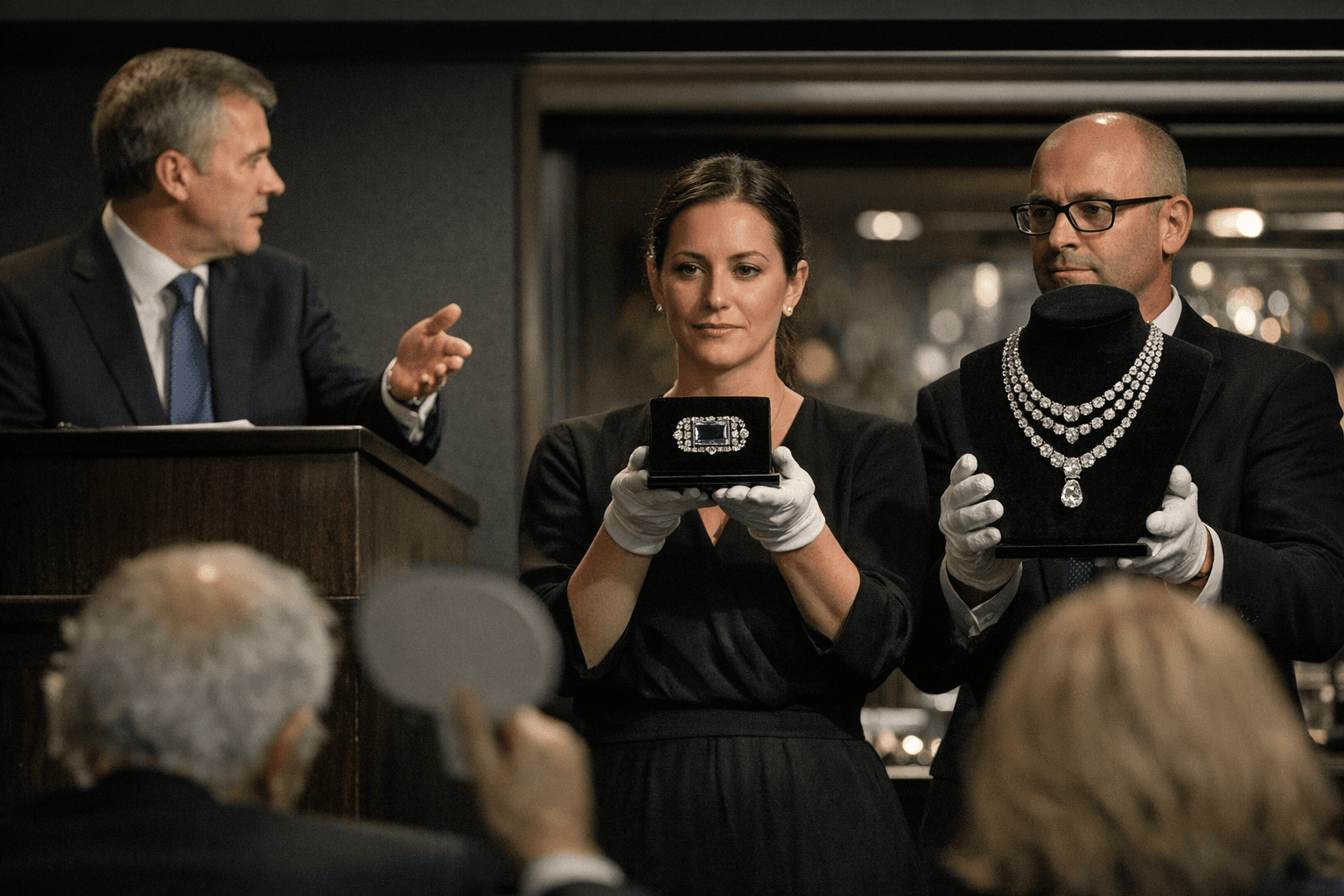
Hold the 1925 aquamarine brooch with both hands and you are already in conversation with at least three different specialists. The stone is a 30.80-carat step-cut octagonal aquamarine, cool and deep. Around it, asymmetric floral sprays of old brilliant and single-cut diamonds stretch outward; carved onyx anchors the composition; calibré-cut cabochons of amethyst and ruby accent the frame in the unmistakable, concentrated palette of the high Art Deco period. At Bonhams' Fine Jewellery London sale on March 25, the piece carried a pre-sale estimate of £3,000 to £4,000. It left the room at £26,160: nine times its low estimate, and the most unambiguous statement the afternoon made about where collector conviction currently lives.
The 273-lot sale closed at 87% sold by lot and 98% by value. The eleven-point gap between those two numbers is where the real story lives. It signals that what failed to sell were almost certainly smaller, lower-value lots without the provenance or gem quality that serious collectors now treat as non-negotiable. The pieces that had both? They didn't just sell; they reset expectations. When 98 cents of every available pound changes hands in a London saleroom, the auction has succeeded in precisely the terms the specialist market cares about.
The top lot confirmed the dynamic. A Cartier diamond 'C de Cartier' necklace, designed as a series of articulated links with the front face composed of c-shaped links set with brilliant-cut diamonds, achieved £40,960, more than double its pre-sale estimate of £18,000 to £25,000. The 'C de Cartier' is one of the maison's most architecturally precise signatures, a design where the letter form becomes the structural logic of the entire piece, each articulated unit refracting light differently as it moves. Collectors have long understood that signed Cartier material carries a premium above its material value alone, but a result at more than double the high estimate reflects something more specific: the recognition that a documented, signed example from a prestigious maison is among the most reliable stores of value currently available in the secondary market.
The cushion-shaped Myanmar sapphire pendant, weighing 8.20 carats and set within an old brilliant and cushion-shaped diamond openwork frame with rose-cut diamond accents at each cardinal point, achieved £35,840, more than three times its pre-sale estimate of £10,000 to £15,000. The piece dates to circa 1890, placing it squarely in the late Victorian period, when jewellers worked with old-cut diamonds not because they were technically limited but because that faceting style was considered the height of refinement. The geography carries as much weight as the carat here. Burmese origin, now designated Myanmar, commands a consistent premium at auction because that provenance is finite, documentable, and increasingly absent from new supply. A sapphire of that origin and that age, in an intact period mount, is not simply a gemstone purchase; it is an acquisition with an audit trail.
A Tiffany & Co. diamond-set 'Vanniere' necklace, bracelet and earring suite from circa 1991, an 18-carat gold articulated woven collar set with brilliant-cut diamonds and matching bracelet and earrings of similar design, achieved £32,000, double its pre-sale estimate of £14,000 to £18,000. The 'Vanniere' is one of Tiffany's more quietly celebrated designs, less immediately recognizable than the Return to Tiffany or the Atlas, but well-known among collectors as a substantial, architectural piece from the house's strongest period of gold jewellery design. That a complete suite in matched condition doubled estimate suggests the market is actively seeking signed sets, not just individual statement pieces.
The sale also included creations from Boucheron, Van Cleef & Arpels, Graff, Buccellati, and Andrew Grima, alongside the signed maison pieces. Bonhams identified four defining trends across the auction: the premium placed on provenance, the continued strength of signed jewels, and the dominance of both superb coloured gemstones and fine natural pearls in driving top prices.
Taken together, these results describe a precise set of acquisition signals for anyone buying comparable material right now.
The maker's signature is the first and most consistent of them. Cartier, Tiffany & Co., Boucheron, Van Cleef & Arpels, Graff, Buccellati, and Andrew Grima all appeared in this sale, and the pattern from the room was consistent: signed lots attracted premiums, often substantial ones. When examining any piece, the hallmark and signature are not incidental details; they are part of the value architecture. On French pieces, look for the maker's poinçon alongside the eagle head guarantee mark for 18-carat gold, or the owl for imported pieces. On British work, the full assay hallmark with maker's mark, date letter, and standard mark tells you age, metal, and origin in a single cartouche. A piece described as "unsigned but in the manner of" represents a categorically different asset from one with a verified maker's signature.
Natural gem provenance is the second signal. The Myanmar sapphire's three-times-estimate result was not circumstantial. The international gem trade has increasingly separated natural, unheated stones from treated or synthetic alternatives, and any piece accompanied by a current laboratory certificate from GIA, Gübelin, or SSEF carries measurably higher bidder confidence. Older certificates may not reflect current grading language around heat treatment, which means a fresh report on any sapphire, ruby, or emerald above two carats is worth commissioning before a significant acquisition. The question to ask any dealer or specialist: does a current lab report exist, and if not, can one be obtained as a condition of sale?
Period integrity is the third signal, and the 1925 aquamarine brooch illustrates it precisely. A period piece in which the original setting survives complete, without later repairs, replaced stones, or adapted fittings, commands a dramatically higher premium than a mechanically equivalent piece that has been altered or 'improved.' For Art Deco material specifically, look for consistent surface patina across the metal; hand-applied milgrain that runs beneath the stones as well as around them, indicating it was worked before setting rather than applied as a finishing touch; and calibré-cut coloured stones that fit their channels with the precision of original manufacture. Replacement calibré stones in a period channel are almost always fractionally too tight or too loose, a discrepancy that becomes obvious under a loupe.
Documentation and auction provenance matter more than buyers sometimes anticipate. A piece that has appeared in a named sale, with catalogue photography and a specialist note, carries an established ownership record that private treaty acquisitions rarely provide. Before committing to a significant vintage purchase, the questions worth putting to any dealer or auction specialist are these: Is the piece signed, and has that signature been verified against documented examples by the maker? Does any accompanying gem certificate reflect current laboratory standards, and does it address treatment status explicitly? Has the setting been repaired, re-tipped, or re-plated since original manufacture, and if so, when and by whom? Can the period attribution be supported by maker records, exhibition history, or previous auction provenance? And for natural pearl pieces, has the strand been tested for natural versus cultured classification by X-ray, given that visual inspection alone cannot determine this?
The March 25 sale at Bonhams was, in that sense, less a single auction result than a precise description of where the market has concentrated its conviction. Signed jewels from the great houses, period pieces in intact original condition, and natural gemstones with verifiable geographic provenance are not simply selling in this environment. They are attracting the kind of competitive bidding that rewrites price expectations, sometimes nine times over.
This article was produced by Prism’s automated news system from verified source data, official records, and press releases, then run through automated quality and moderation checks before publishing. The system is built and supervised by the people who set the standards it runs under. Read our full AI policy.
Did this article answer your question?