Pomellato retrospective in Paris celebrates vintage designs and heritage
Pomellato’s Paris debut turns its bold colored jewels, 1970s-to-1990s campaigns and early prêt-à-porter codes into tomorrow’s vintage map.

Pomellato is arriving in Paris with the kind of retrospective that changes how a house is collected. “Pomellato, Le Joaillier Révolutionnaire” turns the brand’s own archive into a case study in how a relatively young jeweler can already look canonical, especially when its history is shaped by color, image, and a radical refusal to dress jewelry up as something reserved or formal.
A Paris debut with collector implications
The exhibition opens at the Palais de Tokyo on June 24 and runs through July 20, 2026, marking Pomellato’s first exhibition in Paris. Admission is free, but reservation is required, with bookings opening May 27 on Pomellato’s website. That detail matters because the show is not presented as a static brand homage, but as a public argument for why Pomellato belongs in the conversation about modern jewelry heritage.
Curated by Alba Cappellieri, Ph.D., head of Jewelry Design at the Politecnico di Milano, the retrospective gathers archival and contemporary designs alongside vintage Pomellato pieces and campaign images from the 1970s through the 1990s. The effect is not simply nostalgic. It is a reminder that some of the most collectible jewelry histories begin not in the distant past, but in the moment a house invents a new visual language and keeps refining it.
Why Pomellato already reads like tomorrow’s vintage
Founded in Milan in 1967 by Pino Rabolini, Pomellato introduced the idea of prêt-à-porter jewelry, and that concept still feels unusually modern in the context of the secondary market. The phrase signals more than accessibility. It points to a way of making jewels that are meant to live with the body, not sit apart from it, which is precisely why early Pomellato pieces can feel so contemporary when they resurface.
Kering, which has owned the house since 2012, describes Pomellato as an Italian luxury jewelry house established in Milan in 1967, and the retrospective underlines that lineage without softening its edge. The brand’s long-standing emphasis on women and self-expression, including the Pomellato for Women platform, gives the house a social and stylistic identity that many older jewelry maisons had to retrofit later. Here, that message was built into the house from the start.
The signatures likely to matter most to collectors
If you are looking at Pomellato as a future vintage canon, the most important clues are already visible in the exhibition framing: style, craftsmanship, color, image, and women. Those are not abstract themes. They are the codes that made the house distinctive in the first place and will determine what rises in value and desirability among collectors.
The pieces most likely to matter are the ones that best express Pomellato’s original daring: bold but wearable forms, strong color stories, and that unmistakable Milanese confidence. Early examples from the house’s foundational decades, especially pieces tied to the campaigns of the 1970s through the 1990s, are likely to carry the greatest cultural charge because they show Pomellato becoming Pomellato in real time.
The retrospective also highlights the house’s dialogue with photographers including Helmut Newton, Herb Ritts, Michel Comte, and Lord Snowdon. Related coverage expands that list to include Gian Paolo Barbieri, Albert Watson, Horst P. Horst, Peter Lindbergh, and Javier Vallhonrat. For collectors, those images are not just marketing ephemera. They are part of the provenance of the brand itself, and Pomellato’s archival advertising images are considered among the most significant photographic archives in the jewelry world.
What to watch for in early Pomellato pieces
Vintage buyers should look closely at whether a piece still carries the clarity of the house’s original design intent. Pomellato’s strength has always been its synthesis of jewelry craft and editorial modernity, so condition alone is not enough. The best pieces should feel structurally thoughtful, visually resolved, and unmistakably tied to the maison’s Milanese identity.
- Early pieces that show the house’s prêt-à-porter philosophy in a recognizable, wearable form.
- Strong color combinations and design choices that reflect the brand’s revolution in style and image.
- Pieces with clear provenance, especially if they can be connected to historic campaigns or key decades in the house’s development.
- Craftsmanship that still reads cleanly at close range, because a modern house’s future vintage value depends on how well its construction holds up outside the showroom.
A few points matter especially:
That last point is crucial. Collectors often focus first on the look of a jewel, but Pomellato’s long-term significance will also depend on the tactile evidence of how the piece was made: how precisely elements meet, how confidently the form is finished, and whether the design still feels deliberate from every angle.
Why the archive matters as much as the jewels
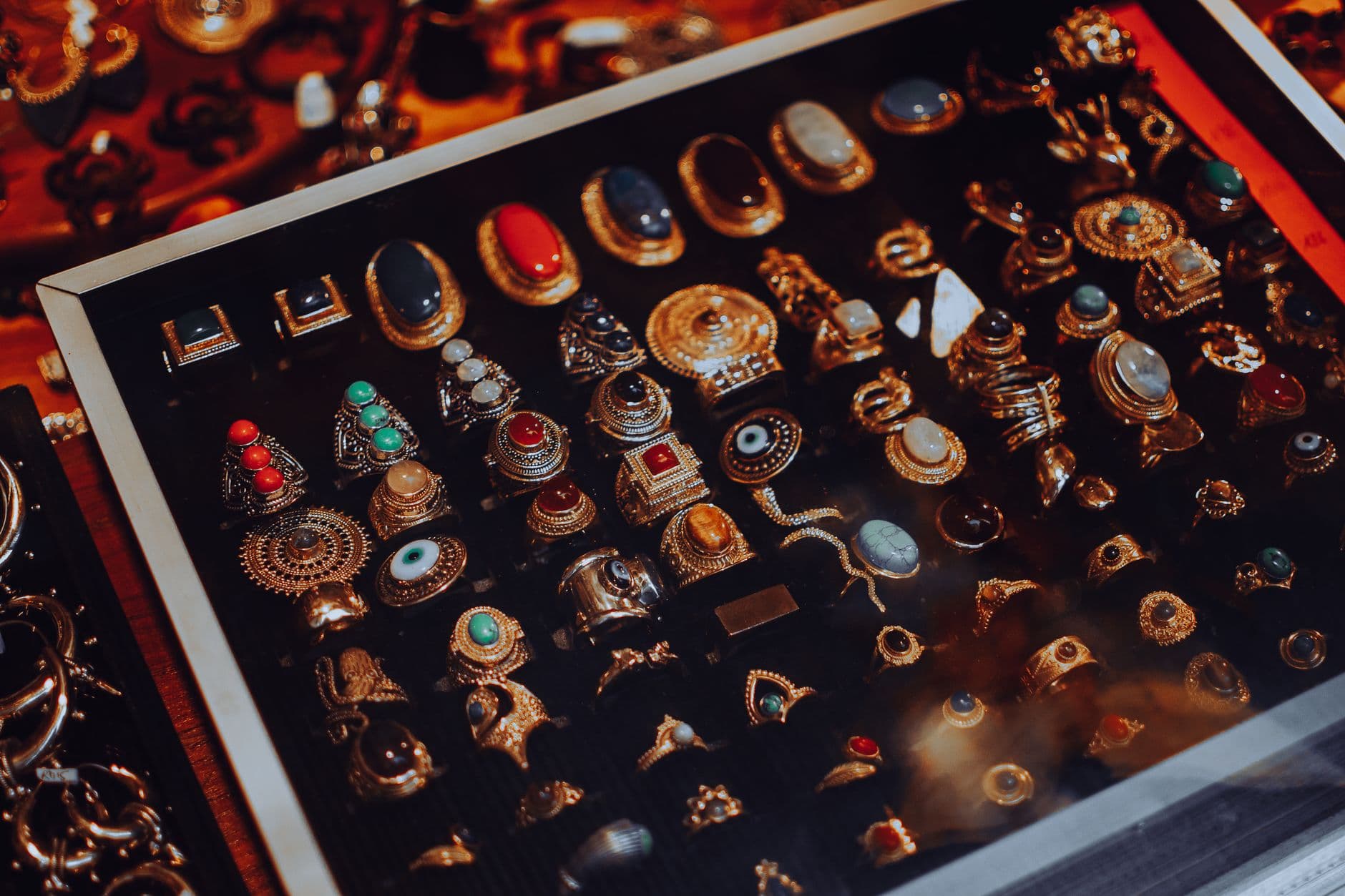
Pomellato’s campaign imagery from the 1970s through the 1990s is part of what made the house legible, and that visual history should not be treated as a supplement to the jewelry. In Pomellato’s case, image helped create identity, and identity now helps create collectible value. The retrospective’s strongest contribution is that it places jewels and photographs in the same frame, showing how the brand built a coherent world around women who wore jewelry as self-definition.
That is where Pomellato differs from houses whose vintage markets rely mainly on age, rarity, or gemstone spectacle. Pomellato’s value proposition has always been more editorial than aristocratic: modern, independent, and made for a client who wants the jewel to look like part of her life rather than a relic from someone else’s. That clarity of purpose is exactly what collectors often chase later, once a brand’s early pieces begin to feel culturally prescient.
The significance of the Palais de Tokyo show
The setting deepens the argument. The Palais de Tokyo is one of Paris’s premier contemporary art centers, and placing Pomellato there signals that the house is being read not just as a luxury jeweler, but as a design force with a serious visual vocabulary. For a brand founded in Milan in 1967 and now firmly part of the global luxury conversation, this first Paris exhibition is less a victory lap than a marker of maturity.
For vintage jewelry readers, the takeaway is simple: Pomellato is entering the phase where its early decades stop feeling merely recent and start feeling collectible. The house’s signatures, especially its color, its prêt-à-porter instinct, its modern womanhood, and its photographic archive, are the traits most likely to anchor future demand. In other words, the retrospective is not only celebrating heritage. It is quietly helping define the next generation of what collectors will call vintage.
This article was produced by Prism’s automated news system from verified source data, official records, and press releases, then run through automated quality and moderation checks before publishing. The system is built and supervised by the people who set the standards it runs under. Read our full AI policy.
Know something we missed? Have a correction or additional information?
Submit a Tip