Queen of Kalahari, from Botswana discovery to Chopard high jewelry
From a 341.9-carat discovery in Botswana to Beyoncé on the Met Gala carpet, the Queen of Kalahari shows how origin, cutting, and narrative turn a diamond into cultural currency.
From mine find to named icon
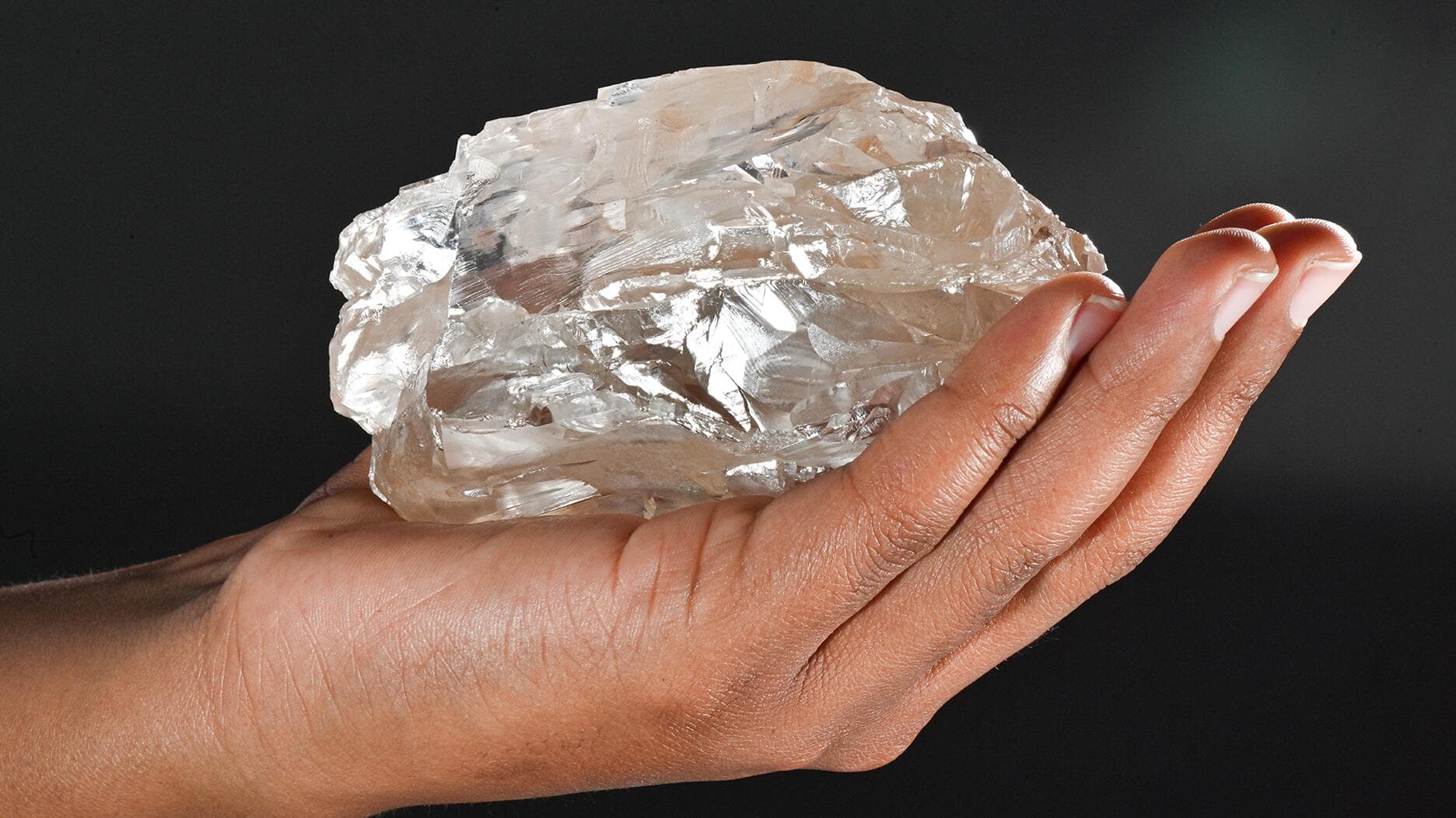
The Queen of Kalahari begins as a geology story and ends as a brand story. Lucara Diamond Corp. recovered the 341.9-carat gem-quality diamond at the Karowe Mine in Botswana on April 20, 2015, and described it as a Type IIa stone with exceptional colour and clarity. That combination matters: in the world of important diamonds, rarity is never just about size. It is about the chemistry of the crystal, the sharpness of the faceting potential, and the way a stone behaves once it leaves the ground.
Botswana gives that narrative extra force. The country keeps 40% of its land under conservation and is often called the Gem of Africa, a reminder that the Queen of Kalahari did not emerge from an abstract supply chain but from a place with a strong, legible identity. The stone was found while processing fragmental kimberlite at the central and south lobe interface, a technical detail that may sound arcane but tells you this was not a random miracle. It was the result of modern diamond recovery systems working at the edge of what is possible, alongside two other diamonds above 100 carats and a 7.8-carat stone found during testing of Lucara’s new XRT recovery machines.
Why the rough mattered before the jewelry ever existed
The Queen of Kalahari was special before a single polished facet was cut. Natural Diamonds identified it as D color and F, or Flawless, clarity, which places the stone in the rarest conversation even before branding enters the picture. A diamond like this can survive multiple interpretations because its underlying material is unusually strong: very white, very pure, and large enough to support several major cuts rather than being forced into one compromise.
That is where provenance becomes more than romance. For collectors, a famous stone carries value not only because it is large, but because its story is coherent from mine to finished jewel. If the discovery site, recovery method, cutting decisions, and final presentation all reinforce one another, the stone becomes easier to read, and more persuasive to buy into culturally. The Queen of Kalahari is a case study in how the market rewards a diamond that can be explained as elegantly as it can be worn.
Caroline Scheufele’s eye for a transformable jewel
Chopard’s Caroline Scheufele named the rough The Queen of Kalahari, and her reaction shaped the entire afterlife of the stone. She traveled to Karowe to see it herself after sensing its exceptional beauty and purity, later describing the encounter as “love at first sight.” That instinct became a design brief: do not simply set the diamond, but let it multiply into a suite of stones with different personalities.
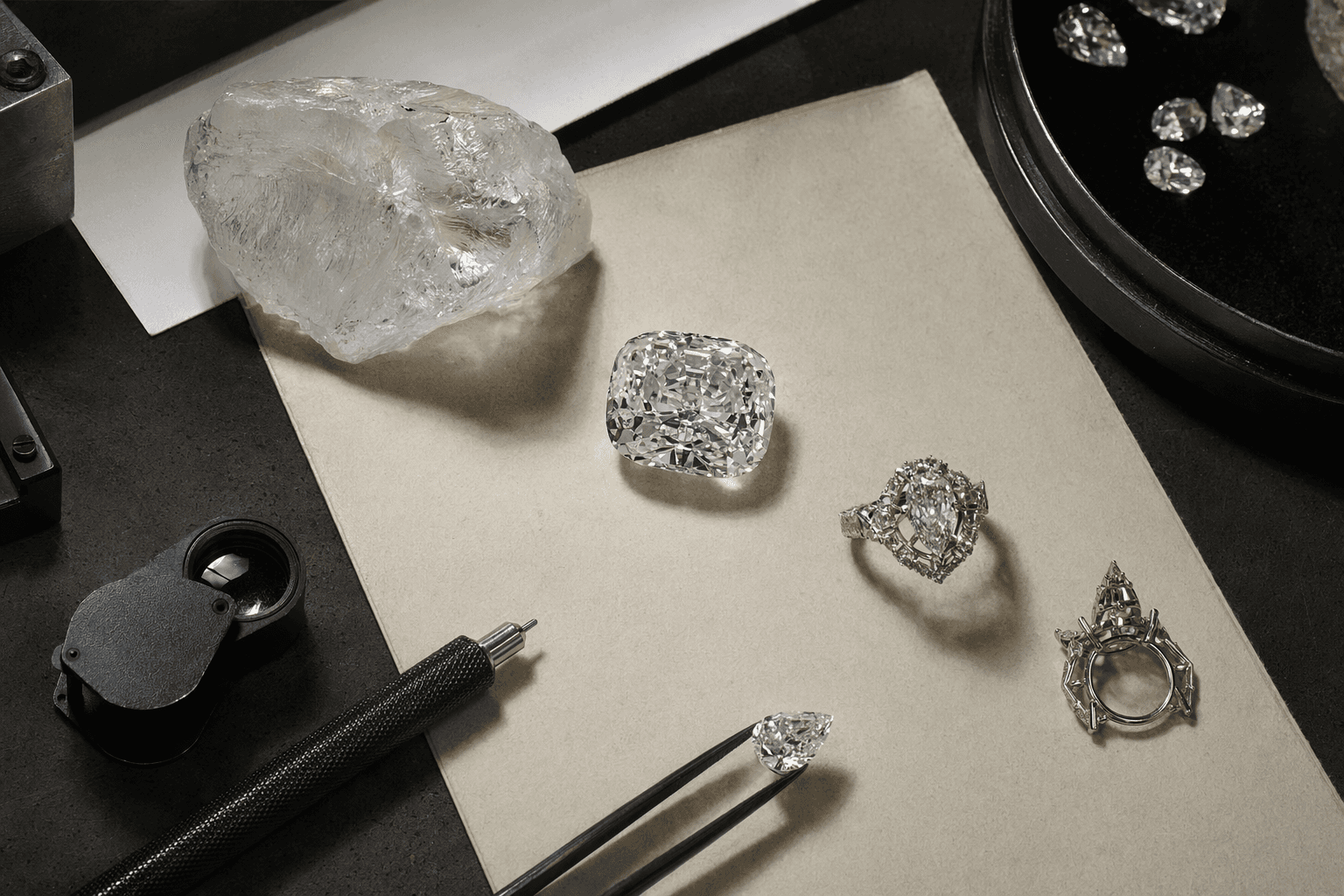
The rough yielded 23 polished diamonds, including five stones above 20 carats, which Chopard then turned into the Garden of Kalahari high-jewelry set. The main stones include a 50-carat brilliant cut, a 26-carat heart shape, a 25-carat pear shape, a 21-carat emerald cut, and a 20-carat cushion cut. The pear-shaped and heart-shaped stones can be detached and worn with the earrings, which is exactly the sort of transformable architecture serious collectors notice. It is not only decorative flexibility; it is evidence of disciplined planning at the cutting table, where every carat has to earn its place.
The Paris unveiling turned a diamond into theater
The Garden of Kalahari was unveiled in Paris at Théâtre du Châtelet on January 21, 2017, during Haute Couture Week, and the presentation made clear that Chopard understands high jewelry as performance art as much as product. Dame Shirley Bassey sang “Diamonds Are Forever” while wearing the transformable necklace, a choice that tied the collection to cinema, glamour, and a very specific idea of diamond mythology. The unveiling was also documented in a 55-minute film by Alexis Veller, extending the jewel’s life beyond the salon and into a cinematic register.
This is where storytelling becomes part of the stone’s value. A great diamond can stand on mineral facts alone, but a memorable diamond acquires a second life when a maison gives it a visual and cultural script. Chopard did not simply present polished stones in a tray. It staged the Queen of Kalahari as a spectacle of transformation, using music, film, and haute couture timing to teach the audience how to desire it.
Why celebrity placement changes perception, not just visibility
Chopard has long used the Cannes red carpet as a runway for its high jewelry. Forbes reported that the maison began unveiling annual Cannes Red Carpet collections in 2007, starting with 60 jewels for the festival’s 60th anniversary and reaching 70 pieces for Cannes’ 70th anniversary in 2017. That matters because Cannes is not just a publicity platform. It is a repeating stage where a house can establish continuity, making each new jewel feel like part of a known lineage rather than a one-off display.
The Queen of Kalahari continued that life off the show floor and onto major carpets, including a 2026 Met Gala appearance in which Beyoncé wore Chopard’s Queen of Kalahari necklace. That kind of placement does more than generate images. It repositions the stone in the public imagination, shifting it from exceptional rough to recognizable cultural object. Once a diamond enters that orbit, its appeal is no longer limited to gemological perfection. It also carries recall value, the kind that collectors and clients remember when they compare famous stones.
How to read a famous diamond like a collector
If you want to understand why the Queen of Kalahari resonates, read it in layers.
- Start with origin. Botswana and Karowe give the stone geographic credibility, and Botswana’s conservation profile adds a modern sense of place.
- Then inspect the rough. A 341.9-carat Type IIa diamond with D color and F clarity gives cutters remarkable freedom without sacrificing purity.
- Study the cut strategy. The transition from one rough to 23 polished stones, including five above 20 carats, shows deliberate value engineering rather than simple yield.
- Look for transformability. Detachable pear and heart stones tell you the jewel was designed for wear, not only display.
- Follow the narrative. Paris, Cannes, the film, and later red-carpet appearances each add a new layer of meaning.
The Queen of Kalahari is persuasive because every stage of its journey reinforces the one before it. Discovery made it rare, cutting made it legible, and storytelling made it unforgettable. That is the formula behind many of the world’s most famous diamonds, and it is why provenance, when handled with real discipline, can be as powerful as carat weight itself.
Know something we missed? Have a correction or additional information?
Submit a Tip