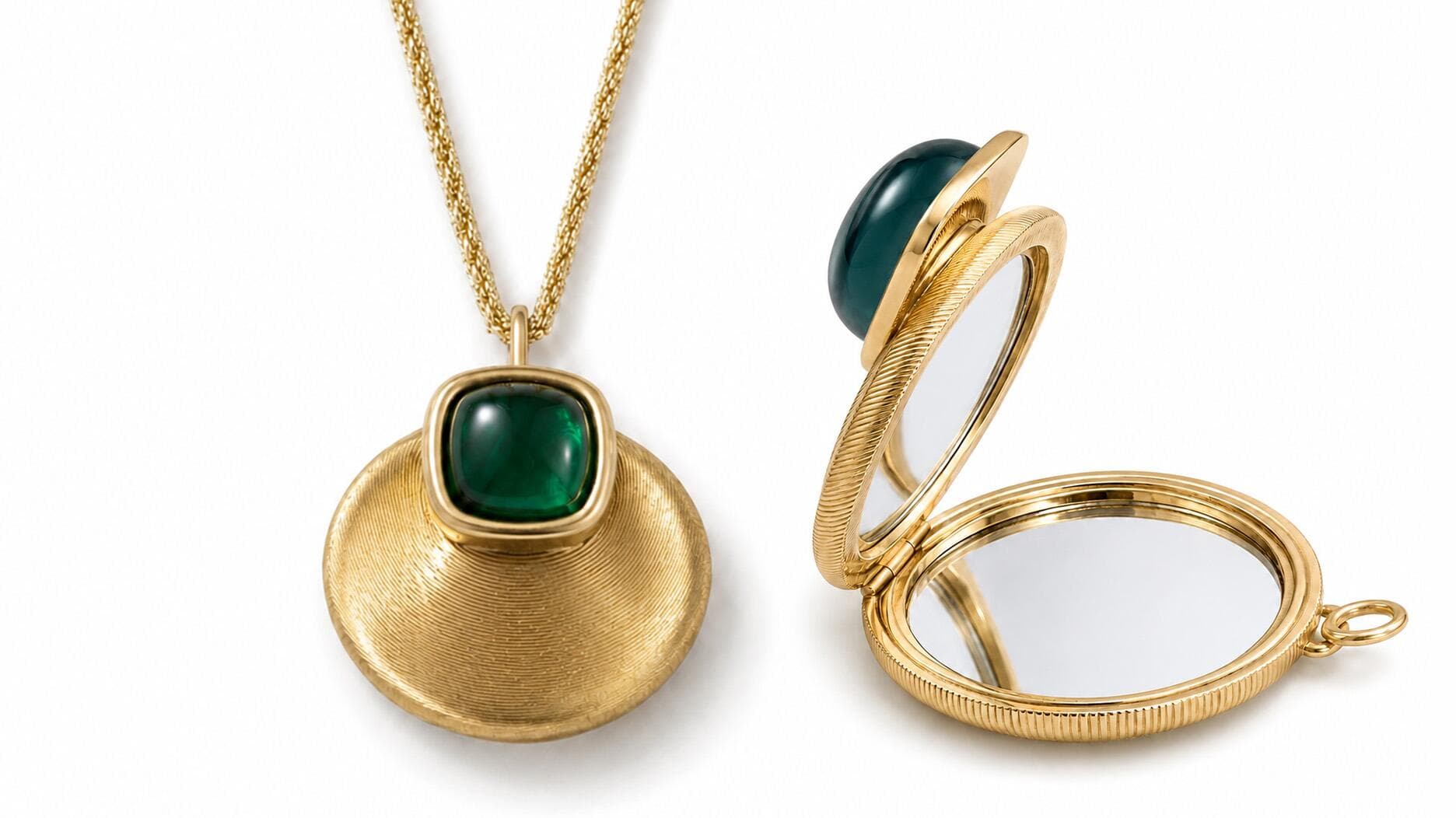
Restoring Antique Jewelry: Key Technical and Ethical Decisions Collectors Face
The line between saving an antique piece and destroying its value is finer than most collectors realize. Here's how to navigate every decision.
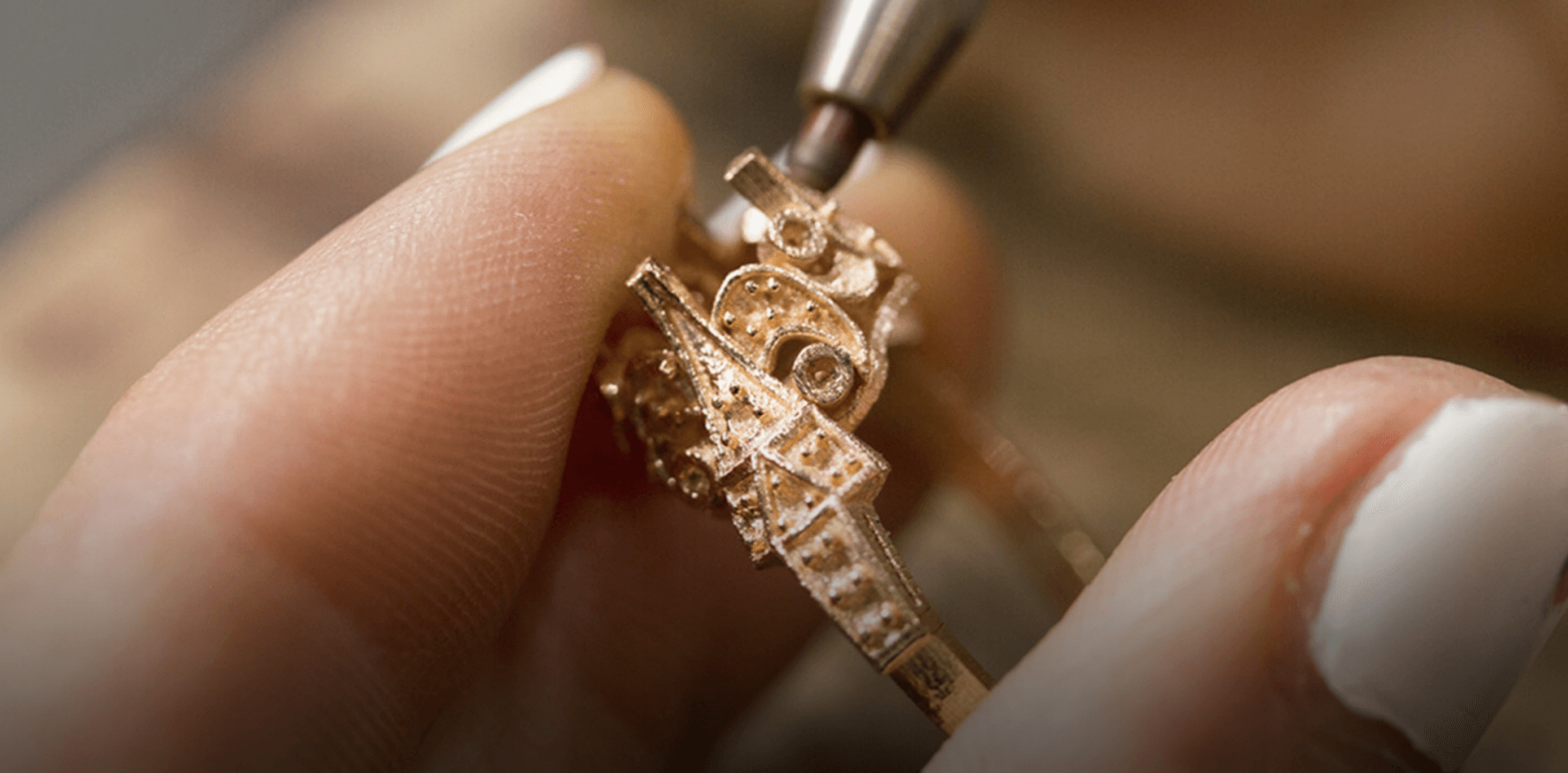
Pick up an antique ring or a brooch pulled from an estate sale, and you're holding a small archive. Every worn prong, every dimpled surface, every softened engraving is evidence of the life the piece has led. The question of whether to restore it, repair it, leave it alone, or transform it entirely is one of the most consequential decisions a collector can face — and one that far too many people make without understanding the distinctions involved.
Conservation, Repair, and Restoration: The Terms Are Not Interchangeable
The vocabulary here matters enormously. Conservation is about prevention: protecting an object from future damage and extending its life. Restoration, meanwhile, involves taking corrective measures and addressing existing issues to return a work to its intended appearance. Repair occupies a middle ground. When jewelry is repaired, original broken parts are put back together — a cracked earring post, bent stone claws, a clasp that no longer functions. The goldsmith works with the original componentry.
Restoration goes further. It may involve repairs, but the requirements extend beyond them; restoration is generally warranted when the condition of the piece is irreparable, meaning the damage is too extensive for a simple fix. Then there is renovation, a term that demands particular caution. Renovation involves making something new or restoring its vigor and applies to jewelry when an old piece is changed to create a new one: converting tiaras to necklaces or brooches, making stickpin heads into slides for slide bracelets, altering earrings from wire backs to screw backs. Renovations often result in a drastic, if not total, reduction in the value of antique jewelry to collectors.
The Central Ethical Question: How Much Is Too Much?
Preservation ethics emphasize minimal intervention, reversibility of treatments, and thorough documentation of all actions taken. This approach proceeds from the recognition that each intervention creates the potential for unintended consequences and that future generations may develop better techniques. The American Institute for Conservation's Code of Ethics frames this as a principle of "do no harm," prioritizing long-term survival of artifacts over aesthetic considerations.
In the jewelry world, the same tension plays out at the bench. "The art is knowing how far to go," remarks Dr. Tehmina Goskar, museum curator, material culture and collections specialist and research fellow at UAL. Like buildings in Greece and vases in the V&A museum, vintage and antique jewels are storytelling relics, and the industry should have similar conversations about its approaches to reviving them. The Venice Charter of 1964, the foundational document of architectural conservation, advocates for clear differentiation between the original and the restored, to preserve authenticity and avoid historical confusion. No equivalent binding standard exists for jewelry, which means the current lack of universal guidelines leaves it up to any given jeweler to decide where on the sympathetic-to-disruptive spectrum their work falls.
What Collectors Stand to Lose
Patina is not a flaw. The patinas and signs of age found on antiques are one of the very reasons collectors seek them; they reflect a connection to the past. Patinas can be developed artificially to replicate those produced naturally through time, but they are never the same — and any work done on an antique can destroy something of value that is of a highly subjective nature.
This is especially pointed with certain categories. Many collectors prefer estate jewelry in its original condition, including the patina of age. Victorian mourning jewelry, for example, often loses value if over-cleaned or "modernized," as the signs of wear tell a story that collectors find appealing. Signed pieces face a particularly high bar: any restoration that permanently alters a piece's original design should be carefully considered, as resizing an antique ring or resetting stones can decrease value for serious collectors who prize authenticity.
The material complexity of antique jewelry compounds the risk. Some esoteric materials found in antique jewelry have little intrinsic value but are very difficult to replace, and some gemstones are cut in ways that are no longer widely available and must be custom-cut at great expense. A mine-cut diamond or a natural pearl drilled in a period-specific manner cannot simply be sourced from a supplier's catalogue.
When Restoration Is the Right Call
None of this argues for leaving every piece untouched. Objects in stable condition may need only preservation, while those actively deteriorating or structurally compromised might require more interventive restoration to survive. Poor or excessive intervention almost always reduces value, but if a significant object truly needs work, thoughtful, professional restoration almost always adds value by stabilizing the piece and preventing future issues.
Pieces over 100 years old often have unique construction and gemstone cuts that require expert knowledge. Common antique jewelry issues include missing stones, thin prongs, and discolored metals, all of which can be repaired or restored. For heirloom pieces intended to be worn and passed down, addressing structural issues such as loose stones, worn prongs, or damaged clasps is important, as these repairs preserve the jewelry while making it functional for modern life.
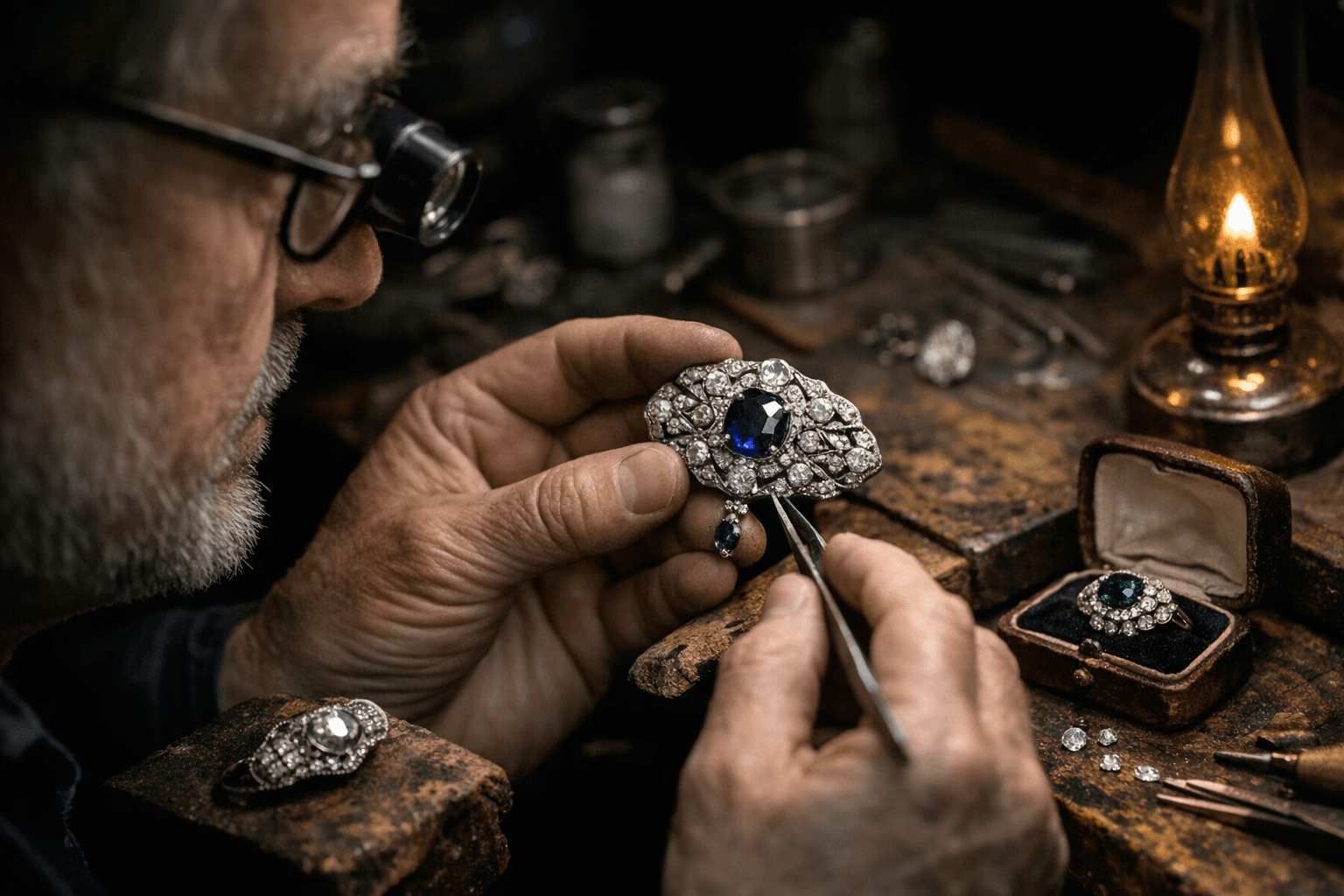
Stone replacement requires particular gemological care. Missing or damaged stones can significantly impact the beauty and value of heirloom jewelry. Gemologists source period-appropriate replacements that match the color, cut, and quality of the original stones, then carefully reset loose stones and ensure all settings are secure. For high-value items, authentic vintage or period-appropriate stones are the correct choice.
Metal-specific considerations also apply. Many vintage pieces are made in platinum, and platinum repairs require specialized equipment, training, and years of practice. Antique filigree and enamel work demand an especially gentle hand: enamel and filigree should not be submerged in water; a soft cloth dampened with water is the appropriate cleaning method. Meanwhile, when working on a piece set with emeralds, extra care is warranted because emeralds are more susceptible to damage than harder stones like diamonds; ultrasonic cleaners should be avoided in favor of soft brushes and mild soap solutions.
Assessing the Piece Before Any Decision
The first step in a restoration assessment is to determine what is at fault. Most jewelers specializing in vintage jewelry repair take detailed notes and photographs to document the initial condition of the piece before restoration begins. This documentation serves both practical and ethical purposes: it creates a record of the piece's state prior to intervention, which is invaluable if questions of authenticity or provenance arise later.
Ask yourself the fundamental questions before commissioning any work. Is this piece intended for regular wear, or is it a collection object? Does it carry monetary value, sentimental value, or both? If the piece is extremely valuable, the goal is generally a solution that will be in keeping with the style and era. For more sentimentally driven repairs, exact replication may be less critical if the cost is disproportionate to the piece's value. Restoration is most defensible when abundant documentation exists about an object's original appearance. Without such evidence, preservation generally represents the more ethically sound choice.
Choosing a Restorer
The skill gap in this specialty is significant. Work tends to ebb and flow in trade shops, and when specialists are overburdened, jewelry requiring their skill might be given to someone less experienced. Because repair does not generate as much revenue as manufacturing, it is often relegated to a lower level of importance in the shop, and many trade shops have been conditioned to take a quick-fix or patchwork approach.
If the object is important and genuinely needs work, restoration is usually worth it — but it must be done by a true specialist. This is an area where expertise matters, and cutting corners almost always costs more in the end. When vetting a restorer, look for credentials that carry real weight. A Master Jeweler title signifies extensive experience and mastery of techniques, often with over 20 years of experience. A GIA Certified Gemologist has expert knowledge in evaluating gemstones, which is critical for accurate stone replacement and appraisal. Affiliation with organizations like Jewelers of America indicates a commitment to professional standards.
A quality jeweler will provide a clear explanation of the work involved, estimated costs, and potential challenges. You should feel comfortable asking questions and confident that the jeweler has the piece's best interest at heart. Transparency builds trust, and a genuine heirloom deserves nothing less.
The Value of Doing Less
The global jewelry repair market was valued at $10.5 billion in 2022 and is projected to reach $16.8 billion by 2032, which signals just how many pieces are in circulation and in need of attention. But market size does not imply that every piece needs a full intervention. While cleaning and repairing are important, it is equally crucial to preserve the unique patina and character that come with age; a sound restoration philosophy addresses structural issues and damage while maintaining the piece's authentic antique appearance.
As a collector, restoration offers the chance to fine-tune and maximize the pieces in a collection. And restoration provides everyone with a chance to see pieces as they were originally intended to look, thereby coming to appreciate them more fully. The operative word is "intended." The best restorations are those that return a piece to its own history, not to a generic ideal of newness. A 1913 platinum filigree ring with a century of wear is not improved by erasing that century. It is improved by being made stable, safe, and legible — so that the next person who holds it can read the same small archive you found when you first picked it up.
This article was produced by Prism’s automated news system from verified source data, official records, and press releases, then run through automated quality and moderation checks before publishing. The system is built and supervised by the people who set the standards it runs under. Read our full AI policy.
Did this article answer your question?