The Odyssey could put ancient-inspired jewelry in the spotlight
A summer epic about Odysseus could push laurel wreaths, intaglios, and coin pendants back into view, but the best buys will be the ones with real goldsmithing behind the myth.

Christopher Nolan’s The Odyssey opens on July 17, 2026, with Matt Damon as Odysseus.
Why ancient motifs have a real chance of catching on
The Odyssey could be a summer blockbuster with the power to set a trend in very vintage jewelry. Pop culture rarely creates antique demand out of thin air, but it can sharpen the eye: once viewers see a bronze-age hero in a laurel crown, a sealed ring, or a pendant shaped like a vessel, those forms stop reading as museum jargon and start reading as personal adornment. The film’s costume debate only strengthens that effect. Online criticism focused on armor and costume choices that some viewers found historically off for a Mycenaean setting, while Nolan defended the look as research-driven speculation, citing Mycenaean blackened bronze and the challenge of imagining the ancient past.
The line is between “period-evoking” and “period-accurate.” A piece can feel antique without pretending to be excavated, and the market is full of that middle ground: jewelry that borrows classical vocabulary but translates it for modern wear.
The motifs most likely to move from screen to market
Start with wreaths and diadems, because that is where the classical eye naturally goes. Hellenistic jewelry included earrings, necklaces, wreaths, diadems, and elaborate hair ornaments, and the Met’s ca. 330-300 BCE pediment-shaped gold diadem is a textbook example of how ancient goldsmiths built drama into a headpiece: floral repoussé, a central scene with Dionysos and Ariadne, and matching earrings and necklace pieces that feel coordinated rather than merely decorative. That is the antique precedent for anything laurel-like in the market, whether it arrives as a headband, a tiara, or a leaf-linked collar.
Then come intaglios and signets, the most wearable of the ancient references. A British Museum gold signet ring has an oval bezel set with a sard intaglio of Hercules’ head, and another shows Hercules seizing the Cretan bull, both of which show why engraved stones still feel authoritative on the hand. An intaglio reads differently from a printed emblem because the image is cut into the stone itself, then framed by the ring’s bezel, so the object carries both authority and tactility. In modern terms, that translates to signet rings, engraved medallions, and gemstone portraits that feel collected rather than mass-produced.
Amphora shapes and granulation are the next forms to watch. A British Museum pair of Hellenistic earrings in the form of lynx heads and amphoras shows the old-world appeal of tiny sculptural drops, built from thin sheet gold, chased detail, twisted wire, and granulated surfaces, with garnet and green glass accents giving the pieces depth. That same kind of construction is what separates an object with real ancient resonance from a costume jewel that merely mimics the outline of a vessel.
Coin jewelry belongs in this conversation too. Coin jewelry dates to the Hellenistic period, and coins were worn predominantly as pendants, but also worked into bracelets, belts, and rings.
What separates antique, archaeological revival, and costume
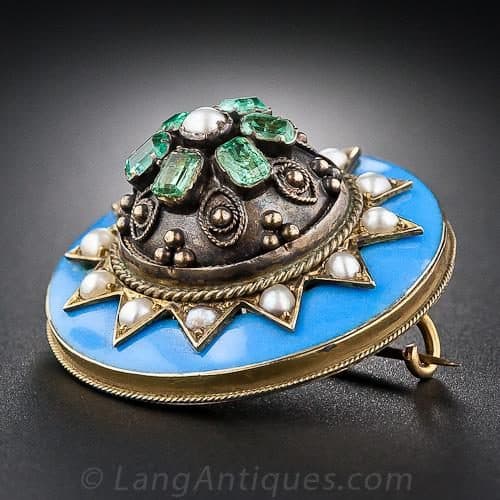
The cleanest distinction is in the workmanship. The Met’s archaeological revival necklace by Castellani draws on Etruscan, Roman, Byzantine, and Medieval styles while seeking out ancient techniques as well as motifs for reinterpretation. The Met’s Etruscan revival pendant, probably by Eugène Fontenay, goes further into the technical register, with matte enamel, rose-cut diamonds, fine granulation, and beading that make the piece feel learned rather than theatrical. Those are the hallmarks collectors should look for when a jewel claims ancient inspiration: the surfaces should be worked, not merely textured.
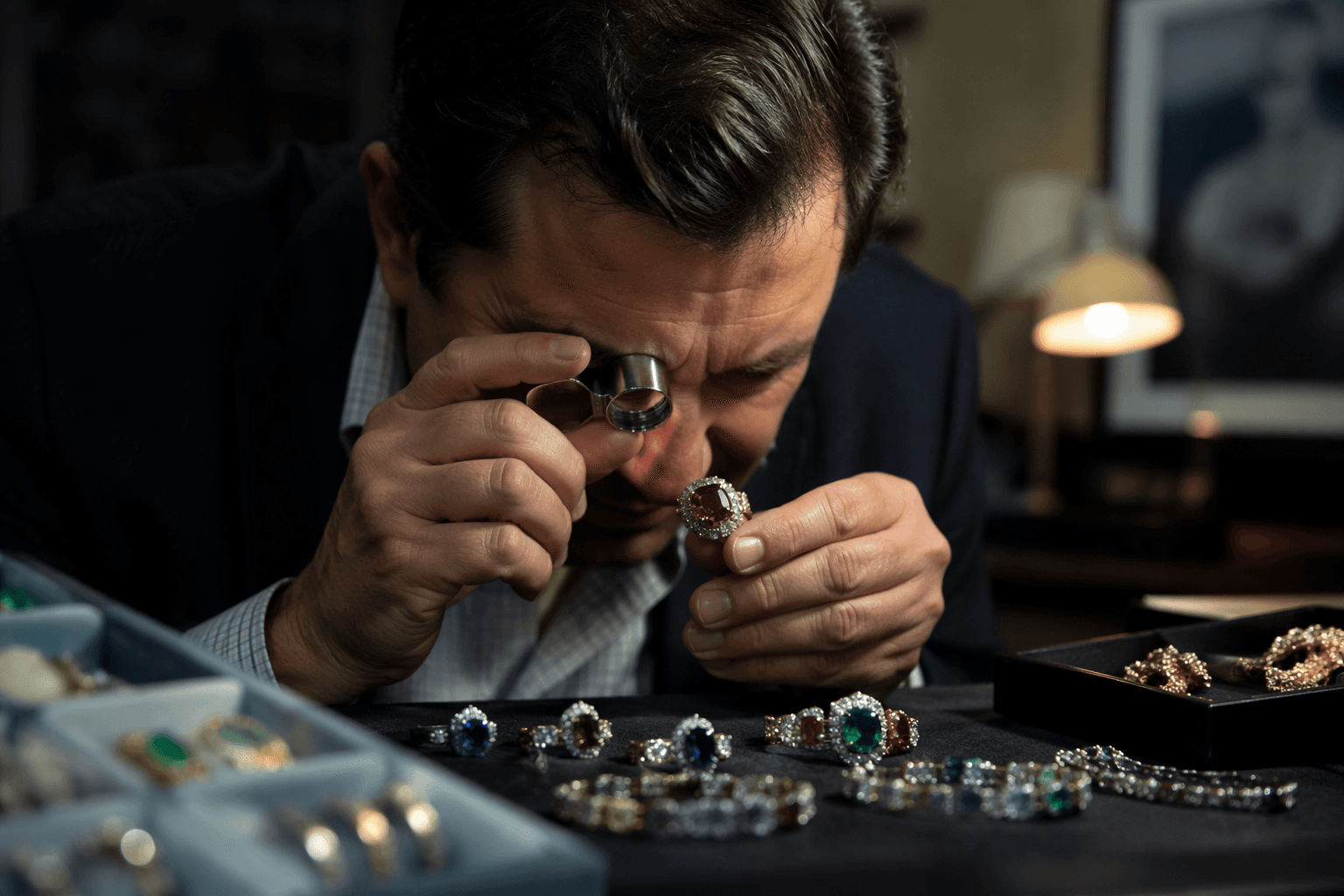
That is where costume jewelry usually gives itself away. A modern imitation may borrow a laurel silhouette, an amphora drop, or a coin face, but if the details are flattened into casting seams or graphic embossing, the piece is all reference and little craft. The antique and revival examples from the Met and the British Museum show a different standard: repoussé, chasing, granulation, engraved stones, and articulated metal parts that catch light the way a screen prop seldom can.
How to buy the look with a collector’s eye
- Favor signet rings with a true engraved bezel or intaglio, not a printed motif. The British Museum’s Hercules examples show how much authority a carved stone in a gold setting can carry.
- Look closely at the surface. Repoussé, chasing, granulation, and beading are the craft clues that place a jewel in the antique or revival conversation, as seen in the Met diadem and the British Museum’s amphora earrings.
- Coin jewelry stretches from the Hellenistic period through Byzantium, and pendants are one of its most durable forms.
- If you want a modern version of the mood, National Jeweler’s 2026 trend coverage includes personalization, colored gemstones, artisan finishes, mixed metals, charms, white metals, and turquoise.
This article was produced by Prism’s automated news system from verified source data, official records, and press releases, then run through automated quality and moderation checks before publishing. The system is built and supervised by the people who set the standards it runs under. Read our full AI policy.
Did this article answer your question?