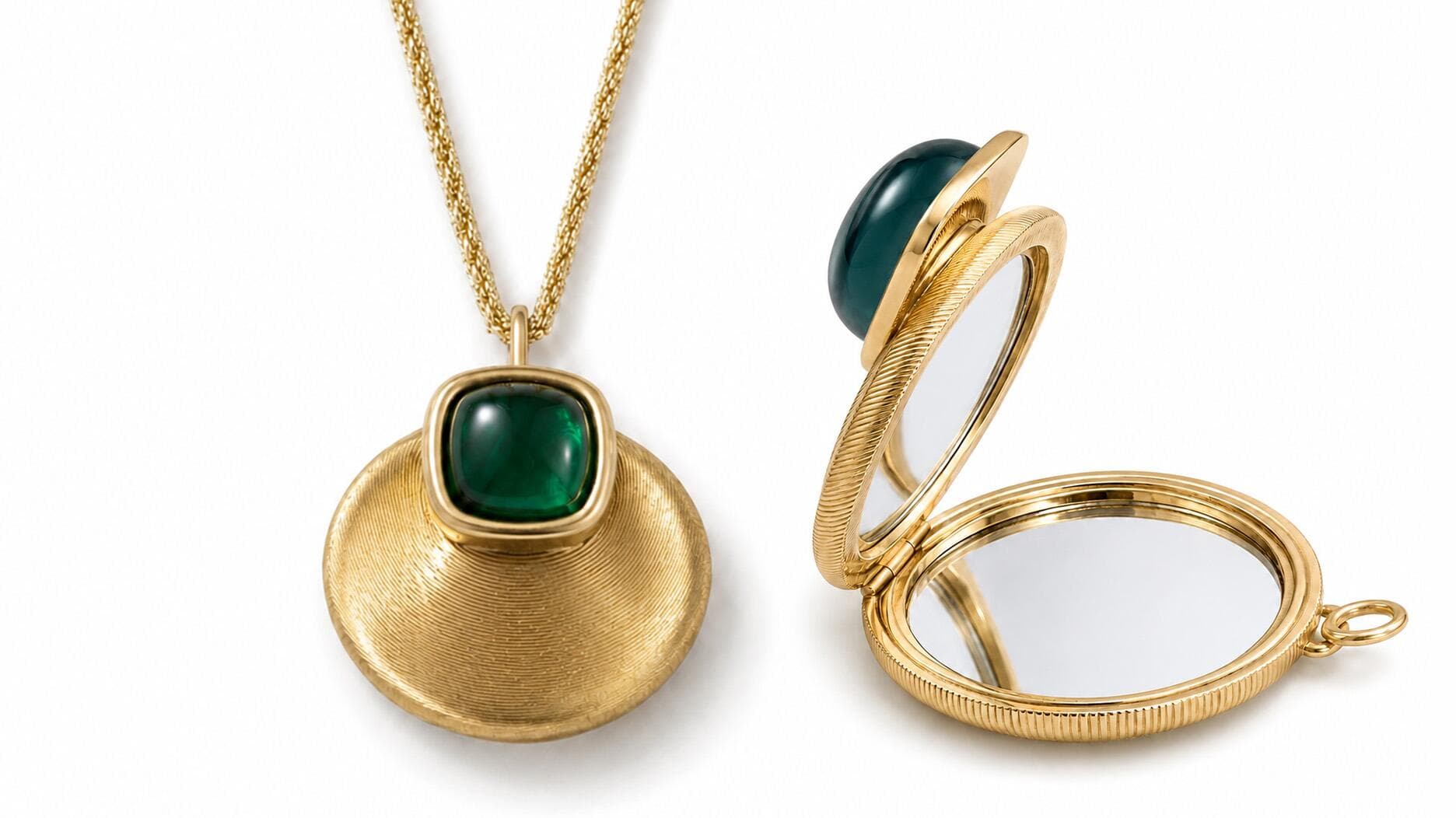
The Velvet Echo Brings Curated Vintage Jewelry and Charity to Downtown Denton
Stephanie Miller opened The Velvet Echo in downtown Denton on March 20, pairing estate-sourced vintage jewelry with a mission to support impoverished women.
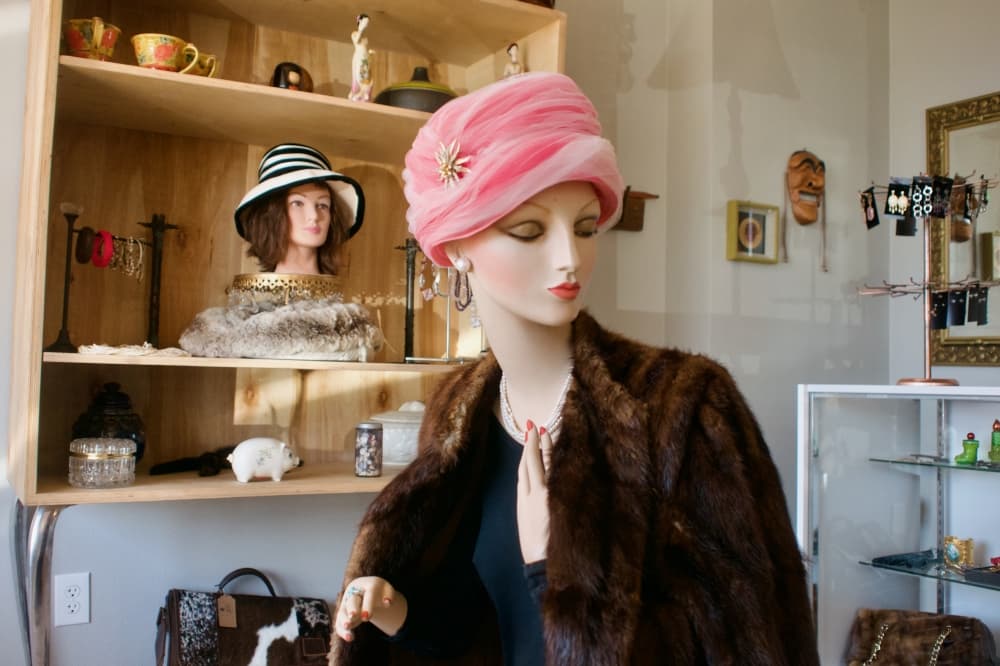
Pick up a brooch pulled from an estate sale, or a gold chain that migrated from a stranger's jewelry box into a thrift shop bin, and you're holding a small archive. The question is whether you know how to read it, and whether the shop selling it to you does.
Stephanie Miller is counting on both. On March 20, Miller opened The Velvet Echo in downtown Denton, a curated vintage boutique stocking vintage furs, designer handbags, jewelry, women's fashion, and home décor. The inventory arrives through a sourcing pipeline that should sound familiar to any serious vintage jewelry hunter: estate sales and thrift shops, hand-selected and edited before anything reaches the display case. "Anything you're looking for, you can find second-hand," Miller said.
Miller is not new to the world of aesthetics or curation. Before The Velvet Echo, she managed a MAC Cosmetics counter and worked as a makeup artist with a clientele that included country musicians Miranda Lambert and Kacey Musgraves. The background in reading what works on a person — what silhouette, what finish, what weight — translates directly to vintage jewelry buying. Both disciplines require a trained eye for quality and the confidence to say, with authority, this is worth it. Miller also opened the shop with an environmental mission: to reduce clothing waste by giving pre-owned pieces a second life, a principle that applies to every gold bangle and beaded necklace in her cases as much as it does to the clothing racks. A portion of proceeds will go toward charities that assist impoverished women, a commitment built into the business from the start rather than grafted on later. "Already, Denton has been so loving and we plan to be here a long time," she said.
Denton's vintage market has historically leaned toward clothing and furniture. The addition of a carefully curated jewelry offering, sourced directly from estates, adds a dimension the local scene has been missing. But The Velvet Echo also serves as a useful model for how to evaluate any small vintage jewelry shop, particularly in a market where the difference between a genuine find and an expensive mistake can come down to a few questions you either thought to ask or didn't.
Estate-sale sourcing is the gold standard for vintage jewelry supply, and for good reason. When a shop acquires directly from estates, pieces are more likely to arrive with coherent histories: family jewelry accumulated across decades, often with legible hallmarks, original boxes, or at minimum a generational provenance that helps with dating and authentication. Thrift-shop sourcing is less predictable but not without value; the best vintage dealers comb thrift inventories constantly, pulling pieces that were donated without the donor understanding what they had. The skill is in knowing the difference between a gold-filled chain and a solid gold one before a price tag goes on.
When you walk into The Velvet Echo or any comparable shop, start with how the jewelry is displayed. Pieces arranged haphazardly under poor lighting with no labeling suggest a shop making no claims it can substantiate. Jewelry laid out in organized cases, labeled with at minimum a note on metal content and approximate era, signals a dealer thinking carefully about what they're selling. That doesn't mean every piece will be correctly identified; even experienced dealers misattribute. But it signals a standard of care worth trusting.
Gold hallmarks are the starting point for any piece in the case. In the United States, gold jewelry carries a karat mark: 10K, 14K, or 18K. European pieces use millesimal fineness instead: 750 for 18-karat gold, 585 for 14-karat, 417 for 10-karat, often alongside assay office marks that can place a piece by country and decade. A dealer who can read these marks and explain what they mean is a dealer worth buying from. Gold that arrives unsigned, or marked only with a maker's stamp and no metal content, should have been tested before it hit the floor. A responsible shop will have done this with an acid test kit or an electronic gold tester, or will do it on request.
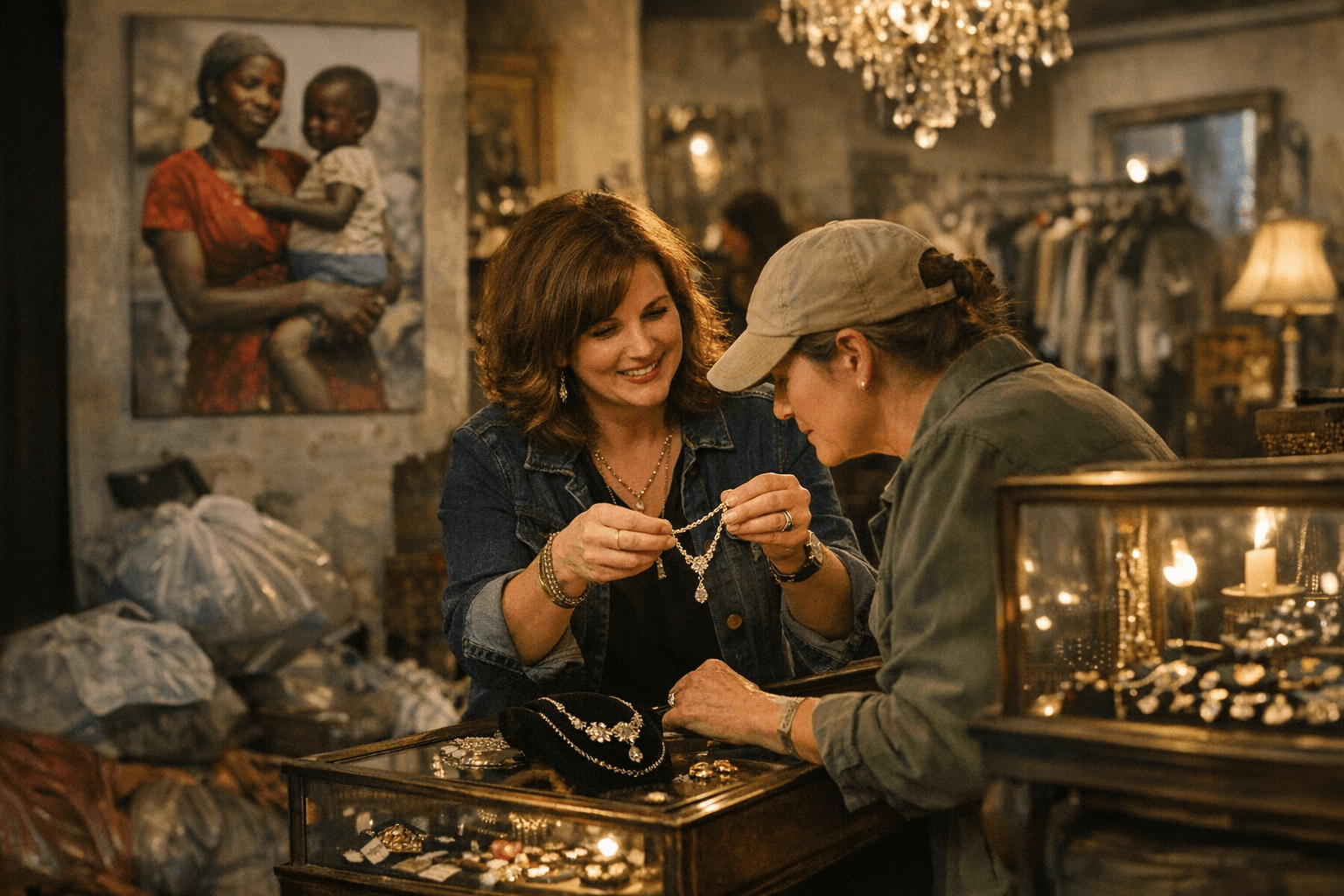
Unsigned designer work is the other great frontier of the Denton vintage jewelry hunt. Many mid-century American pieces were produced by small workshops supplying larger retailers; the jewelry was often excellent, but it was never signed by a recognizable name. Other pieces were made by designers whose signatures weren't well-documented until the collector market caught up with their output decades later. A Miriam Haskell necklace with a missing bead and a broken clasp might come in without its signature tag. A Hattie Carnegie brooch might have lost its cartouche at any point in fifty years of circulation. The shape of the metalwork, the style of the stone cuts, the construction of the clasp: these are the details that help identify unsigned work and, in the hands of a knowledgeable dealer, can justify a price significantly above what an anonymous piece commands in a bulk lot.
Period details in the display case reward close looking. A box clasp on a necklace points to mid-century or earlier. Lobster-claw clasps are largely a post-1970s development. Prong settings with sharp, handworked tips suggest pre-machine-set eras; mechanically uniform prongs indicate mass production. Bezel settings appear across every period but with telling stylistic differences: the low, flush bezels of Art Deco pieces, the raised architectural bezels of Arts and Crafts work, the heavy and sometimes irregular bezels of Modernist studio jewelry from the 1950s and 1960s. These are not specialized credentials. They are the vocabulary of anyone who has spent time looking closely at jewelry across eras, and a dealer who can speak this language is one worth returning to.
Before you buy from any vintage jewelry shop, in Denton or elsewhere, these six questions are worth bringing with you. Where does the jewelry inventory come from, and do you track which pieces came from which estate or source? This tells you whether sourcing is genuinely curated or purchased in lots without review. Have any of these pieces been cleaned or repaired, and if so, by whom? Improper cleaning, such as running a porous stone like turquoise or opal through an ultrasonic bath, can cause damage that isn't immediately visible. What is the return policy on vintage jewelry if an independent appraisal finds that the metal or stone content differs from what is described? A confident dealer operating in good faith will stand behind their descriptions. Do you test gold and silver in-house before pricing, or can you walk me through the hallmarks on this piece? If unsigned, how are you arriving at the attribution you've given it? And finally: what specific details, whether the clasp construction, the stone cuts, or the setting style, tell you this piece is from the era you're describing?
A dealer who fields these questions thoughtfully, even without a perfect answer to every one, is a dealer working in good faith. One who deflects is telling you something equally useful.
Miller's decision to build The Velvet Echo on estate-sale sourcing, and to bring to it a curatorial sensibility shaped by years of professional work in aesthetics, suggests a shop designed for the long game. Whether the find is a signed Trifari clip-on, an unsigned mid-century gold charm, or a Georgian mourning brooch with a provenance no one has thought to reconstruct, downtown Denton now has a new place to begin looking.
This article was produced by Prism’s automated news system from verified source data, official records, and press releases, then run through automated quality and moderation checks before publishing. The system is built and supervised by the people who set the standards it runs under. Read our full AI policy.
Did this article answer your question?