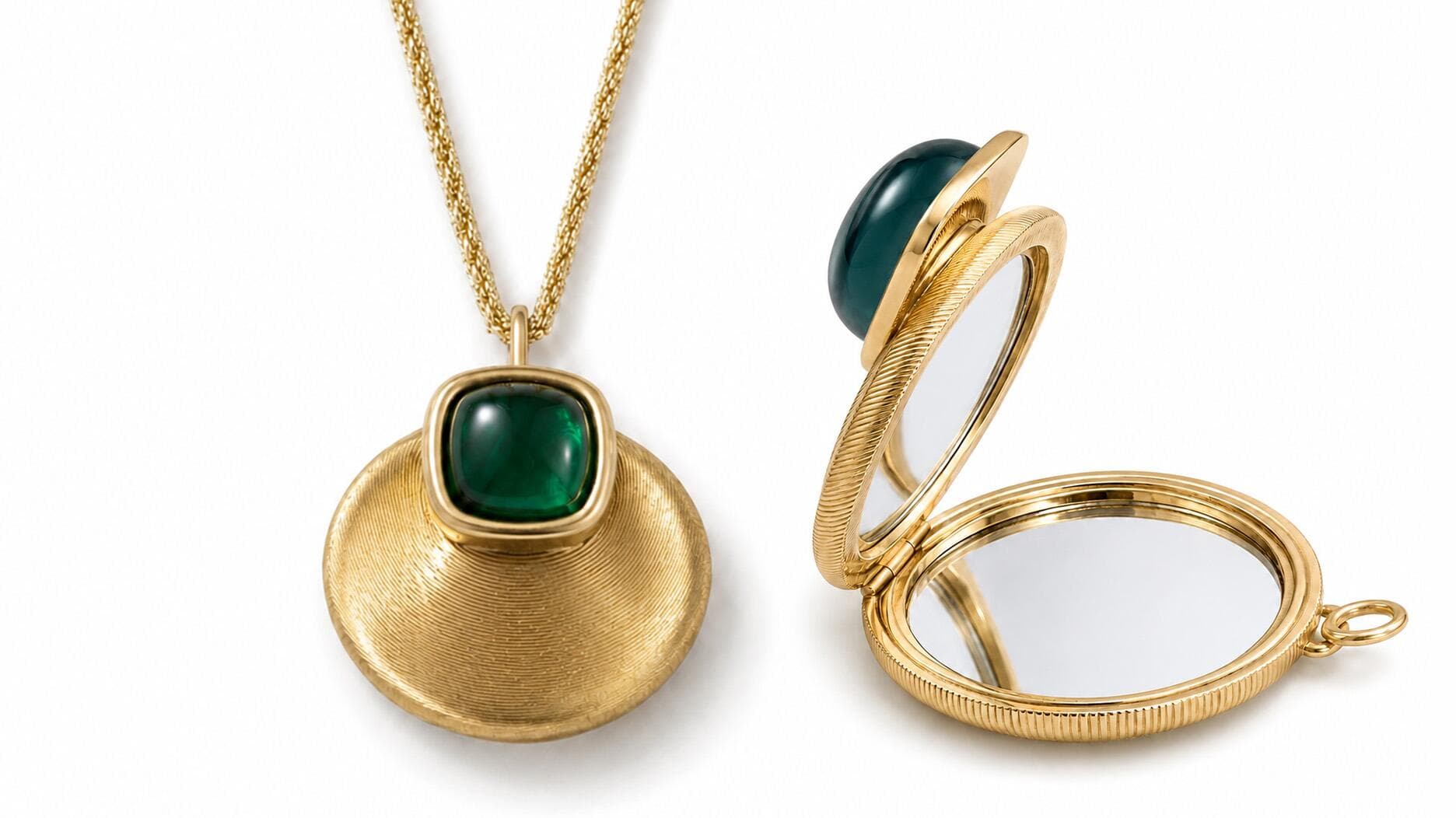
TwentyFour reimagines the locket with NFC storage for memories
TwentyFour’s Vault turns a gold charm into a tap-to-open memory capsule. The NFC locket updates an old heirloom logic for photos, voice notes and playlists.
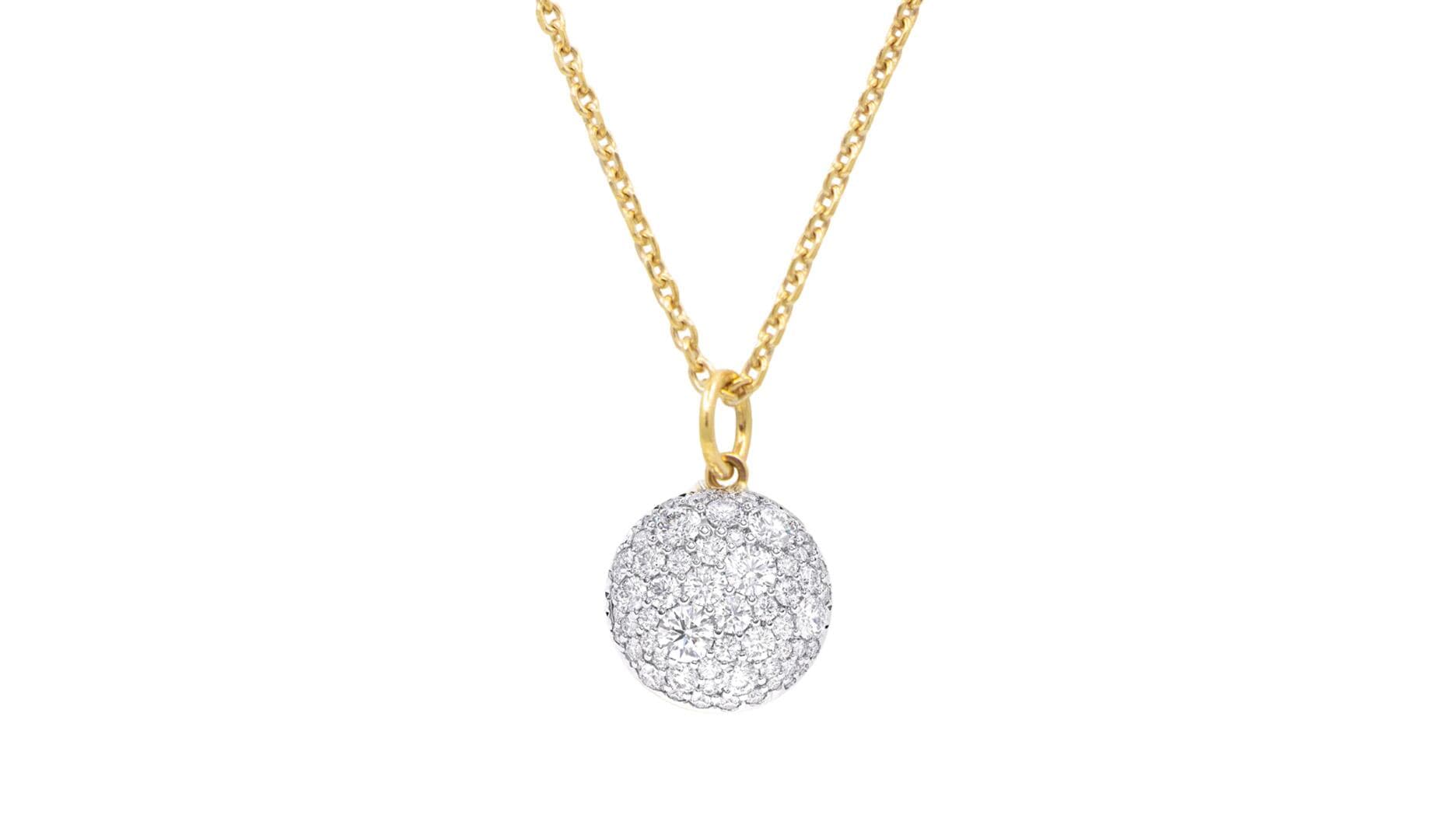
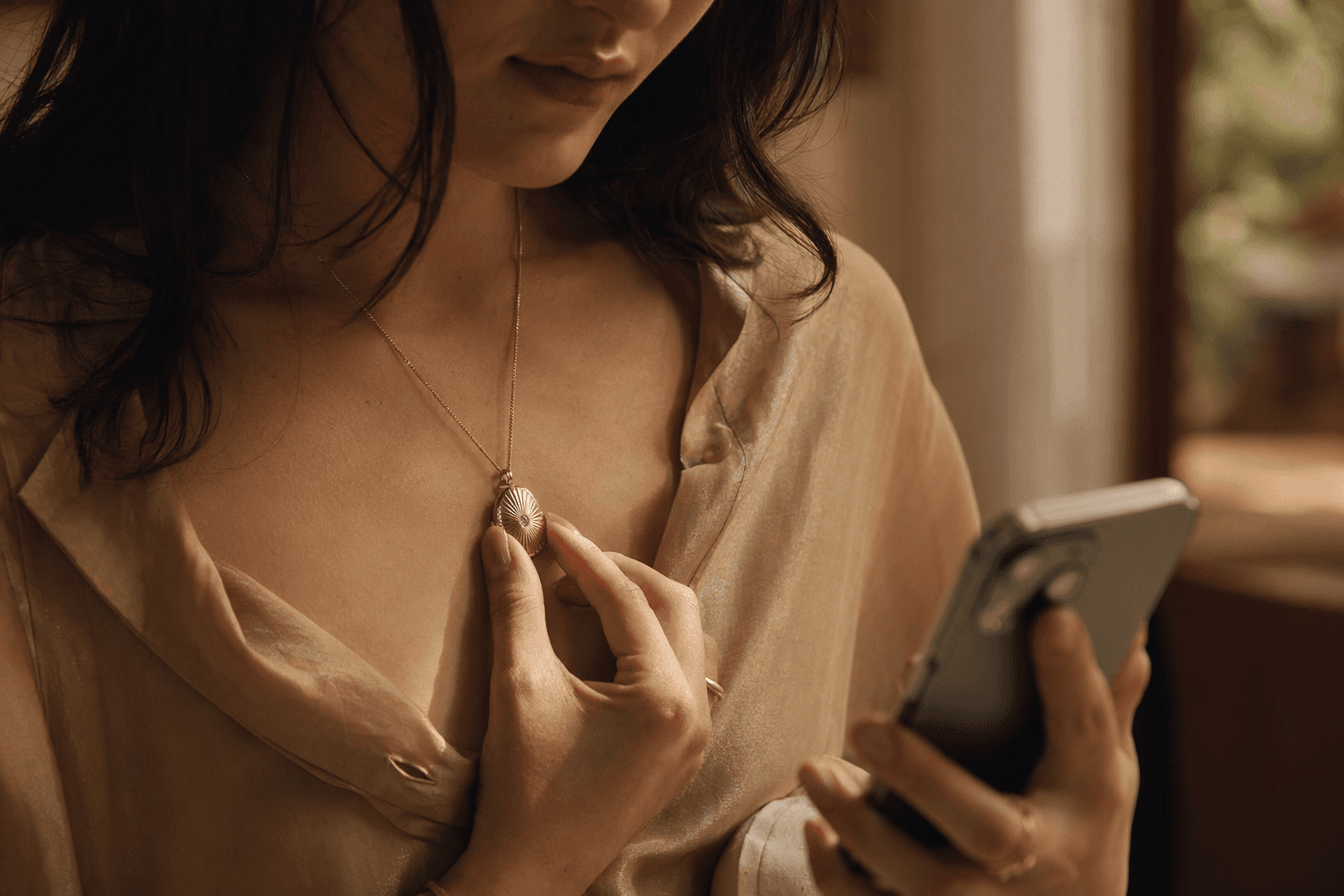
A locket has always been a small archive, and TwentyFour’s Vault makes that idea literal. The New York City fine jewelry studio has reimagined the keepsake in gold and diamonds with NFC, or near-field communication, storage that lets a wearer tap the charm with a phone to open private memories. The piece can hold a voice note, photo collection, playlist or video, and the published product page says it can also store up to five images, a short video, a handwriting sample and as many as three links to songs or playlists.
The instinct behind it is older than any chip. The Metropolitan Museum of Art has traced some of the earliest jewelry made and owned in America to sentiment, with pieces tied to courtship, marriage, death and mourning. One 1706 Boston locket in the museum’s collection held a tightly woven plait of light brown hair beneath crystal, a reminder that intimacy in jewelry once meant enclosing a trace of a person inside a decorative shell. Smithsonian Magazine has noted that hair work remained popular for hundreds of years before falling out of fashion around 1925.
Vault lands in that lineage with an update for a different kind of fragility. Digital photos, videos and music now live on phones and in clouds, but The Conversation has warned that they are vulnerable to linkrot, obsolete hardware and platform shutdowns. MySpace’s 2019 loss of 12 years’ worth of music and photos, which affected more than 14 million artists and 50 million tracks, remains a blunt example of how quickly a private archive can vanish. The phrase digital dark age, popularized by information and communication specialist Terry Kuny, sounds less abstract when memories depend on software that may not survive the next device cycle.
Lee Bridge, founder and designer of TwentyFour, said Vault began with a question about the relevance of the traditional locket and a desire to create a piece that could hold more than one moment. That ambition fits the brand’s larger identity. Founded in 2020, TwentyFour is built by a small team of five artisans and works exclusively in solid 14k, 18k and platinum, a material palette that keeps the charm firmly in the language of heirloom jewelry rather than gadgetry. National Jeweler says TwentyFour also plans a dedicated app with more customization and functionality, projected for 2027.
The appeal of Vault is not that it replaces the old locket, but that it respects what made lockets matter in the first place. The best memory jewelry has always been about containment, privacy and touch. TwentyFour has simply traded the woven lock of hair for a digital key, and the result suggests that heirlooms endure most when they preserve feeling without giving up form.
This article was produced by Prism’s automated news system from verified source data, official records, and press releases, then run through automated quality and moderation checks before publishing. The system is built and supervised by the people who set the standards it runs under. Read our full AI policy.
Did this article answer your question?