Van Cleef & Arpels and Cartier lead luxury jewelry resale value
Van Cleef & Arpels and Cartier hold resale power because their signatures are instantly readable, from Alhambra clovers to Love and Juste un Clou. The right motif matters more than logo heat.
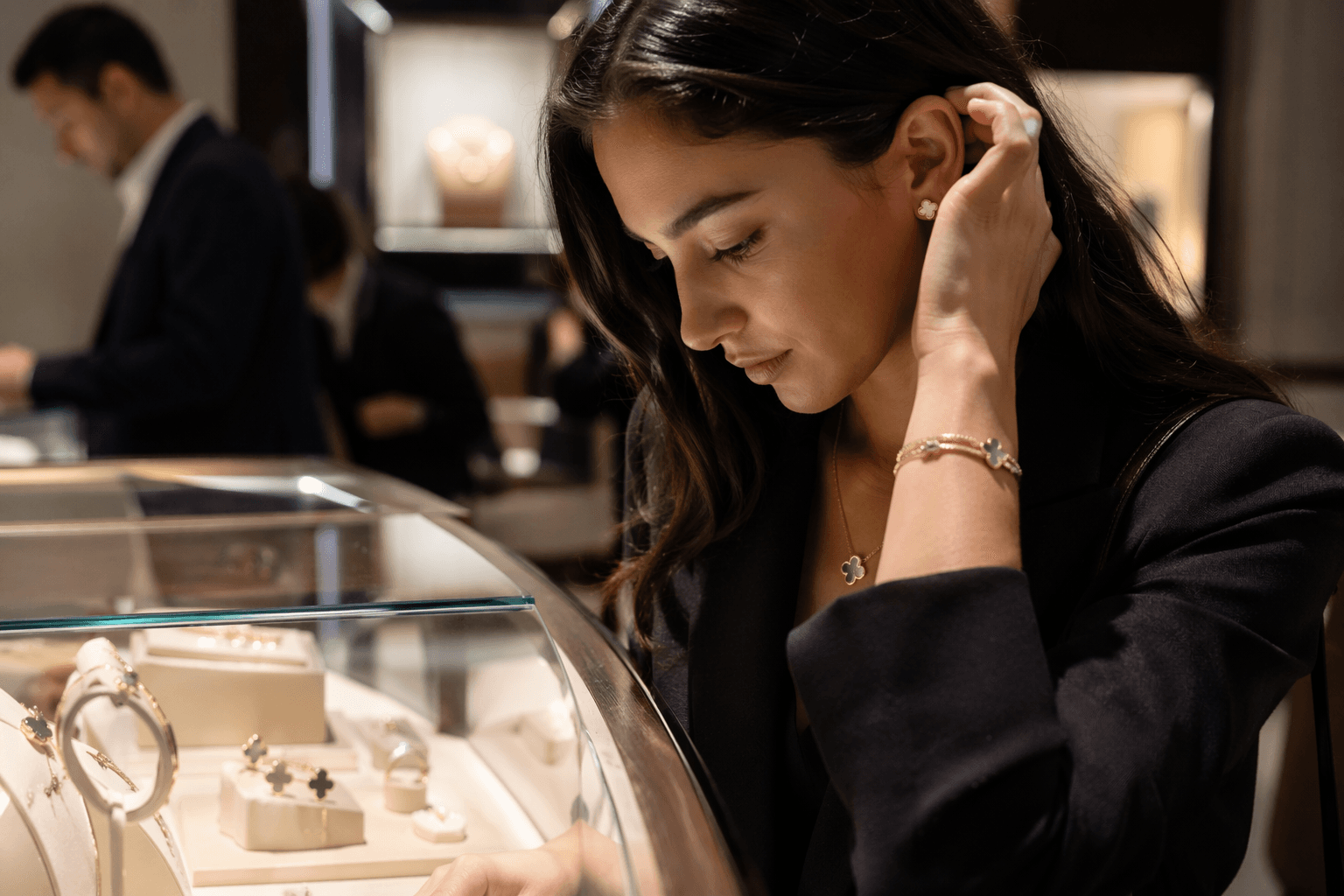
Van Cleef & Arpels’ Alhambra clover and Cartier’s Love bracelet are the resale pieces you can recognize from across a room. Van Cleef & Arpels and Cartier keep rising to the top because their designs are durable in the most literal sense: the motifs are clear, the settings are repeatable, and the oldest references still feel current in the secondary market.
Why these houses keep commanding attention
The RealReal’s seventh annual 2024 Luxury Resale Report, released Aug. 21, 2024, used 13 years of data and the shopping and consignment behavior of more than 37 million members. The RealReal calls itself the world’s largest online marketplace for authenticated resale luxury goods, and it found that fine jewelry was the fastest-growing category in 2024, with demand and values up 7%.
The report’s theme was “Consumers Take the Lead, Redefining Trends and Investing in Lasting Value.”
Van Cleef & Arpels: the Alhambra formula
Van Cleef’s strongest secondary-market engine is the Alhambra line, introduced in 1968. The four-leaf clover motif remains the collection’s calling card, and it has aged well because the design is simple enough to be iconic but varied enough to stay collectible. Vintage Alhambra, Magic Alhambra, and Lucky Alhambra all keep the same visual grammar, which makes older and newer pieces feel related rather than dated.
The most durable versions are the ones with material character: guilloché gold, pavé-set diamonds, and classic stone combinations such as onyx, mother-of-pearl, and malachite. Those materials give the clover depth and texture, not just shine. A guilloché surface catches light differently from polished gold, while pavé diamonds add brightness without changing the core silhouette, which is why the motif tends to hold demand even when specific sizes or length variations move in and out of favor.
What keeps Alhambra strong is that the resale premium sits in the motif first and the gemstone second. A clover pendant in mother-of-pearl or onyx is still unmistakably Van Cleef, and that recognizability is what makes authenticated pre-owned examples attractive to collectors. It also explains why the line can outperform pieces with technically larger stones but weaker design identity.
Cartier: the bracelet language collectors know by sight
Cartier’s resale power comes from a different but equally consistent design vocabulary. Love, Juste un Clou, and Panthère all turn a single shape into a signature, and the market rewards that repeatability. Cartier calls Juste un Clou “a nail transformed into a piece of jewelry to be worn as a symbol of power,” which tells you exactly why the piece keeps selling: it is blunt, graphic, and instantly legible.
Love bracelets remain the most familiar entry point, especially in classic yellow gold and diamond-set versions. Their appeal is not just that they are Cartier, but that the form is so standardized that buyers know what they are getting. That predictability makes the bracelet easier to authenticate, easier to compare across listings, and easier to resell than a more ornate piece whose value depends on taste alone.
Panthère pieces widen the picture. The feline motif gives Cartier a more sculptural, fashion-forward edge, but it still trades on strong house language rather than novelty. In the pre-owned market, classic Love and Juste un Clou pieces, plus rare vintage bangles, tend to keep attention because they sit closest to Cartier’s established visual code.
Where value comes from, and where it doesn’t
The clearest resale premiums often detach from intrinsic material value. A bracelet or necklace can contain a relatively modest amount of gold or diamonds and still command a strong price because the design is instantly recognizable and the brand name is trusted. That is especially true for Van Cleef’s Alhambra and Cartier’s Love and Juste un Clou, where the motif itself does much of the work that a heavier setting might do in another house.
How to read a piece like a collector-investigator
A hallmark tells you more than a brand name. On authenticated pre-owned jewelry, the maker’s mark, metal fineness, and model-specific details help separate a collectible from an ordinary gold accessory. That is why sellers and platforms emphasize authentication so heavily, including expertly inspected pre-owned Cartier bracelets and Van Cleef necklaces verified for authenticity.
- Does the piece carry one of the house’s defining motifs, such as Alhambra, Love, Juste un Clou, or Panthère?
- Is the setting part of the design language, such as pavé diamonds or guilloché gold, rather than just decorative excess?
- Does the model belong to a long-running era that still defines the brand’s image, like Alhambra’s 1968 debut or Cartier’s enduring bracelet families?
- Is the value coming from a readable signature, or mostly from the logo on the clasp?
When you are weighing a purchase, the most useful questions are practical:
This article was produced by Prism’s automated news system from verified source data, official records, and press releases, then run through automated quality and moderation checks before publishing. The system is built and supervised by the people who set the standards it runs under. Read our full AI policy.
Did this article answer your question?