Vintage jewelry trends point to western motifs, brooches and turquoise in 2026
Las Vegas buyers just validated the estate staples collectors already know: western icons, brooches, charms and turquoise now read as near-term resale signals.
Western motifs, brooches, charms and turquoise did not arrive in Las Vegas as a mood board so much as a market signal. On the show floor, the pieces drawing the most attention already belonged to the estate vocabulary collectors understand instinctively: a horseshoe, a locket, a cactus, a bolo, a brooch, a white-metal setting with enough texture to feel personal. That matters because the strongest retail trends often begin as vintage truths, then move forward with new urgency.
What the Las Vegas floor was really saying
National Jeweler’s market-week recap makes the point plainly: the trends it spotted will continue through the rest of 2026 and into 2027. That is not a fleeting styling note. It is a demand map, and it suggests that jewelry with collectible character, especially pieces that read as found rather than manufactured, is moving closer to the center of the conversation.
The broader market-week backdrop sharpened the message. JCK and Luxury 2026 drew more than 17,500 attendees from around the world, and the week was marked by strong attendance and busy buying at The Venetian Expo and The Venetian Resort in Las Vegas. COUTURE 2026 ran from May 27 through May 31, with an opening-night event on Wednesday, May 27, from 6:00 p.m. to 8:00 p.m. at Wynn Las Vegas, giving retailers and press an early read on what was gaining traction. With approximately half of COUTURE’s exhibiting designers and brands coming from outside the United States, these preferences were being tested in a genuinely international luxury market.
Why collectors should care about western motifs now
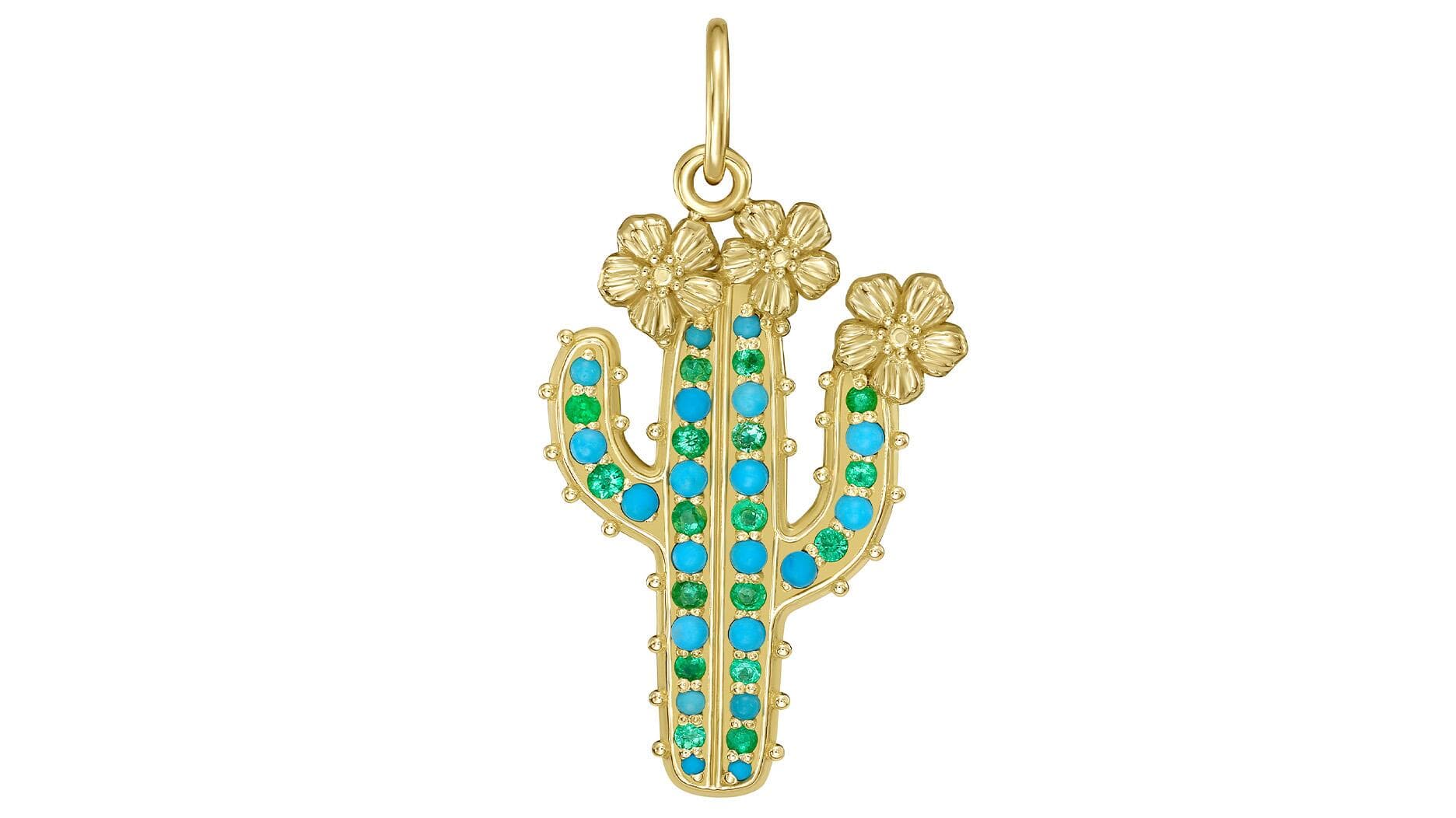
The western turn is broader than a rodeo reference. In vintage terms, it maps to a long chain of precedents: 1940s and 1950s cowboy iconography, 1970s Southwestern styling, and the recurring appeal of good-luck symbols like horseshoes, boots and stars. On the Vegas floor, that language appeared in a micro mosaic horseshoe pendant from Sylva & Cie, Harwell Godfrey’s Fire Horse brooch, Lionheart’s Cactus charm, Monica Rich Kosann’s horseshoe locket on an emerald beaded chain, Brooke Gregson’s horseshoe ring, Ophelia Eve’s bolo necklace and Buddha Mama’s cowgirl-hat charm.
The horse motif has a specific calendar logic this year, too: horse jewelry has become more popular in 2026 because it is the Year of the Fire Horse. That detail gives the western trend a tailwind, but it also explains why these pieces feel collectible rather than costume-like. A good horseshoe or horse brooch reads as symbol, not theme. In resale terms, that distinction matters, because symbols tend to travel better than novelty.
Brooches are back because they never left estate cases
Brooches were one of the clearest vintage cues in the market recap, and they are already established territory in the estate market. Their appeal spans eras: Georgian sentiment, Victorian mourning and flower sprays, Art Deco geometry, midcentury figural pins, and the large-scale designer brooches of the 1980s. That breadth is exactly why they are useful in a collector’s wardrobe and in a dealer’s case. A brooch can be pinned to tailoring, a hat, a scarf or even a chain, which means it solves the modern problem of making one jewel do several jobs.
The rising search interest in brooches and heirloom jewelry earlier in 2026 helps explain why they resurfaced with such force. Once buyers start looking for pieces that feel inherited, the brooch becomes a natural answer: intimate, legible and often surprisingly affordable relative to its craftsmanship. As demand rises, the best examples, especially signed or unusually designed pieces, can tighten quickly.
Charms, beads and the pleasure of building a story
Charms and big beads tell the same story from different angles. The market is rewarding jewelry that feels assembled over time, not purchased as a single, sealed statement. Fashionista captured that mood with Jillian Sassone’s description of jewelry in 2026 as “sculptural, statement-making and personal,” while Ashley Moubayed said people want pieces that feel “collected, expressive and a little unexpected.” That language fits estate jewelry almost too well.
Charms already have deep roots in the vintage market, from charm bracelets of the midcentury era to playful gold novelties from the 1970s through the 1990s. Beads, especially colorful strands and beaded chains, echo the same impulse toward tactile layering. When Monica Rich Kosann placed a horseshoe locket on an emerald beaded chain, the effect was not just western. It was archival, as if the jewel had been built from remembered chapters.
White metals are the practical side of a gold-priced market
The move toward white metals is not merely aesthetic. National Jeweler noted that the price of gold has risen enough to affect how designers make and position pieces, and Metals Focus forecast in June 2026 that the annual average gold price would rise 43% to a record $4,920. The firm also said physical investment is set to replace jewelry as the largest component of gold demand for the first time.
That shift has consequences for vintage buyers. As new gold jewelry becomes more expensive to produce and price, white metals, silver, platinum and mixed-metal constructions can become more visible in the market because they offer volume, contrast and sparkle without the same bullion pressure. In estate cases, white-metal pieces already have strong precedent in Art Deco, midcentury and late-20th-century design, so they do not read as a compromise. They read as a continuity.
For collectors, that can translate into opportunity. Fresh retail interest often nudges attention toward older white-metal pieces with strong silhouettes, crisp settings and original stones. It can also create price pressure on well-preserved examples, especially if they fit the current appetite for sleek, sculptural forms.
Turquoise has the deepest vintage runway
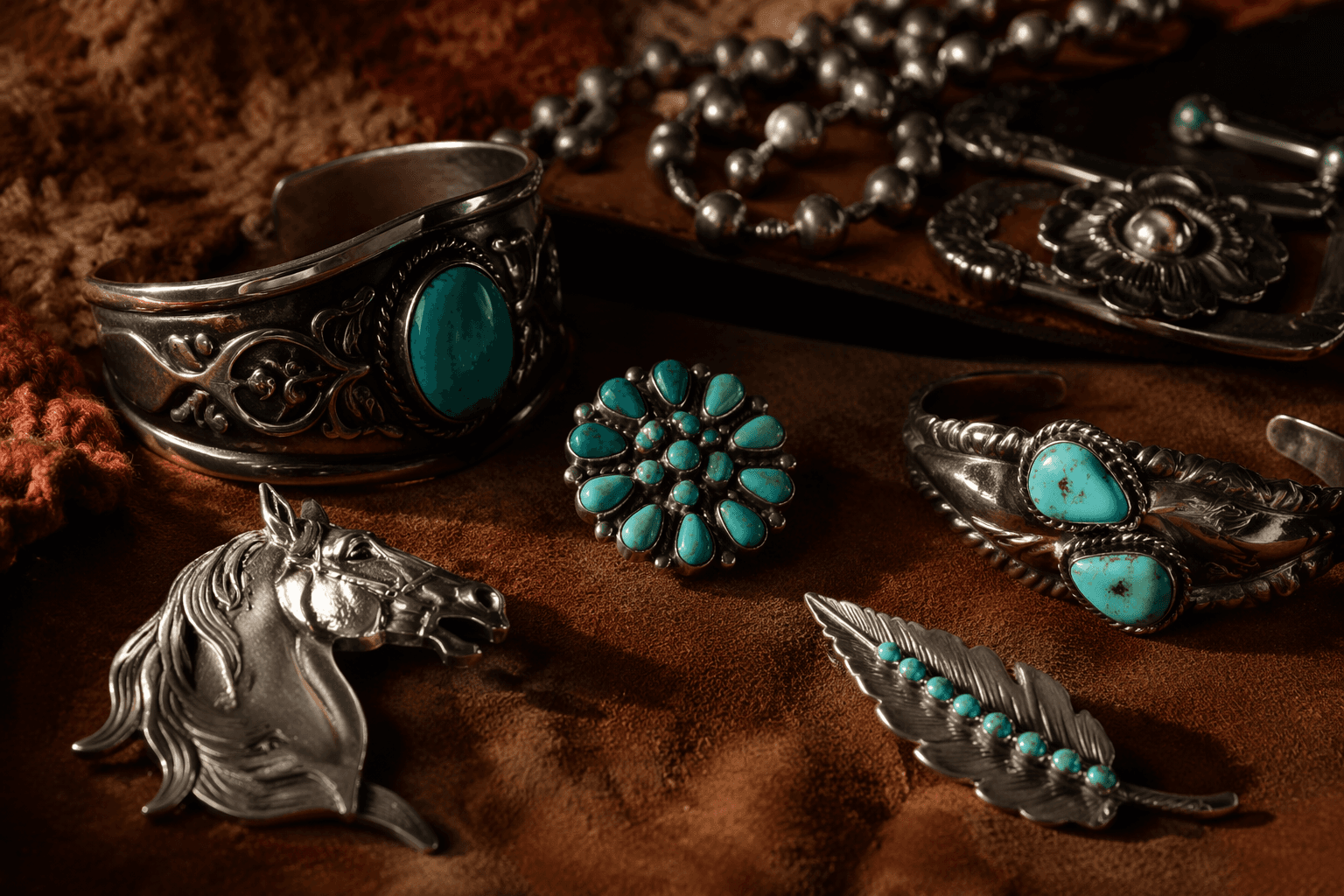
Turquoise may be the clearest example of a trend that already has a full estate-market history behind it. It lives across Native American jewelry traditions, Southwestern silver work, 1970s bohemian design and the broader western aesthetic now resurfacing in luxury retail. Its appeal is structural as much as chromatic: the color holds against silver and white metal, and the matrix gives each stone a fingerprint.
That is why turquoise is likely to remain a reliable collector category even if fashion cycles change. It can sit inside a bolo, a cuff, a ring, a pendant or a charm without losing identity. As retail buyers chase it now, the pieces most likely to benefit are those with strong stone color, honest construction and a design language rooted in a recognizable era.
How to read the trend as a collector
The smartest way to approach this moment is to separate what is fashionable from what is already historically durable. Pieces with western cues, brooch mechanics, charm construction, white-metal settings and turquoise are not newly invented categories. They are established vintage lanes that retail is rediscovering, which often means the best examples become harder to find first.
Look for jewelry that carries its period clearly. A good estate jewel should feel like a small archive: the clasp, the stamp, the chain, the setting and the wear patterns all tell you where it belongs. In a market where collectible-looking jewelry is moving from fringe to center, that decoding skill is not just useful. It is where value is made.
This article was produced by Prism’s automated news system from verified source data, official records, and press releases, then run through automated quality and moderation checks before publishing. The system is built and supervised by the people who set the standards it runs under. Read our full AI policy.
Know something we missed? Have a correction or additional information?
Submit a Tip