Why Vintage Jewelry Still Captivates Collectors and Designers
Old jewels win on evidence: handwork, hallmarks, and era-specific design clues that make an inherited ring or estate brooch easier to read, and harder to replace.
Why old jewelry still outshines new
The pieces that keep collectors coming back are rarely the flashiest ones in the tray. They are the ones that let you see the maker at work, the era in the silhouette, and the life of the jewel in its wear. An inherited ring with softened claws, an estate-sale brooch with a hand-finished clasp, a small archive of drawings and hallmarks, all of it becomes legible once you know what to look for. That is the real seduction of vintage and antique jewelry: it is wearable art with evidence built in.
Know the difference before you buy
Vintage generally means roughly 25 to 100 years old, while antique means 100 years or older. That line matters because museums, dealers, and collectors still lean on the 100-year rule, and because a jewel’s age often tells you how it was made, what materials were favored, and which style language it belongs to. A mid-century cocktail ring and a turn-of-the-century pendant may both be old, but they speak different visual dialects.
Jewelry has never been only decoration. It has long served as adornment, status marker, protective object, and heirloom, which is why the best surviving pieces feel personal even when they were created for broad taste. In colonial America, sentimental jewelry often carried courtship, marriage, death, and mourning into the visible world through hair jewelry, portrait miniatures, and keepsake pieces. That emotional charge still drives buying today, especially when a jewel arrives with the kind of wear that suggests it was lived with, not merely stored.
Read the construction like a collector
The quickest way to separate a meaningful old piece from a modern imitation is to look at the construction. On the back of a brooch, inside a ring shank, or under a clasp, the jewelry should feel resolved, not generic. You want to see hand-finished edges, sensible solder joints, and a logic to the way the stone is held, whether by bezel, prong, or a combination that matches the period.
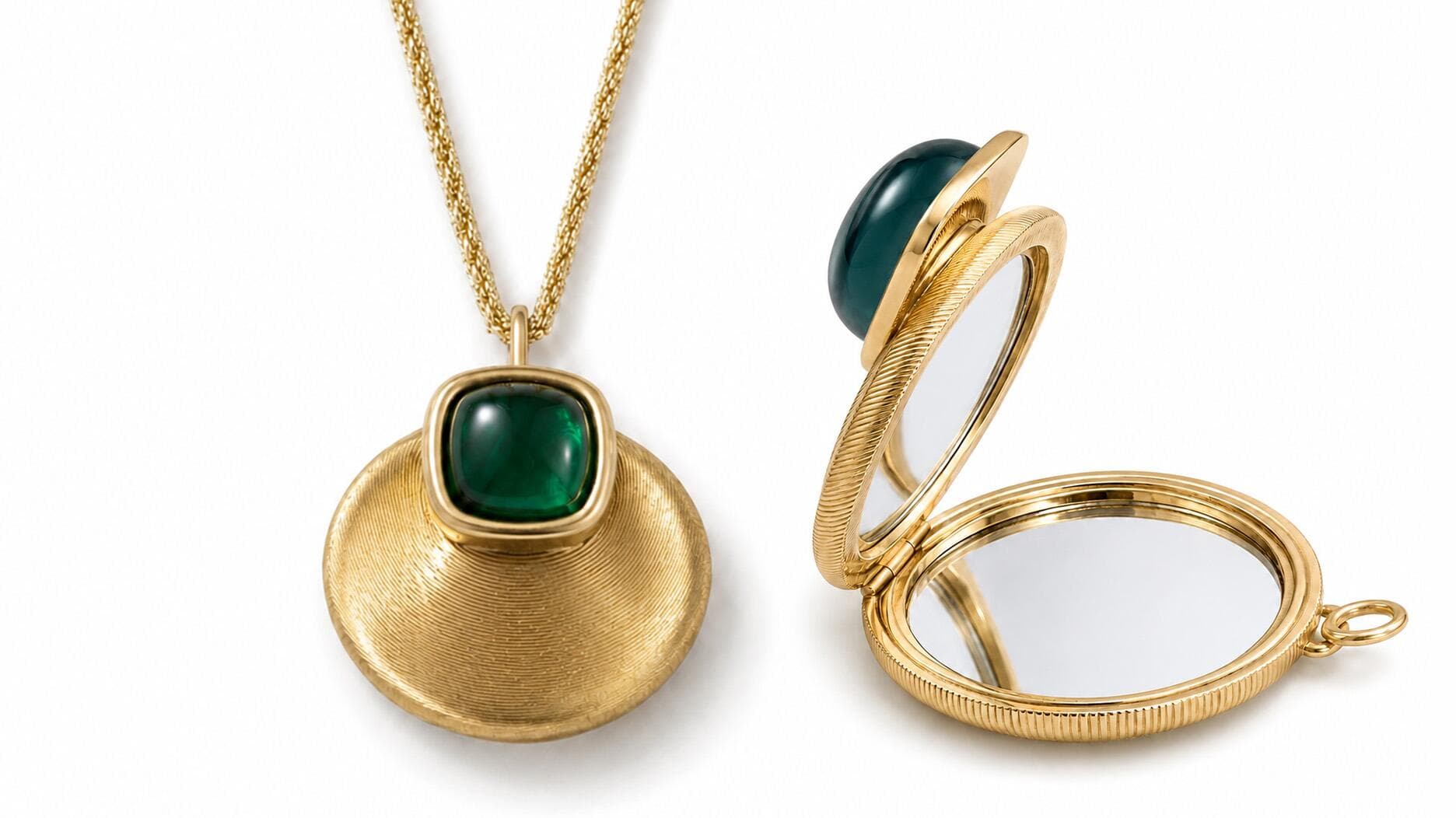
A bezel setting, where metal hugs the stone’s edge, often gives you a different read from a prong setting, where claws expose more of the gem. A well-made bezel can signal an earlier or more artisanal approach, especially when the metal seems to be formed around the stone rather than stamped into place. Prongs can be perfectly period too, but on older pieces they often show hand adjustment, wear at the tips, and slight irregularities that mass production tends to flatten.
- Hallmarks and maker’s marks that are crisp, properly placed, and consistent with the metalwork.
- Wear patterns on the underside, clasp, and chain links that feel natural rather than artificially distressed.
- Stone settings that suit the era, including enamel, opals, moonstones, baroque pearls, and cloisonné used for artistic effect as much as value.
- Finishing details, such as engraved backs, hand-cut scrolls, and hinges that move with precision rather than looseness.
- Repairs that respect the original design, which can help you separate a well-loved heirloom from a later recreation.
Look for these clues in person:
The most convincing old pieces often show asymmetry at close range. Tiny differences in carving, setting, and spacing are not flaws so much as fingerprints. In the 19th century, the American jewelry industry grew from small workshops to large factories and from handcraftsmanship to increasingly mechanized production, so those handmade irregularities can be part of the pleasure. They tell you the piece came from a world before uniformity became the norm.
Why Art Nouveau still feels so alive
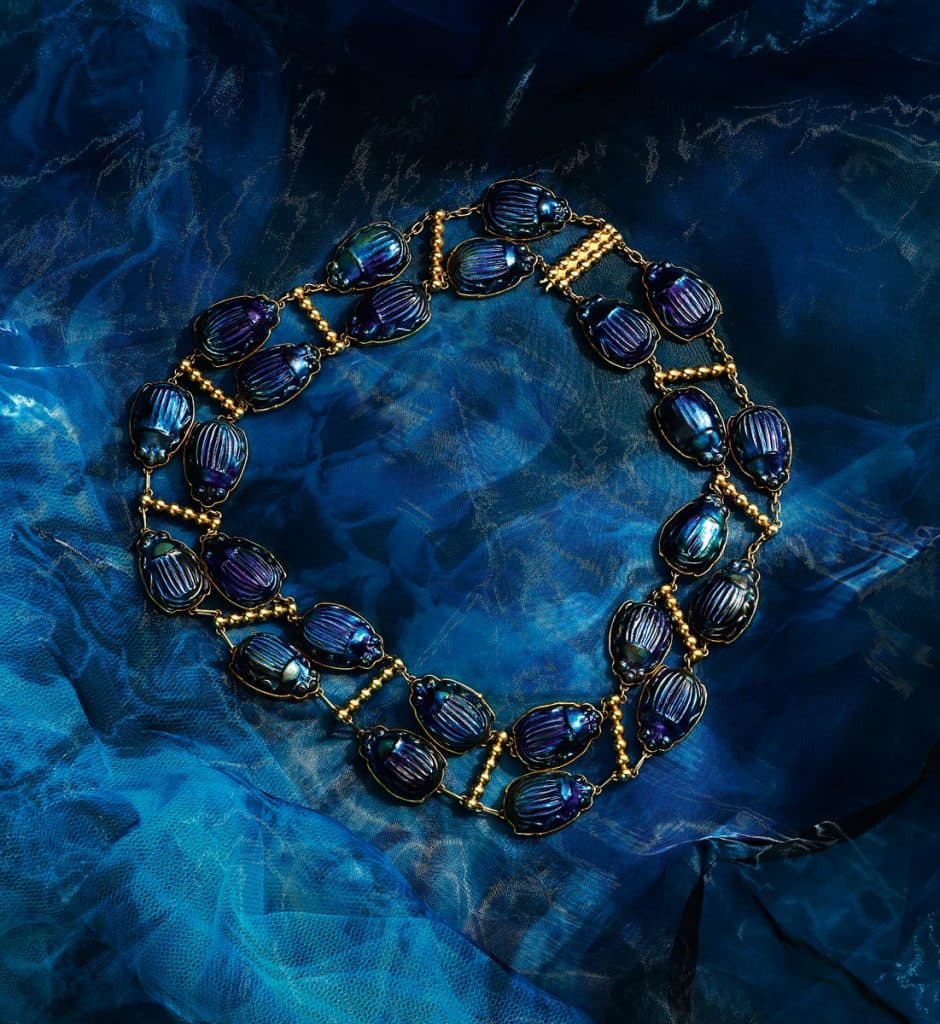
If one style explains why collectors keep circling back to older jewelry, it is Art Nouveau. The Victoria and Albert Museum dates Art Nouveau jewellery and the Garland style to roughly 1895 to 1910, with the movement peaking around 1900 at the Paris International Exhibition. Its appeal is immediate once you see it: sinuous lines, natural forms, and an insistence on craftsmanship over mere material display.
The Metropolitan Museum of Art’s holdings make the point beautifully. Georges Fouquet and Alphonse Mucha collaborated from 1899 to 1901 on Art Nouveau jewels, and even the showroom on Rue Royale was designed to harmonize with the jewelry itself. That is the kind of total design thinking collectors love, because it proves the object was conceived as part of an aesthetic world, not just as a standalone accessory.
René-Jules Lalique pushed the idea further. The French Art Nouveau jeweler became known for combining enameling and precious stones in compositions that treated the stone as one element among many, not the only star. A ca. 1901 pendant with peacocks, opal, pearl, and diamonds shows exactly why his work still stops the eye: the stones are there to animate the design, not overpower it. That hierarchy is one reason older pieces feel so sophisticated to modern buyers.
Art Deco brought geometry, but not simplicity
Art Deco arrived with a different temperament. The term itself was coined in the 1960s, but the style drew on Art Nouveau, Russian ballets, folk art, exotic and ancient cultures, the machine age, and influences from Africa and East Asia, along with the visual shock of Tutankhamun’s tomb, discovered in 1922. Where Art Nouveau curves, Art Deco sharpens. Where Nouveau leans into nature, Deco organizes the world into symmetry, contrast, and architectural lines.
For collectors, that shift matters because it changes what you should expect in construction and design. Art Deco jewels often reward close attention to geometry, calibrated stone placement, and a more assertive use of onyx, diamonds, and colored stones in crisp arrangements. When a piece looks too loose or too soft to be Deco, it often is.
Why the market still favors the old hand
Part of the appeal now is emotional, but part of it is practical. ThredUp says its 2025 Resale Report is its 13th annual edition, a reminder that secondhand is no longer a niche habit but a major retail force. Buyers are thinking secondhand first because they want authenticity, uniqueness, and a lower-impact way to own something beautiful. Vintage and antique jewelry sit squarely inside that shift.
That is why pieces from heritage houses and historic makers still command attention. They offer what many modern jewels cannot easily fake: a traceable design language, a visible hand, and the patina of time. In an era when so much luxury arrives polished to sameness, a jewel with a real clasp, a period-correct setting, and a surface softened by decades of wear feels unmistakably alive.
The smartest collectors do not chase age for its own sake. They chase clarity. A jewel worth keeping usually tells you how it was made, when it was made, and why it was made that way. Once you learn to read those clues, the old pieces do not just outshine the new ones. They reveal the whole history of jewelry on the body, in the hand, and across generations.
This article was produced by Prism’s automated news system from verified source data, official records, and press releases, then run through automated quality and moderation checks before publishing. The system is built and supervised by the people who set the standards it runs under. Read our full AI policy.
Did this article answer your question?