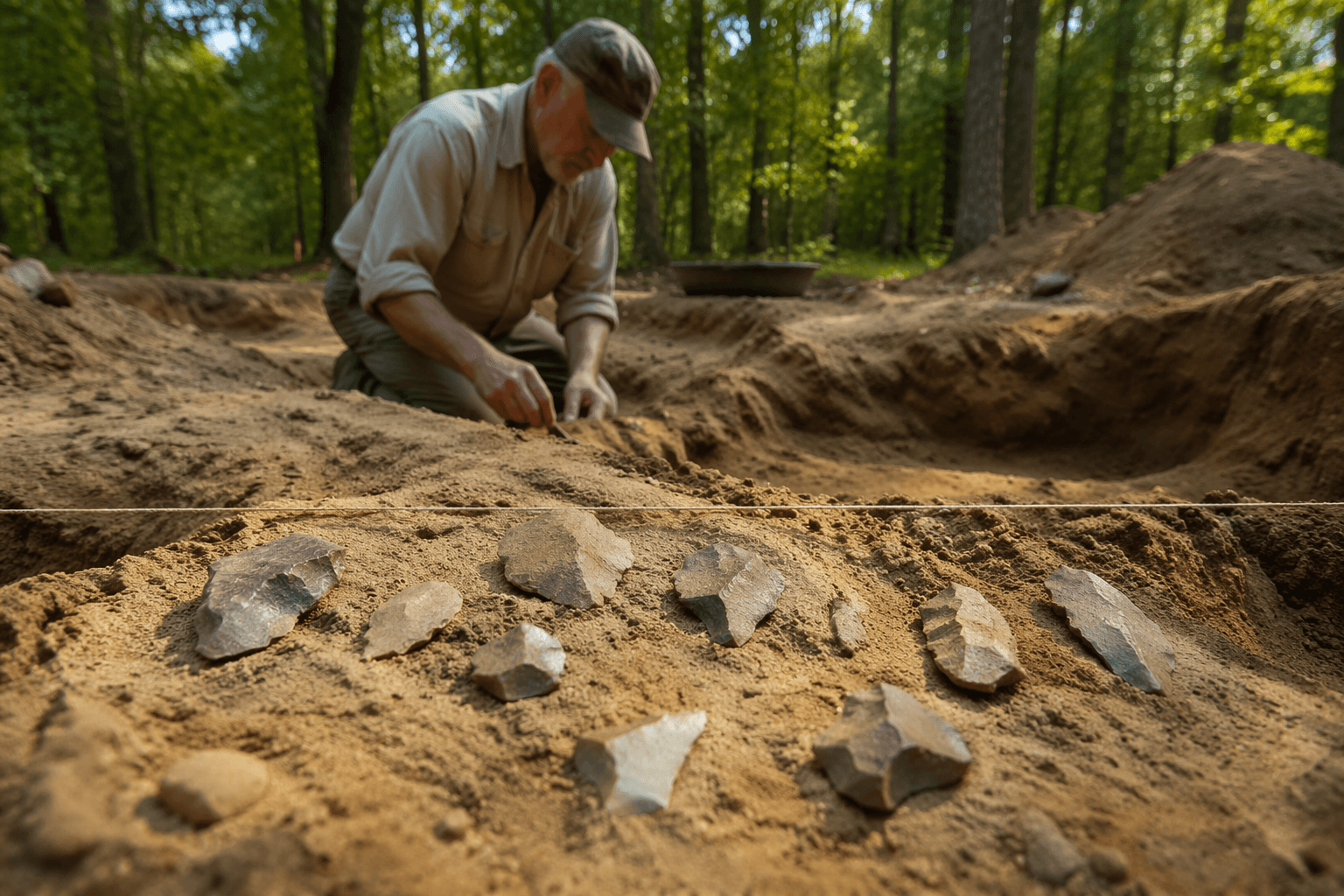
Allendale County's Topper Site reveals North America's ancient past
Topper Site places Allendale County at the center of Ice Age research, and a permanent USC exhibit now brings its Clovis story within reach of local families.
A small county on the Savannah River holds one of North America’s most important windows into the Ice Age. The Topper Site near Allendale preserves remains dating back about 13,000 calendar years before the present, and its Clovis layers, dated roughly 13,250 to 12,850 calendar years BP, rank among the densest in North America. For Allendale County, that makes the site more than an archaeological landmark, it is a piece of local identity with global reach.
A local place with continental significance
Topper sits on the bank of the Savannah River and is identified as a prehistoric quarry and workshop where people made weapons and stone tools. The county names the site for David Topper, the local man who showed scientists where to look, a reminder that major discoveries in rural counties often begin with a person who knows the land well. In archaeological terms, the site is known as 38AL23 and is part of the Allendale Chert Quarries Archaeological District, which was added to the National Register of Historic Places in 1985.
That larger quarry landscape matters as much as the artifacts themselves. A Mississippi State summary describes Topper as one of a series of prehistoric quarries along the Savannah River and one of the largest known Clovis sites in the Americas. That combination of density, age, and place gives Allendale County a claim few places can make: the county sits inside a landscape tied to some of the earliest widely discussed stone-tool traditions in North America.
How to see Topper’s story without going onto the site
The archaeological property itself is private and is not open to the public except for occasional special tours, so the easiest way to experience the site is through USC Salkehatchie. About 15 miles from campus, the university’s permanent public exhibit, Searching for our Beginnings: Public Archaeology at the Topper Site, turns a difficult-to-access dig into something local residents, students, and visitors can actually see and understand.
The exhibit is the first permanent display of artifacts from the Topper Site. It includes artifacts, explanatory posters, and an interactive audio-visual kiosk, and it was prepared by the South Carolina Archaeological Public Outreach Division under the direction of Dr. Al Goodyear in consultation with Dr. Ann Carmichael, dean of USC Salkehatchie. For families, classes, and anyone curious about the county’s deep past, that display is the clearest place to start.
The campus setting gives the story an everyday civic purpose. A prehistoric site does not have to sit behind museum glass in a distant city to matter to a community. In Allendale, the interpretive work happens close to home, in a university library, where the county’s oldest known history is presented as part of local learning, local pride, and local memory.
The dig that kept growing
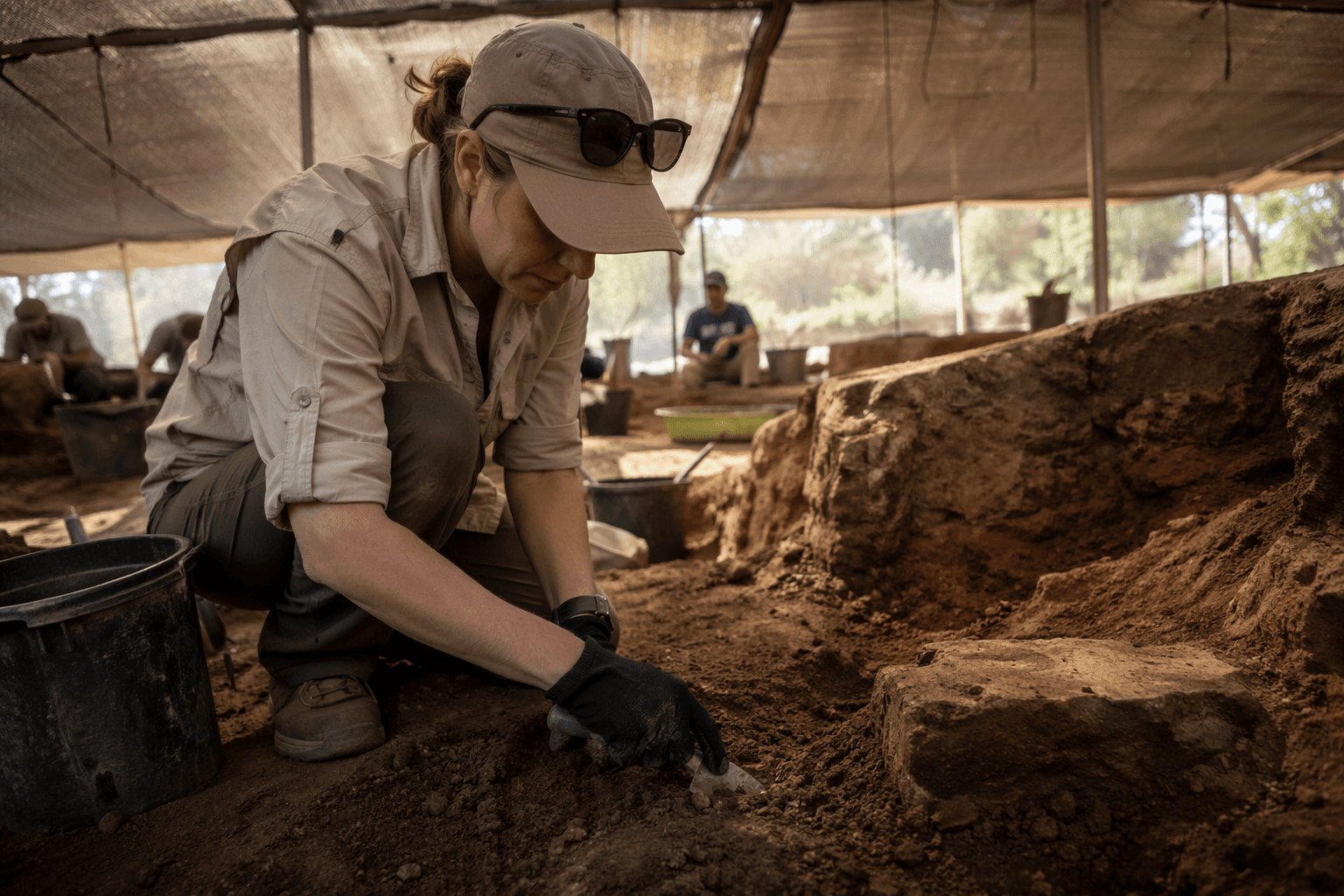
Topper is not a one-time discovery. USC’s Institute of Archaeology and Anthropology says Dr. Al Goodyear has led excavations at the site since 1998 through the Allendale Paleoindian Expedition, a public archaeology program that uses volunteers from the public. That structure matters because it ties the site to civic participation, not just academic expertise.
The 2000 Allendale Paleoindian Expedition was the largest one ever. More than 100 volunteers took part as donor-excavators during a five-week excavation from May 1 through June 3, followed by three more weeks of geology study at Topper and nearby areas. Years later, excavations in 2006 and 2007 produced a 64-square-meter block, described as the largest contiguous unit yet excavated at Topper. Those numbers show a project that has grown in scale while remaining rooted in public involvement.
That record of participation gives Allendale County something rare to build on. School groups, local history programs, and heritage visitors do not need a distant context to understand the site’s importance. The story is already tied to the county, its campus, and the people who returned season after season to help excavate and document what lay beneath the river plain.
Why the site became part of a wider scientific debate
Topper also entered the national conversation because its deepest claims challenged long-held assumptions about when humans first reached the Americas. In 2004, the site drew immediate scientific controversy over whether the stone shards were human-made. Michael Collins of the University of Texas was cited then as disputing that interpretation while also acknowledging that settlement earlier than 13,000 years ago was already widely accepted.
That debate is part of Topper’s history, but it should not obscure the strongest, widely accepted evidence. The Clovis-age material and the dense quarry record remain central to the site’s importance, while the most extreme pre-Clovis claims, including dates far earlier than Clovis and claims of 50,000 years or more, remain controversial. For local readers, that distinction is important: Topper is remarkable not because every claim around it has been settled, but because the site sits at the center of a major archaeological discussion that continues to shape how scholars think about the peopling of the Americas.
Why Allendale should keep telling the story
Allendale County itself was formed in 1919 and had a population of 8,039 in the 2020 census, making it the least populous county in South Carolina. That contrast, a small county with a site known in international archaeological circles, is exactly why Topper deserves a permanent place in civic memory. Counties are often remembered for roads, courthouses, or school districts; Allendale also has a place in the long story of North American prehistory.
The site’s ownership history reinforces that the landscape is part of the public story, even when the land is private. The Topper property was once owned by Clariant and transferred to Archroma in 2013. That means preservation, interpretation, and access depend on active cooperation among landholders, university partners, and public institutions, not on casual visitation.
For Allendale, the practical value of Topper is immediate. It supports classroom learning at USC Salkehatchie, gives local history a stronger anchor, and offers heritage tourism a destination that is distinct from every other rural stop in the region. The county does not need to manufacture significance here. The record at Topper already provides it, layer by layer, in stone, soil, and the public work of keeping the past visible.
This article was produced by Prism’s automated news system from verified source data, official records, and press releases, then run through automated quality and moderation checks before publishing. The system is built and supervised by the people who set the standards it runs under. Read our full AI policy.
Did this article answer your question?