Roselawn shows Allendale County’s antebellum history and family legacy
Roselawn links Allendale County’s plantation past to a family-run farm that has stayed in Lawton hands since the 1830s.
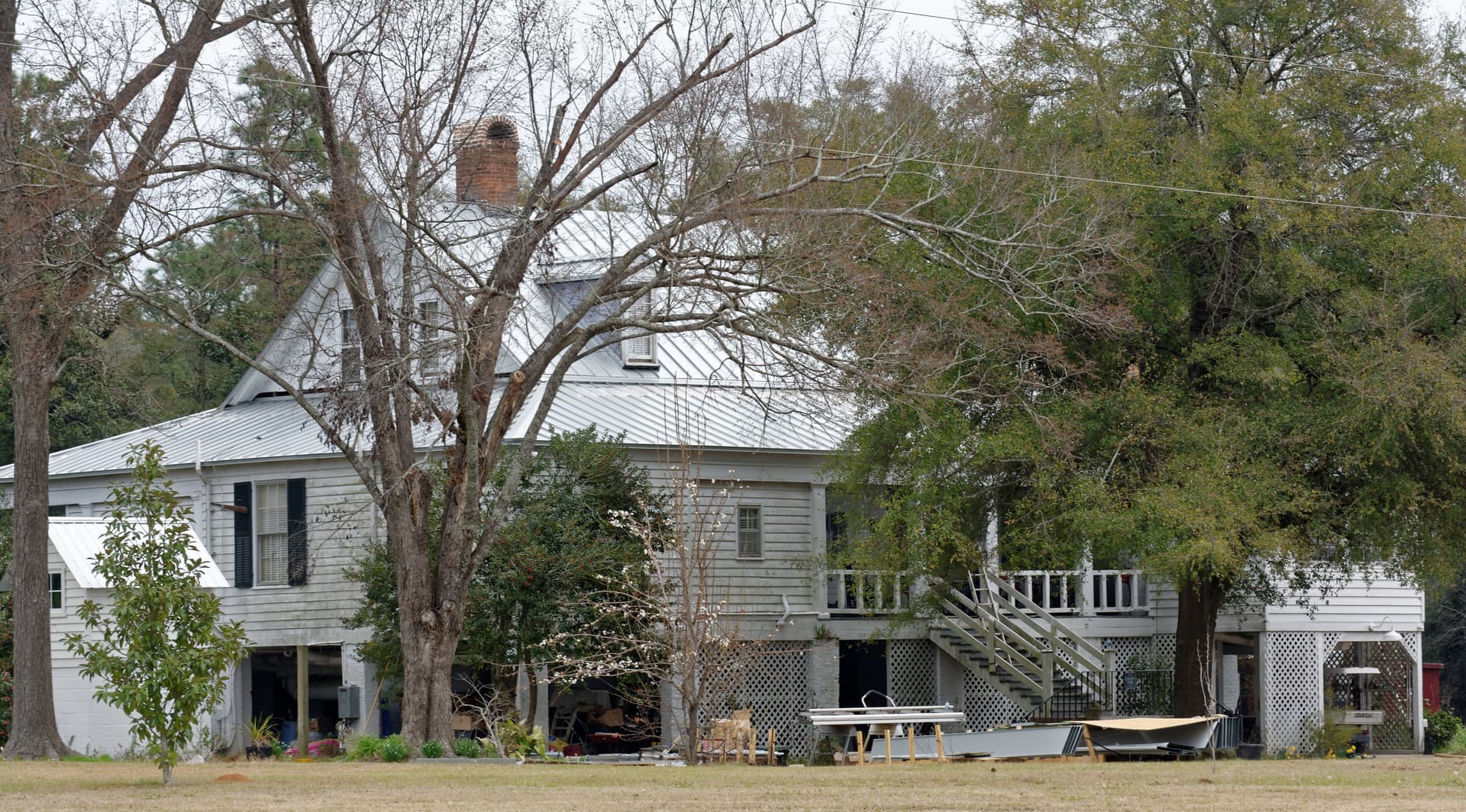
Roselawn stands just outside Allendale as more than an old house. The Lawton House has stayed in one family for generations, and that continuity makes it one of the clearest living links between the county’s antebellum landscape, its farm economy, and the memory that still clings to rural land in Allendale County, South Carolina.
A family place on farm land
The house sits on State Highway 47, about three miles southwest of Allendale, where Joseph Alexander Lawton began building it around 1835 and finished it around 1840. The National Register nomination describes Roselawn as a pine-clapboard, one-and-one-half-story raised cottage, and the Lawton family has kept it throughout its entire history. That long ownership matters as much as the architecture: Roselawn has not been turned into a museum piece, but remained a working property tied to land use, farming, and family memory.
The county’s own visitor information says Roselawn has been maintained and farmed continuously by one family. That detail puts the house in the same category as many of the surviving historic places across rural South Carolina, where preservation happens because families keep living with the property rather than handing it over to an institution. The South Carolina Department of Archives and History lists Roselawn among Allendale County’s National Register properties, and notes that most listed properties are privately owned and not open to the public.
What still survives at Roselawn
Roselawn’s exterior still shows the structure of an antebellum plantation house, even though the building has changed over time. The front façade has three dormers and a full-length piazza supported by eight square wooden columns, while original plaster survives in parts of the porch ceilings. The county description adds that the piazzas are held by brick pillars nine feet high, a reminder that the building was designed to sit raised above the ground.
The property also shows the practical history of a house that had to endure weather, war, and decades of use. Originally, the piazza extended halfway down each side of the house, and the rear piazza was also partially enclosed later. Around 1900, the original shingle roof was replaced with tin. In 1960, tornadoes destroyed two of the three single brick chimneys, and they were rebuilt in a style close to the originals. Inside, the layout is still specific and domestic rather than grand: four rooms in the basement, nine rooms on the main floor arranged around a central hall, and two rooms on the upper floor connected by a small landing.
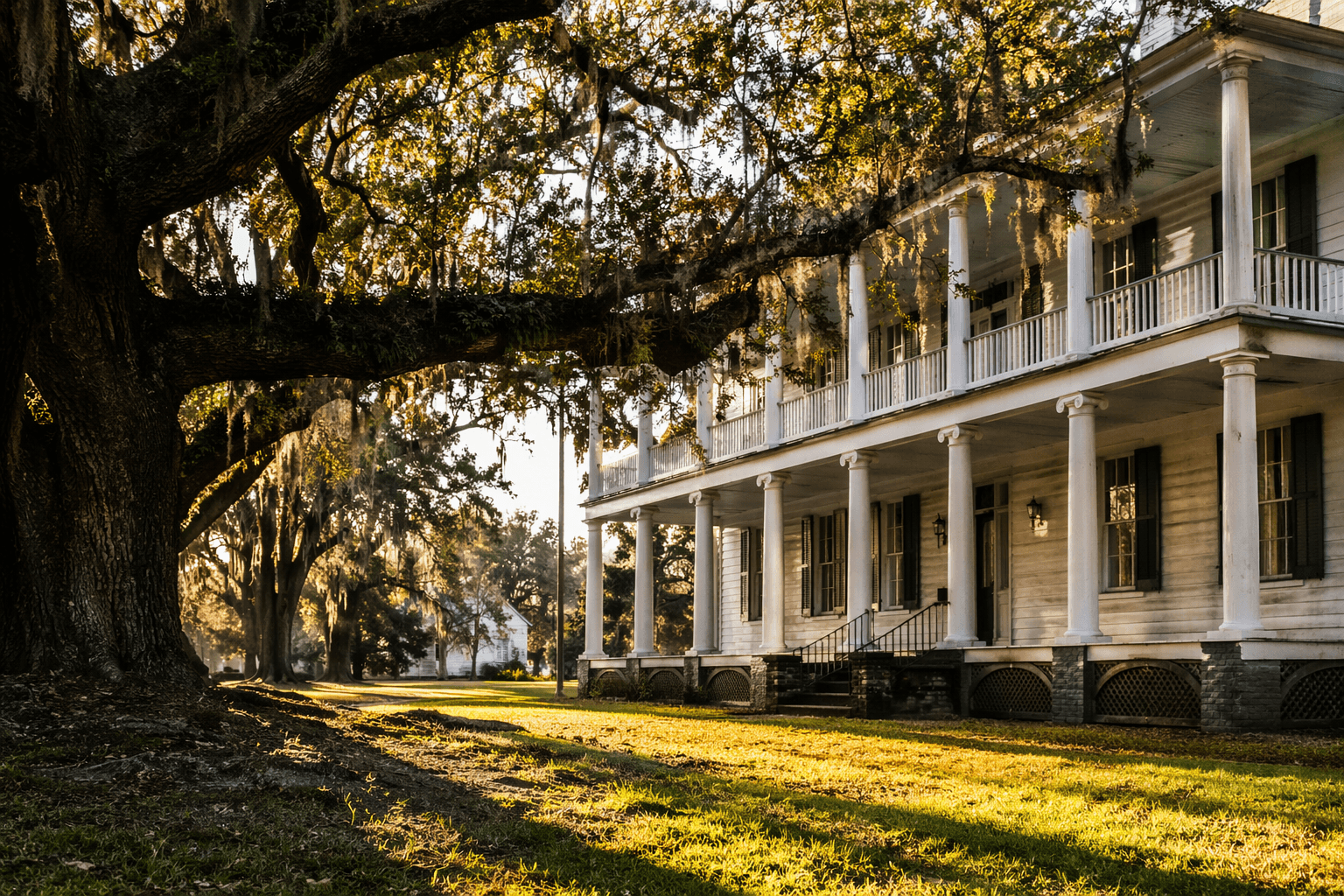
Those details help explain why Roselawn remains useful to local history readers. It is not simply preserved for appearance. It still records the way a family house was adapted to survive in a farming county where weather, labor, and household needs shaped the building as much as architectural fashion did.
Buddenville, the Civil War, and survival
Roselawn is one of the few remaining plantations from the Buddenville area, a part of the county that in the first half of the 19th century was associated with large planters, affluence, and high-status homes. That makes the house a direct witness to the landscape that existed before Allendale County itself was created on February 6, 1919, from parts of Barnwell County, South Carolina, and Hampton County, South Carolina. The county boundary came later; the land, its roads, and its plantation patterns were already in place.
The Civil War gave Roselawn another layer of survival history. Family tradition says Union Gen. Hugh Judson Kilpatrick camped there while his cavalry was in the area. A local plantation-history source says Kilpatrick used Roselawn as cavalry headquarters in 1865 and allowed Joseph Lawton and his family to remain in one small rear room entered by a side door. That wartime use helps explain why the house was spared burning, and why it remains one of the few surviving Buddenville plantations.
That survival is part of the county’s larger historical record. Roselawn was listed in the National Register of Historic Places on May 28, 1976, under the National Park Service’s system for recognizing sites of historical significance. The house’s survival gives Allendale County a physical example of how some plantation properties endured while others disappeared through war, neglect, or redevelopment.
Joseph Alexander Lawton and the family line
Joseph Alexander Lawton gives Roselawn a more personal and traceable story. He was born on December 9, 1811, and died on January 29, 1892, and burial records place him at Smyrna Baptist Church Cemetery in Allendale County. A family-history source identifies him as a Baptist minister, which helps place Roselawn within the religious and social world of antebellum South Carolina, where ministers, planters, and local landowners often occupied overlapping roles.
The Lawton family’s wider public footprint includes Benjamin William Lawton, Joseph’s brother, who signed the South Carolina Ordinance of Secession at the South Carolina State House. That family connection ties Roselawn not only to local landholding, but also to the political break that moved South Carolina toward Civil War. It is part of why the house carries more than architectural value: the family line reaches into the state’s most consequential public decisions of the 19th century.
Roselawn’s later generations stayed tied to the property as well. One plantation-history source identifies Don C. Sharpe and later Camille C. Sharpe as owners. An obituary for Camille Cunningham Sharp says she was born at Roselawn Plantation on April 23, 1921 and died in 2006. That birth at the house extends the place’s family history well beyond the antebellum era and into the 20th century, reinforcing Roselawn as a home site as much as a historic landmark.
Why Roselawn still matters in Allendale County
Allendale County’s population helps explain why one family property carries such weight. The U.S. Census Bureau counted 8,039 residents in the 2020 Census and estimated 7,355 on July 1, 2025. In a county that small, a place like Roselawn can anchor memory across generations because there are fewer surviving markers of the past, and fewer public institutions that hold that past in one place.
Roselawn also shows how preservation works in a county where most historic places remain private. The house is not open to the public, and that fact is part of its meaning. It survives as a lived-in, farmed, family-held property on the edge of Allendale, linking the antebellum period, Civil War memory, and present-day rural identity in a single place. For Allendale County, that continuity is the story.
This article was produced by Prism’s automated news system from verified source data, official records, and press releases, then run through automated quality and moderation checks before publishing. The system is built and supervised by the people who set the standards it runs under. Read our full AI policy.
Did this article answer your question?