Congress Stalls on Tribal Diabetes Funding, Leaving Native Patients Worried
Congress authorized $200M for tribal diabetes programs, but only $150M is reaching communities — leaving Navajo Nation leaders and Arizona's 27 tribal programs uncertain.
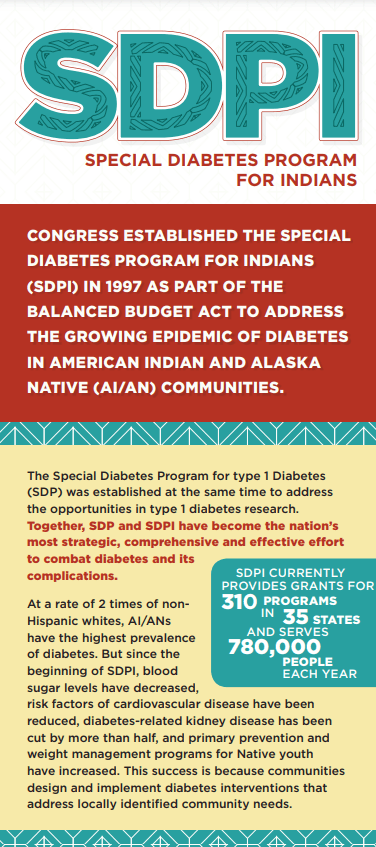
Navajo Nation Vice President Richelle Montoya and Radeanna Comb, the program manager for the Navajo Special Diabetes program, raised concerns this week about distribution delays threatening services across tribal communities, even after Congress set the Special Diabetes Program for Indians at $200 million for fiscal year 2026. Of that authorized amount, roughly $150 million is currently being distributed, leaving approximately $50 million not yet reaching programs on the ground.
The gap is not abstract. The issue surfaced during the recent Indian Health Service Tribal Leaders Diabetes Committee meeting, where Navajo officials said the full amount has not yet reached programs, with about $150 million distributed while roughly $50 million remains delayed, creating uncertainty for staffing, services, and long-term planning.
Vice President Montoya said that "diabetes continues to impact our communities at disproportionate rates," adding, "we must ensure that federal funding keeps pace with the needs of our people." Serving as the Navajo Nation's representative to the Tribal Leaders Diabetes Committee, Montoya emphasized the federal government's trust and treaty responsibility to uphold its healthcare commitments and called for sustained investments that directly support community-based programs, cultural activities, and prevention efforts.
In Arizona, the stakes are quantifiable. Twenty-seven tribal diabetes programs received $32.5 million this year, comprising 22% of the nationwide total. Most of those programs rely entirely or almost entirely on federal funding to operate. A handful, including the San Carlos Apache Healthcare Corporation, provide broader general health care and have additional funding sources. But for the majority, any gap between what Congress authorizes and what actually arrives translates directly into disrupted services: diabetes treatment, prevention, nutrition education, and physical activity programming that have no local substitute.
The program's funding history helps explain why tribal health officials treat even partial delays as a crisis. Congress reauthorized the Special Diabetes Program through December 31, 2026, at $200 million per year, representing a 25% increase over prior funding levels. But that increase came after two decades of stagnation. From 2004 to 2024, the program provided $150 million per year in grants, a figure that never moved while inflation eroded the real value of that allocation by 40%. The National Indian Health Board has pressed Congress to ultimately raise the program to $250 million annually to address that erosion.
The funding structure has also grown increasingly fragile. The last long-term congressional renewal passed in 2004 and lasted until 2017. Since then, the program has survived through a series of short-term extensions, the most recent of which kept it running from March through the end of December. Navajo leaders have noted that while increased funding is a step forward, delays and gaps in distribution continue to impact programs, and continued reliance on continuing resolutions and phased funding creates uncertainty for staff, services, and long-term planning.
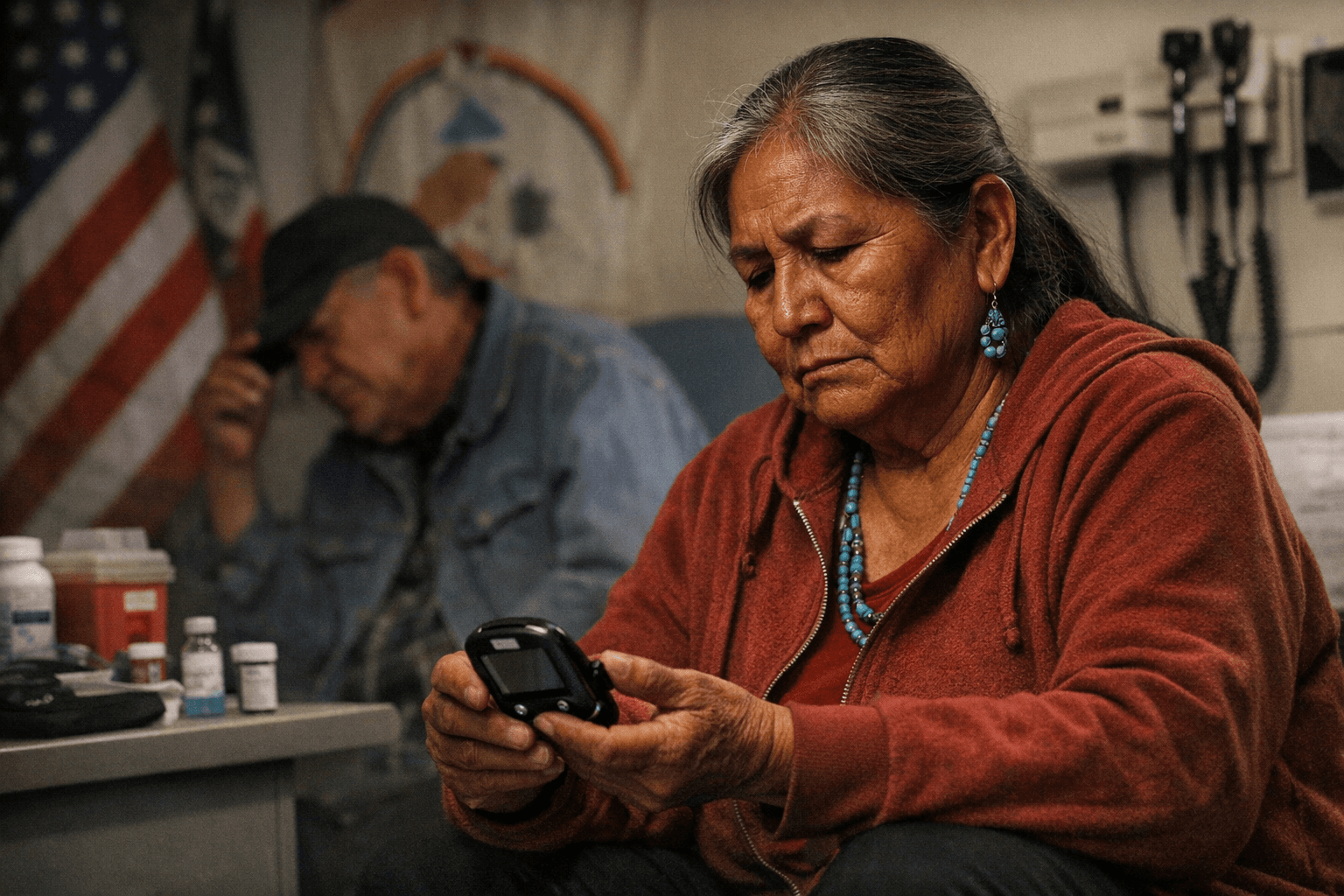
The public health consequences of any funding shortfall fall hardest on communities already facing staggering rates of disease. In Arizona, 27% of Indigenous adults have been diagnosed with diabetes, compared to 10% of the white population, according to 2021 data from the Center for the Future of Arizona. Carmen Hardin, director of the diabetes treatment and prevention division of the Indian Health Service, acknowledged that "there have been some major positive outcomes from this program," but warned that without reliable funding, "ultimately the Native people are the ones that will suffer."
Aides to House Speaker Mike Johnson, R-Louisiana, did not respond to multiple requests for comment on why the program seems to have stalled at the congressional level. Meanwhile, the Navajo Area alone is counting on approximately $17.6 million of the fiscal year 2026 allocation to sustain diabetes prevention and treatment services across sites in Chinle, Crownpoint, Kayenta, Gallup, Shiprock, and beyond. Navajo leadership has said it will continue working with officials from the U.S. Department of Health and Human Services, the Indian Health Service, and members of Congress to secure adequate, advanced, and mandatory funding that meets the urgency of this public health crisis.
This article was produced by Prism’s automated news system from verified source data, official records, and press releases, then run through automated quality and moderation checks before publishing. The system is built and supervised by the people who set the standards it runs under. Read our full AI policy.
Did this article answer your question?