Navajo Nation advances $10.5 million water and housing projects
More than $10.54 million is now headed toward Navajo water, sewer and housing work, including projects tied to Winslow, Burnham and Chilchinbeto-White Mesa.

President Buu Nygren signed agreements on June 16 that put more than $10.54 million in federal water, wastewater, sanitation and housing-related infrastructure work in motion across the Navajo Nation, with Apache County communities like Burnham and Winslow among the places tied to the list. The Navajo Nation announced on June 19 that the deals bring together the Navajo Nation, Indian Health Service, Navajo Engineering and Construction Authority and Navajo Tribal Utility Authority.
The Apache County projects on the list include Burnham Northwest Waterline Extension I, the Winslow Distribution and Sewer Facility Replacement Legacy Project and the Winslow Scattered Cisterns Project. Other named work includes the Shiprock District Arizona and Utah Housing Projects, the Tuba City Service Unit Scattered Housing Project, the Shiprock Failed Drainfield System Projects and the Chilchinbeto-White Mesa Booster Upgrade. The agreements move projects through planning, engineering, design, construction, waterline extensions, system upgrades, wastewater improvements, cistern replacements and long-term maintenance.
The Navajo Nation Department of Water Resources says roughly 30% of the Nation’s population does not have access to clean reliable drinking water, and the Nation spans more than 27,000 square miles across Arizona, New Mexico and Utah.
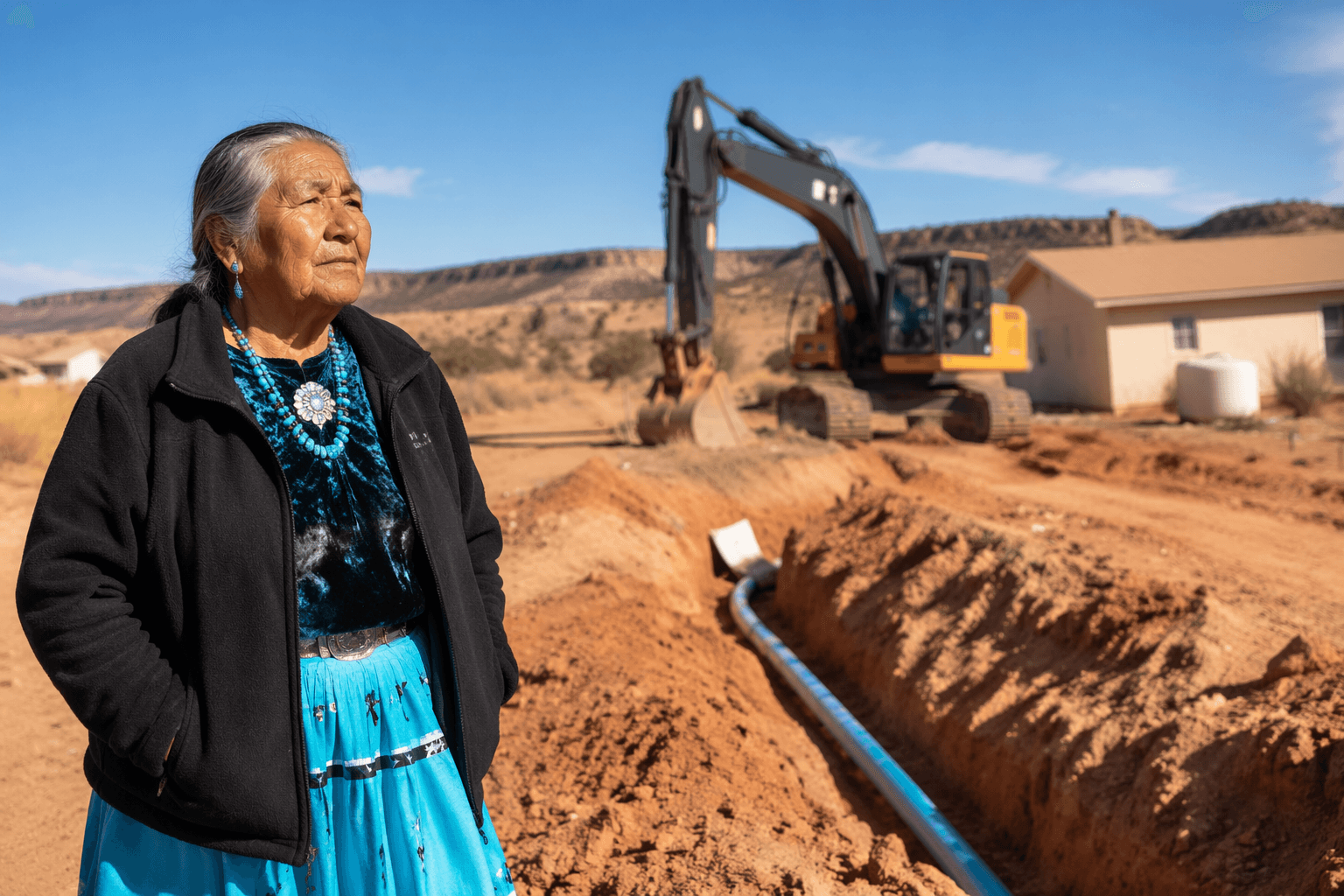
The funding flows through the Indian Health Service and the Infrastructure Investment and Jobs Act, also called the Bipartisan Infrastructure Law. On April 22, the Indian Health Service set fiscal year 2026 allocations at $700 million for Tribal drinking water and sanitation projects, part of $3.5 billion the law provides to the agency between fiscal 2022 and 2026 for critical Tribal water infrastructure. Those allocations follow Tribal leaders’ recommendations to move projects that are already planned and ready for design and construction.
The Sanitation Facilities Construction program is the federal mechanism behind that work, providing technical and financial help for safe water, sewage disposal and solid waste systems on Tribal lands. NTUA, which was established on January 22, 1959, to address the absence of utilities on the Navajo Nation, now operates electric, communications, natural gas, water, wastewater, generation and off-grid residential solar services.
This article was produced by Prism’s automated news system from verified source data, official records, and press releases, then run through automated quality and moderation checks before publishing. The system is built and supervised by the people who set the standards it runs under. Read our full AI policy.
Did this article answer your question?