Pocket Fire smoke forecast warns of air quality impacts in Chinle
Smoke from the Pocket Fire was forecast to reach Chinle and Kayenta, with light to moderate impacts possible as conditions shifted northeast across Apache County.
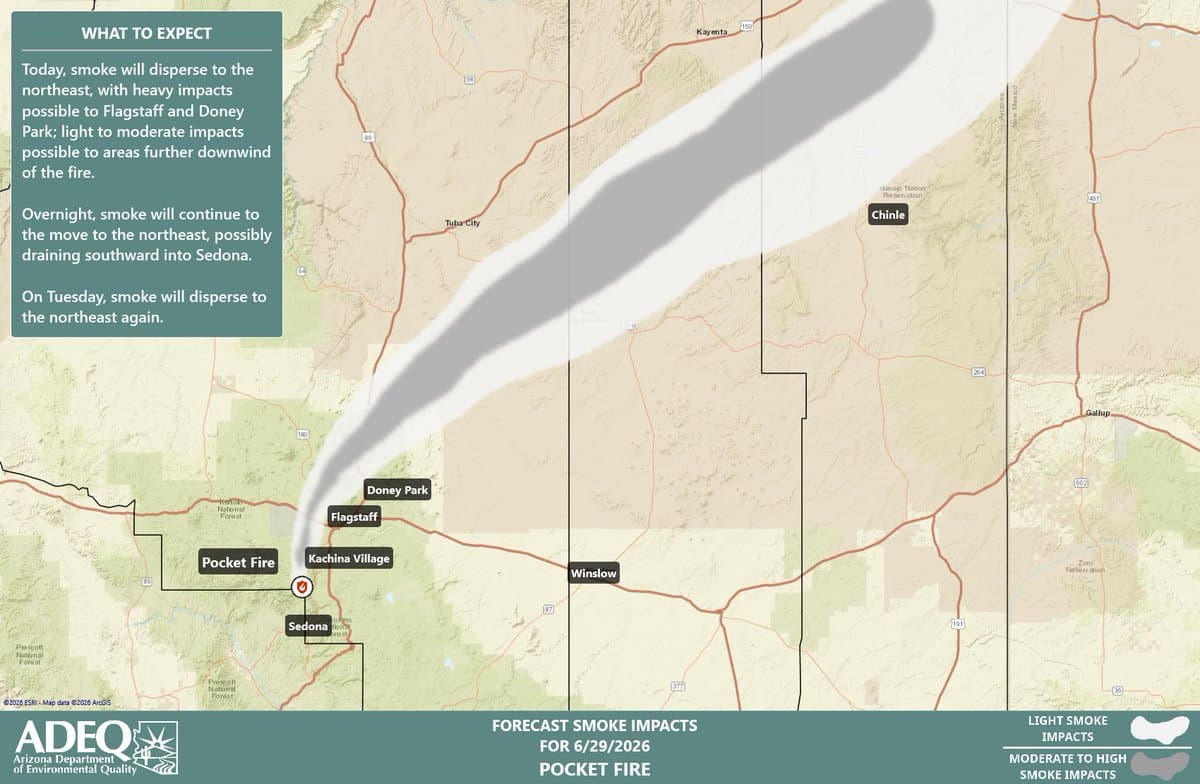
Smoke from the Pocket Fire was forecast to reach Chinle and Kayenta, with light to moderate impacts possible as the plume drifted northeast across Apache County and toward the Four Corners area. The Arizona Department of Environmental Quality said the fire was about 7 miles north of Sedona, and that downwind communities in the reservation could feel the effects even though the flames were far away.
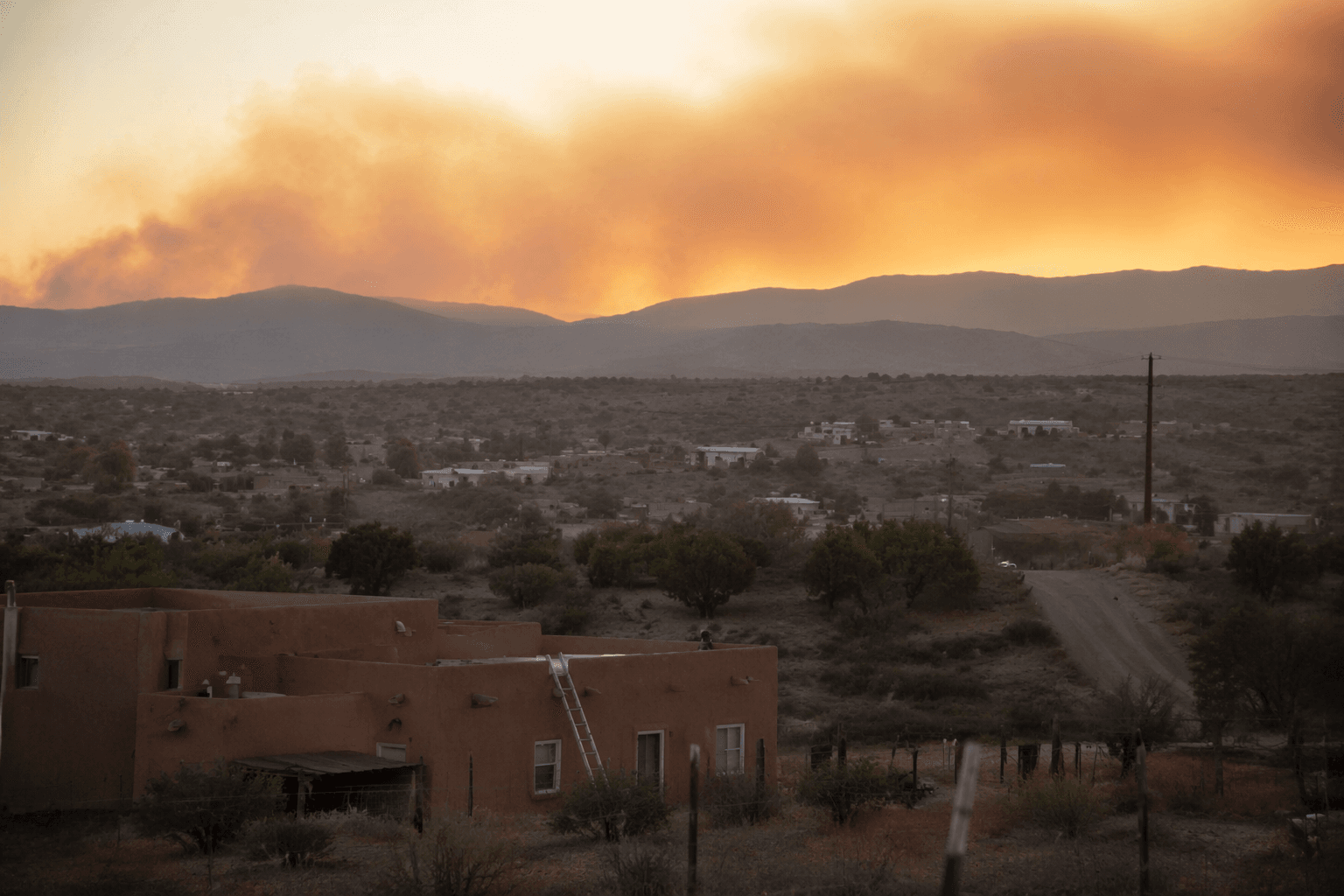
The Coconino National Forest said the Pocket Fire was burning on the Red Rock Ranger District and was under the command of Southwest Area Incident Management Team 2. Emergency updates around the same period put the fire at 11,192 acres with 0% containment, with 302 personnel assigned to the incident. The fire started June 19, and its cause remained undetermined.
ADEQ’s smoke forecast for the Pocket Fire was updated June 29 and was valid through June 30 at 9 a.m. The agency said activated wildfire smoke forecasts are updated daily, available online around the clock, and designed to give a next-48-hour look at likely smoke impacts. That short window matters in Apache County, where smoke can shift quickly with changing winds and reach Chinle, Kayenta and other communities before the fire line itself becomes visible.
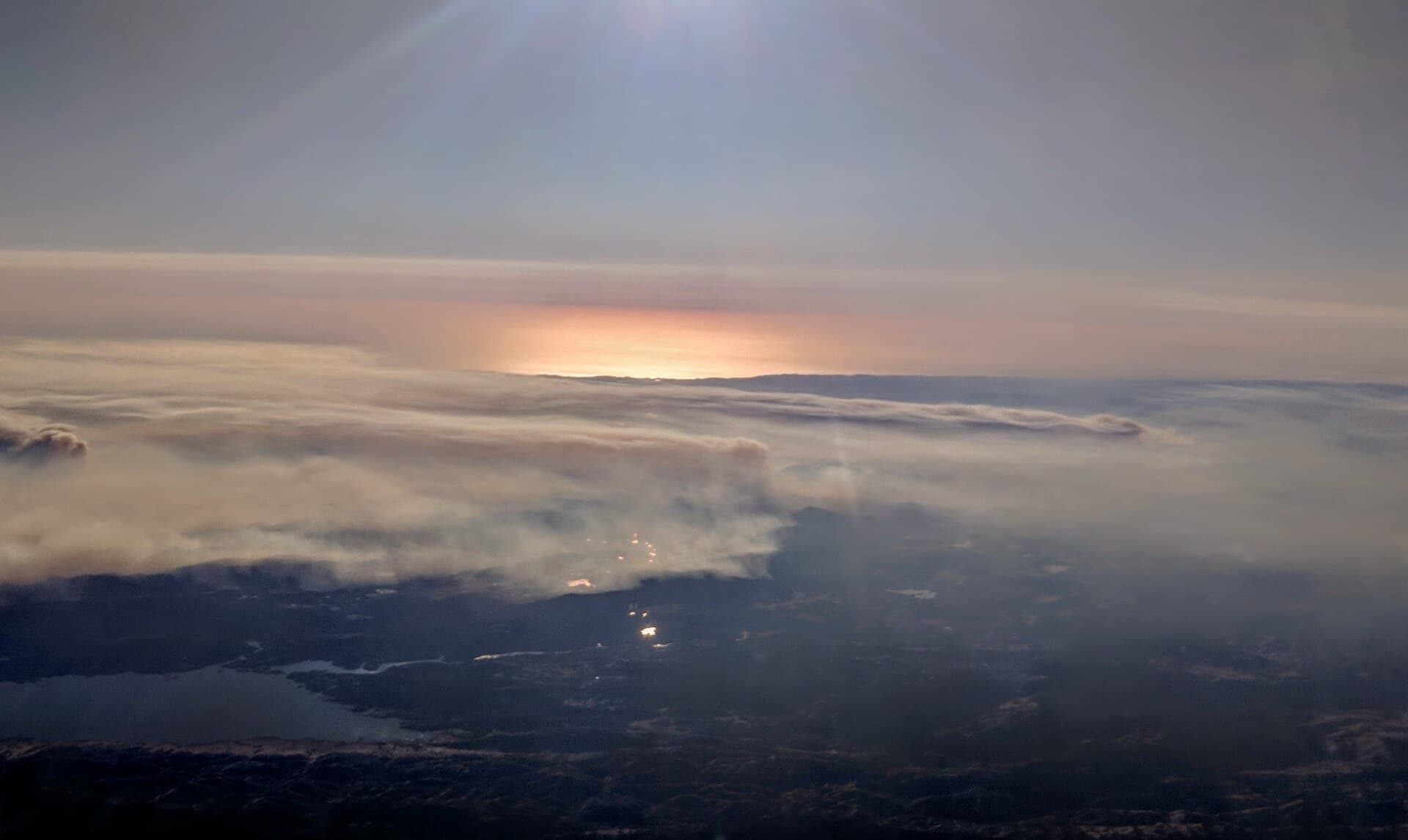
ADEQ said its wildfire support program can monitor air quality in smoke-affected areas when asked by state, county, local or federal agencies, and report conditions to health officials. Residents can also check AirNow’s Fire and Smoke Map, a public tool supported by the U.S. Environmental Protection Agency and the U.S. Forest Service, for wildfire smoke and PM2.5 information. For families in Chinle, schools weighing outdoor activities and workers spending the day outside, the forecast is a warning to watch the next update closely, especially for elders, children and people with respiratory conditions who often feel smoke impacts first.
This article was produced by Prism’s automated news system from verified source data, official records, and press releases, then run through automated quality and moderation checks before publishing. The system is built and supervised by the people who set the standards it runs under. Read our full AI policy.
Did this article answer your question?