Navajo Nation drought emergency hits Chambers, water and livestock stressed
Chambers is already in the drought’s grip: Apache County is fully affected, and Navajo leaders have moved $6.55 million in emergency relief to the center of the response.
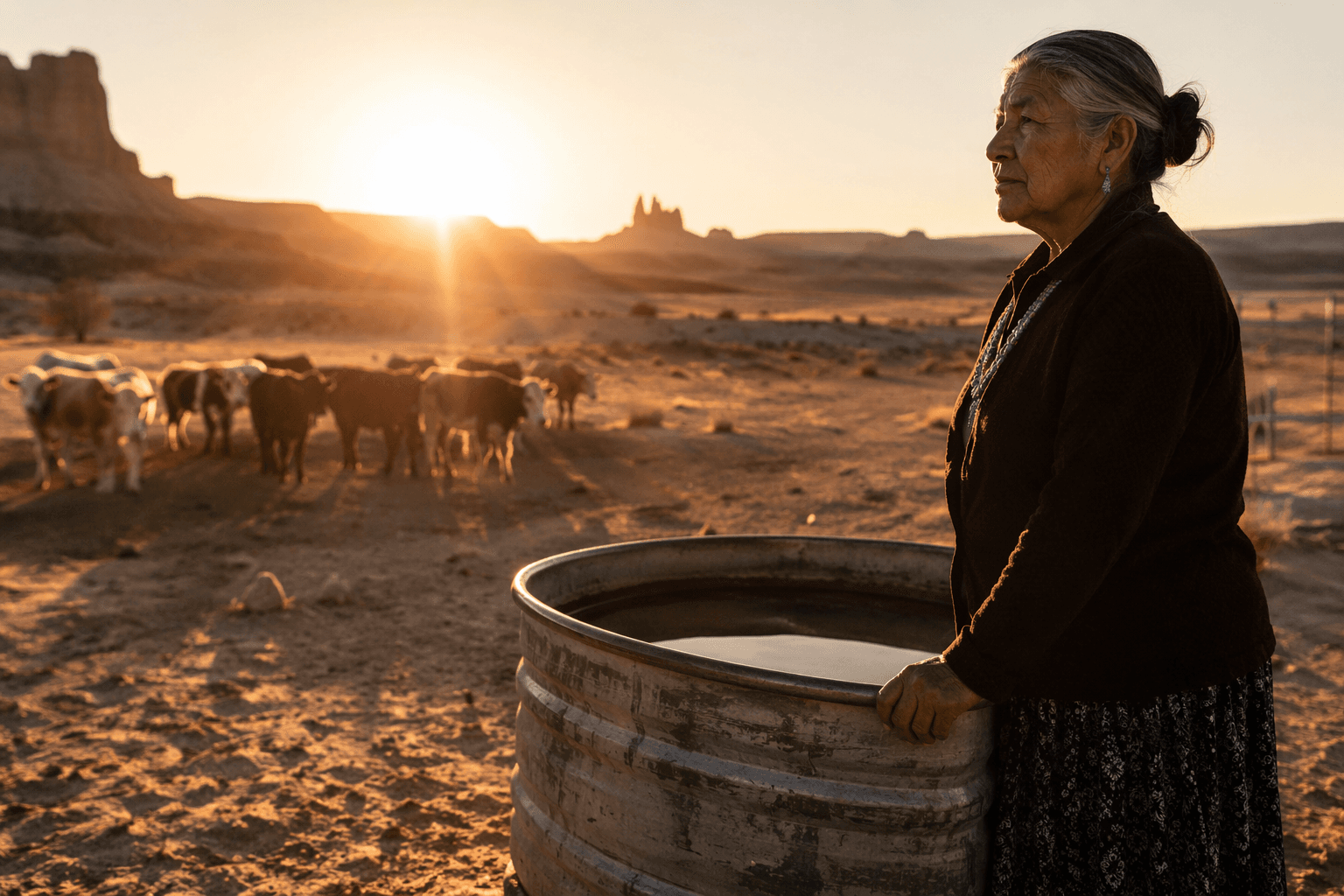
A ranch scene in Chambers made the Navajo Nation’s drought emergency feel immediate: elk crossed pale, stressed ground at Padres Mesa Ranch while nearby livestock and wells faced the same pressure. The declaration now carries a dollar figure, a timetable, and a local test of whether water and ranching infrastructure can be stabilized before conditions get worse.
President Buu Nygren concurred in and signed the Navajo Nation drought emergency declaration on June 10, one day after the Navajo Nation Commission on Emergency Management approved Resolution No. CEM 26-003. The declaration proposed $6.55 million for water and agriculture infrastructure, including windmill repairs, water-storage improvements, and related drought relief. It also reaffirmed a drought state of emergency that had already been activated on May 30, underscoring how long the crisis has been building.
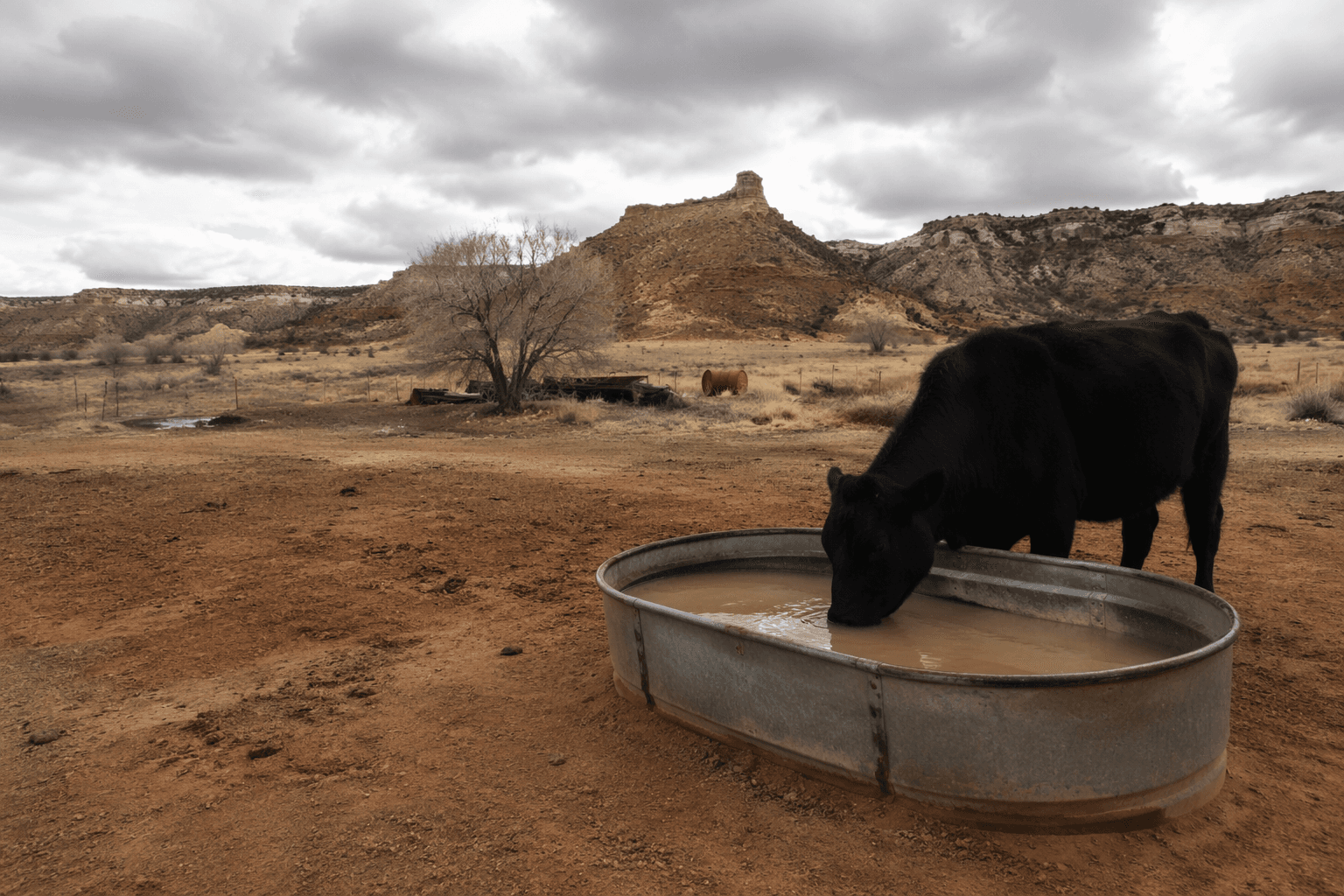
The emergency is visible far beyond Window Rock. The Navajo Times account opened with a rancher collecting water at the 1A-115 Windmill in Bodaway-Gap, then moved to a shrinking stock pond in Tohatchi and overgrazed ground in Shonto. In each place, the pattern was the same: less surface water, thinner forage, and more strain on the people who rely on both for livestock and daily life.
Apache County is not just on the map of this drought, it is in the middle of it. The June 18 U.S. Drought Monitor showed 100 percent of the county’s population affected by drought. County conditions were listed as the 26th driest year-to-date period over the past 132 years, with an estimated 23,829 cattle, 70,838 sheep, 3,229 acres of hay, and 60 acres of haylage in drought conditions. The drought monitor uses five levels, from D0 through D4, to track severity across the county and the region.
The official declaration said Arizona had its hottest and 28th driest January-through-March period on record in 2026, along with its hottest and 27th driest four-year period from April 2022 through March 2026. It said extreme drought continued to affect portions of Navajo and Apache counties and surrounding areas in northern Arizona, where ranchers, schools, businesses and households all depend on water hauling, storage systems and healthy range land.
The administration has been signaling the same pressure for a year. Nygren visited Nahata’ Dziil 14R Ranch in June 2025 to discuss drought and elk impact, and the Nahata Dziil Commission Governance voted on March 13 to keep Padres Mesa Demonstration Ranch under the Navajo Hopi Land Commission Office. In Chambers, the drought is no longer an abstraction. It is a direct cost to water, feed, land and work.
This article was produced by Prism’s automated news system from verified source data, official records, and press releases, then run through automated quality and moderation checks before publishing. The system is built and supervised by the people who set the standards it runs under. Read our full AI policy.
Know something we missed? Have a correction or additional information?
Submit a Tip