Navajo Nation President Nygren Visits UNM to Boost Diné Language Revitalization
Navajo Nation President Buu Nygren met with UNM's 56-year-old Navajo Language Program on March 13, calling Diné Bizaad fluency "a shared responsibility" for all generations.
Navajo Nation President Buu Nygren met with the University of New Mexico's Navajo Language Program in Albuquerque on March 13, pressing for expanded collaboration on Diné Bizaad revitalization and laying out a set of concrete administration initiatives aimed at bringing the language into everyday life across the Nation, from government offices to early childhood classrooms.
The meeting featured Dr. Melvatha Chee, Director of the Navajo Language Program, and associated teachers Mary Whitehair and Nathaniel Brown. Discussions centered on the importance of sustaining Diné Bizaad through education, research, and family and community engagement. The program they convened around has a deep institutional history: since 1970, the Navajo Language Program has offered classes about and in Diné Bizaad, conducted large-scale research studies, and published groundbreaking papers about Navajo linguistics.
A central concern raised during the meeting was the break in daily language use that occurs when young people leave home. Program leaders emphasized that while children begin speaking at an early age, consistent use at home is critical to maintaining fluency, especially as many young people leave home for school and lose daily connection with fluent speakers. Community advocates, including Nathaniel Brown and Mary Whitehair, emphasized the need for more urban access to Diné language learning opportunities.
After the NLP session, Nygren met with the UNM Diné Student Club in a separate meet and greet, where he shared ongoing initiatives from the Office of the President to strengthen Diné Bizaad across the Navajo Nation. Those efforts include expanding online language resources with monthly Diné stories, vocabulary lessons, and conversational tools; integrating Diné Bizaad into daily government operations; increasing bilingual signage; and supporting early childhood immersion programs.
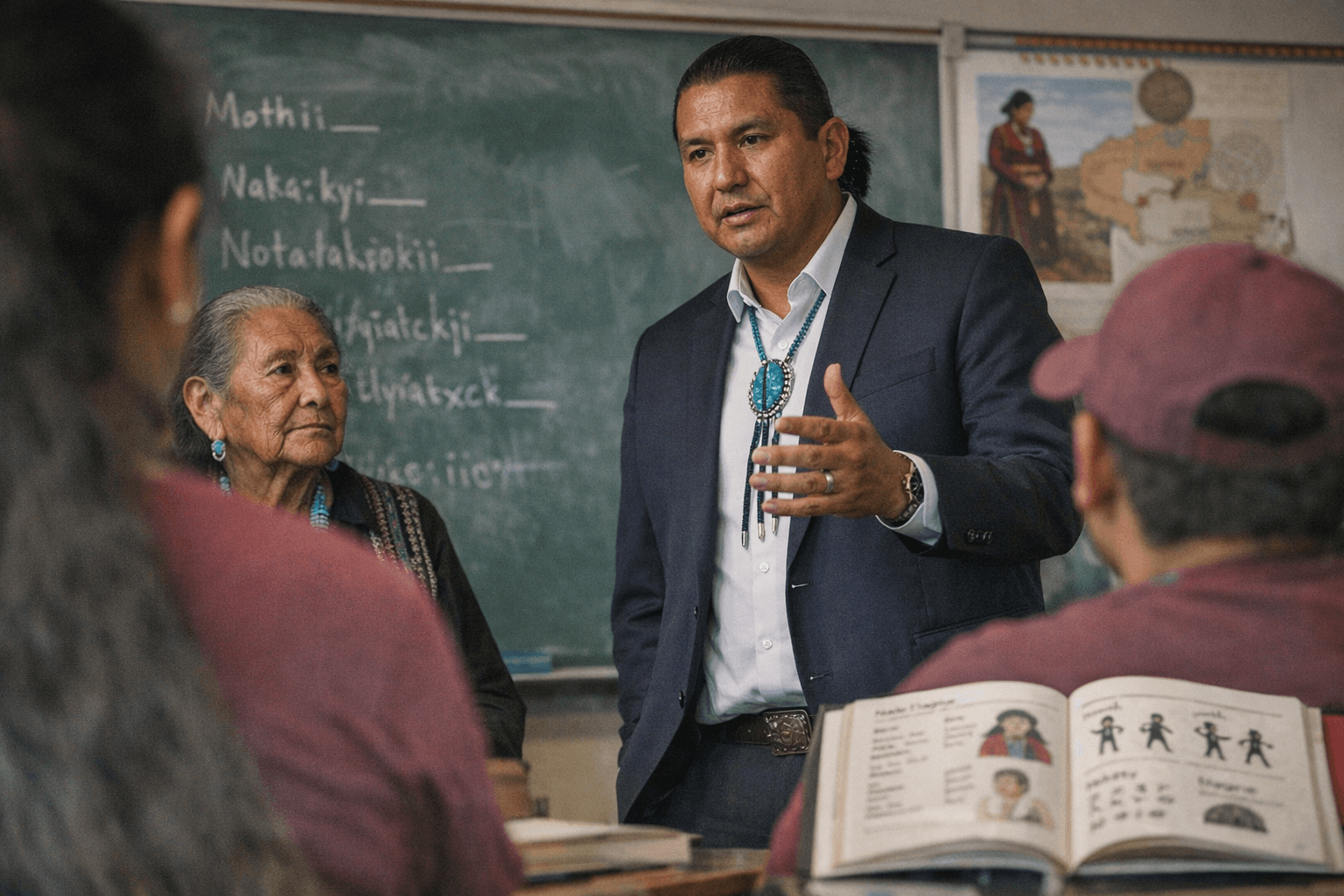
Nygren encouraged continued efforts, stating, "I'm proud of you all for continuing to learn how to speak and teach Navajo," and highlighted the need to expand language resources, including books, films, and writing tools. He then framed the broader stakes plainly: "Ensuring that younger generations continue to learn, speak, and live Diné Bizaad is a shared responsibility," Nygren said.
The visit reflects a pattern of renewed institutional attention to Diné Bizaad at the university level. Dr. Chee's own research, which examines how Diné children acquire the morphologically complex Navajo verb, has drawn national recognition: she received the Mary R. Haas Award from the Society for the Study of the Indigenous Languages of the Americas, presented to a junior scholar for an unpublished manuscript making a significant contribution about Indigenous languages, for her 2017 dissertation on the acquisition of Navajo verbs in children aged 13 months through 10 years. For Apache County families whose children attend school in Albuquerque or Flagstaff and return home with weakening Navajo, the partnership between the Navajo Nation's executive office and UNM's 56-year-old language program signals that institutional support for reclaiming that daily fluency is growing.
This article was produced by Prism’s automated news system from verified source data, official records, and press releases, then run through automated quality and moderation checks before publishing. The system is built and supervised by the people who set the standards it runs under. Read our full AI policy.
Did this article answer your question?