Navajo Nation Washington Office seeks emergency funding to avoid eviction
The Navajo Nation Washington Office asked for $168,000 to stay in its Washington, D.C., space, as a website lapse exposed the strain behind its federal lobbying work.
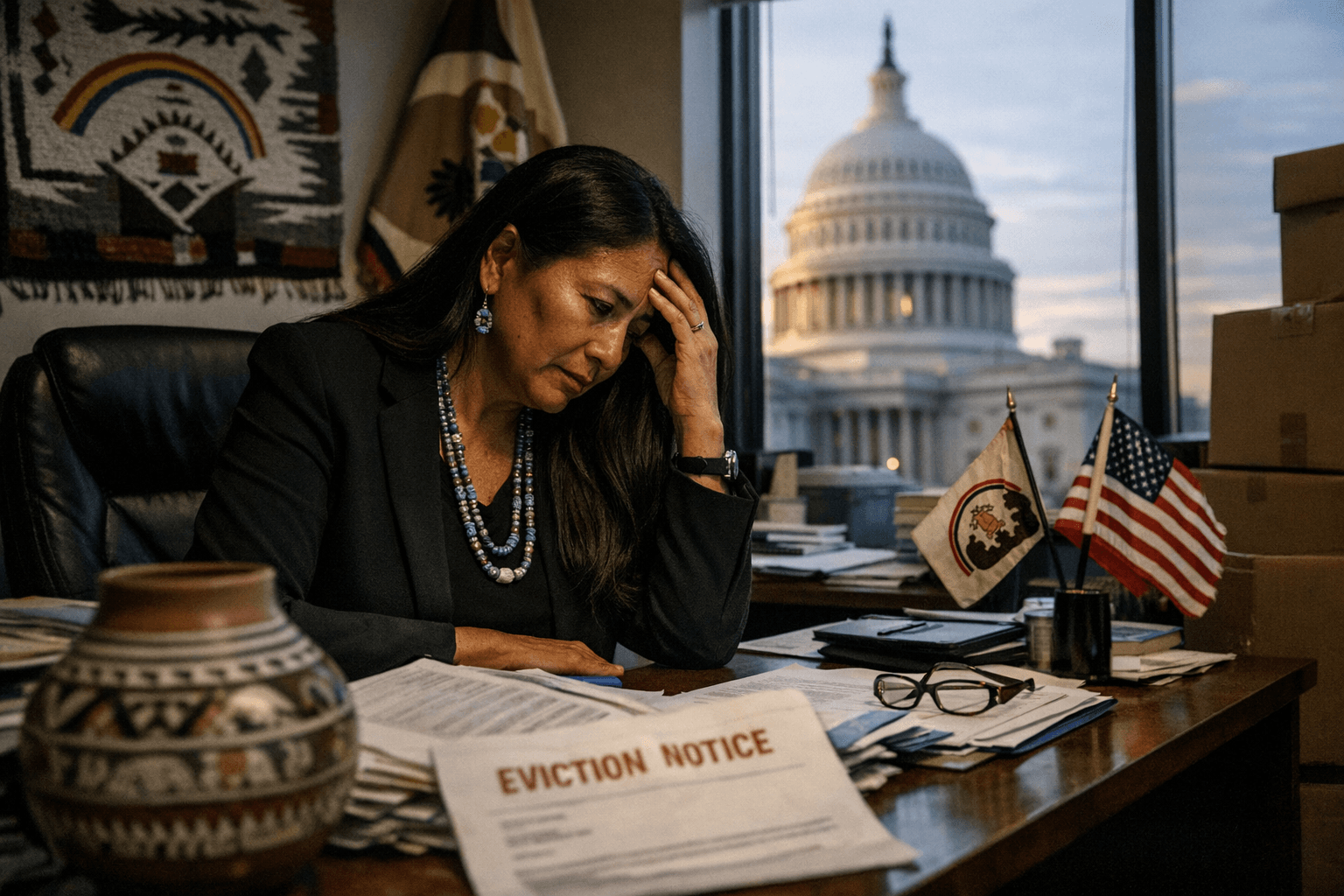
The Navajo Nation Washington Office asked the Navajo Nation Council for $168,000 in emergency funding to avoid being pushed out of its Washington, D.C., office, a move that would narrow the Nation’s access to federal decision-makers on health care, food assistance, water, land and other core priorities. The request came as the Council’s spring session began Monday, putting the funding gap directly before the lawmakers responsible for deciding whether the Nation keeps paying for its federal presence.
The office is the Navajo Nation’s federal advocacy arm and describes itself as an extension of the Office of the Navajo Nation President and Vice President and the Navajo Nation Council. It says its job is to strengthen federal laws, policies, executive orders and practices that reinforce the federal trust responsibility and tribal sovereignty, while working with the White House, U.S. Congress and federal agencies to elevate Navajo priorities. Vince Redhouse, the office’s executive director, said the office has to work with both political parties because tribal needs do not disappear when control of Congress or the White House changes hands.
Arlando Teller, the former federal transportation official, framed support for the funding request as a sovereignty issue, underscoring that the office is not just a Washington address but a government function that helps carry Navajo concerns into federal systems. For residents in Window Rock, Chinle and other Apache County communities, that function can affect how quickly tribal priorities reach federal agencies that control dollars, approvals and access to services.
The funding dispute gained more attention after the office’s website was unavailable at one point. In February 2026, the NNWO site showed an expired-domain notice and placeholder content, and a staff member said the problem may have been as simple as a bill not being paid. That lapse raised new questions about how deep the financial strain runs inside an office that is supposed to keep Navajo leaders connected to Washington.
The pressure on the office also comes against a tight tribal budget picture. Navajo Nation budget materials for fiscal year 2026 projected general-fund revenue at about $285 million, with mandated annual set-asides at $73.5 million, leaving little room for error when expenses pile up. The Washington office has long carried high fixed costs: a 2021 Navajo Nation Council release said it was paying $25,033.63 a month in rent, or about $300,000 a year before utilities, before the Nation approved a $5.1 million property purchase near Capitol Hill to reduce long-term costs. Founded in 1984, the office has been treated as a strategic foothold in Washington, and the current emergency request shows how quickly that foothold can become a liability if the money runs out.
This article was produced by Prism’s automated news system from verified source data, official records, and press releases, then run through automated quality and moderation checks before publishing. The system is built and supervised by the people who set the standards it runs under. Read our full AI policy.
Did this article answer your question?