Nygren joins Gallup Relay For Life to honor cancer survivors
Buu Nygren’s stop at Gallup’s Relay For Life put cancer access gaps back in focus for Navajo and Apache County families who still travel long distances for care.

Buu Nygren’s appearance at Gallup’s Relay For Life was not just a public show of support. For families across the Navajo Nation, including Apache County, it pointed to the harder reality behind every survivor lap and luminaria bag: cancer still means long travel, delayed diagnoses and care gaps that many households have to absorb on their own.
Nygren joined survivors, caregivers, families and other community members at the 27th annual American Cancer Society Relay For Life in Gallup, billed as “Cruisin’ For a Cure.” The event was held June 12-13 at Courthouse Square, 207 W. Hill, with survivor and caregiver registration starting at 5 p.m. and an opening ceremony set for 6 p.m. The gathering included the familiar Relay For Life elements that the American Cancer Society says define the fundraiser: a celebration of cancer survivors, a celebration of caregivers, a luminaria ceremony to honor and remember loved ones, and the call to fight back against cancer.
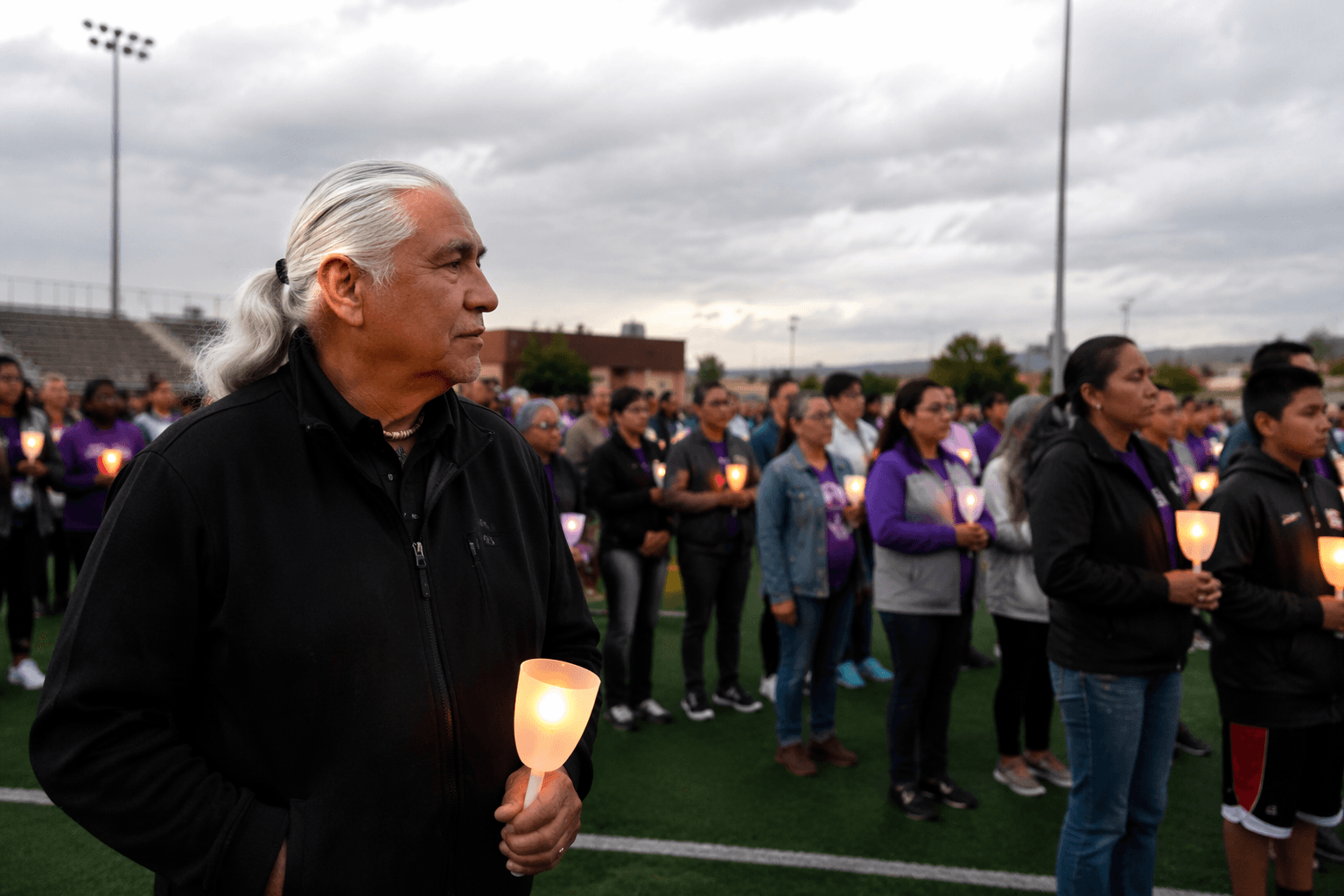
That ritual matters in a region where cancer care is still shaped by geography. Public-health sources have said Navajo patients often live hours from oncology services, and local reporting has described long travel distances, provider shortages and delays that can slow diagnosis and treatment. The Navajo Epidemiology Center’s 2023 report, based on 2014-2018 data, counted 2,981 cancer cases among Navajo Nation residents during that period, and researchers with the Center for Native American Cancer Health Equity have noted higher rates of kidney, liver, stomach and gallbladder cancers among Navajo people. Studies and public-health agencies also say Native patients are diagnosed at later stages more often than the broader U.S. population.

The scale of the problem helps explain why a fundraiser in Gallup carries meaning beyond McKinley County. The Centers for Disease Control and Prevention says cancer patterns in American Indian and Alaska Native communities are shaped in part by where people live, how they access health care and the effects of institutionalized racism. In that setting, community events do more than raise awareness. They help keep the burden of cancer visible, support caregivers who are often the first line of help, and send money toward research and services that can reach families public systems still miss.

Relay For Life is built around that mix of remembrance and action, and Nygren’s presence placed tribal leadership squarely inside that conversation. For Navajo and Apache County residents facing cancer today, the real issue is not whether a crowd showed up in Gallup. It is whether care will arrive in time, close enough to home, and with enough support to keep families from carrying the whole burden alone.
This article was produced by Prism’s automated news system from verified source data, official records, and press releases, then run through automated quality and moderation checks before publishing. The system is built and supervised by the people who set the standards it runs under. Read our full AI policy.
Did this article answer your question?