Solar project brings electricity to 100 Chinle-area Navajo homes
Solar power reached 100 Navajo homes near Chinle, where electricity still shapes homework, refrigeration and safety for families far from the grid.

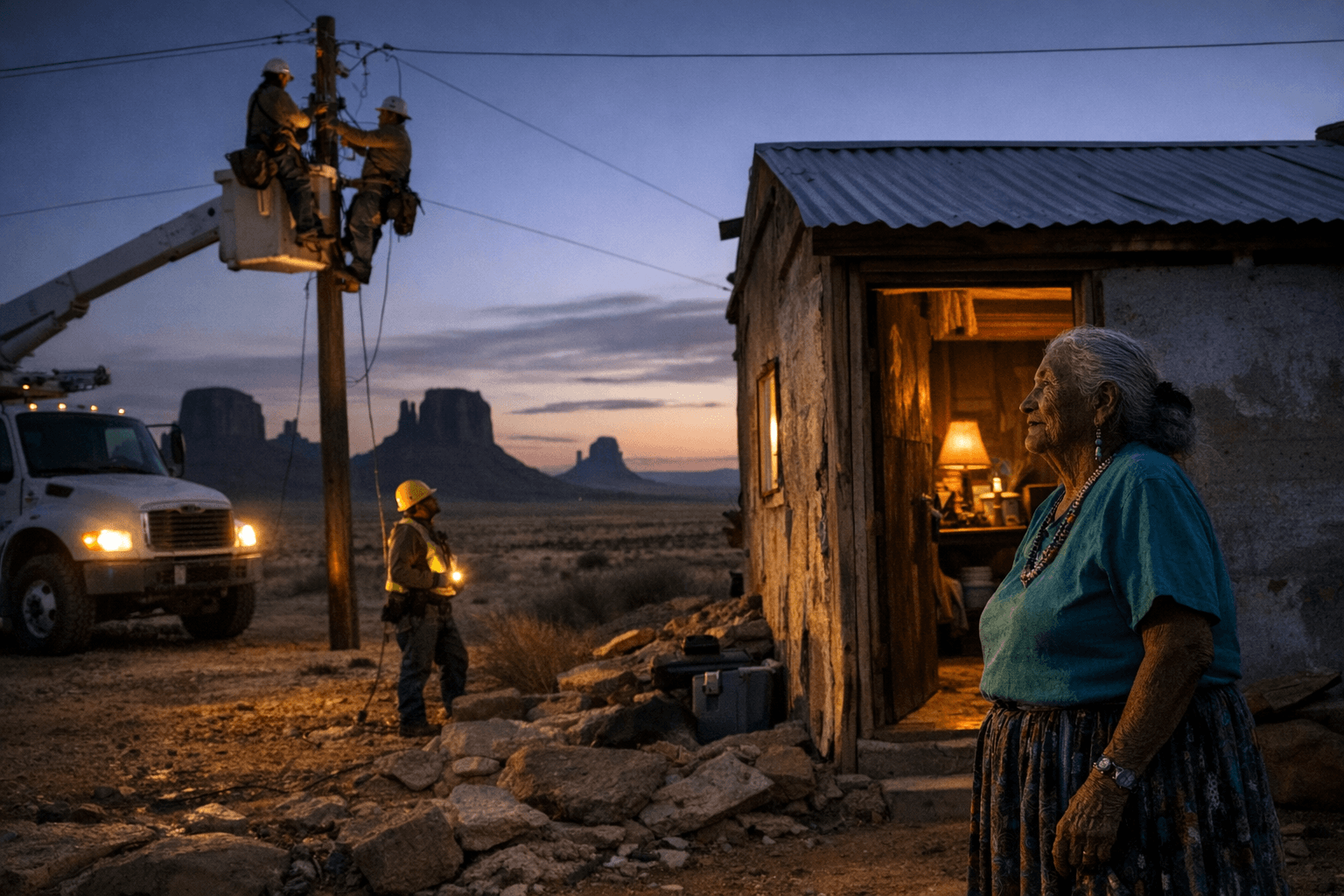
One hundred Navajo Nation homes near Chinle finally got electricity through a solar project funded by The Church of Jesus Christ of Latter-day Saints and Heart of America, a local step that underscored how far Apache County still is from closing one of its most basic infrastructure gaps. The installations were completed in March 2026 in northeastern Arizona, in an area where power is still a daily dividing line between households with stable light, refrigeration and communication, and those left to rely on rechargeable lamps and other stopgap fixes.
The project mattered because the need remains large. About 14,000 homes on Navajo Nation land still lack electricity, according to the figures attached to the effort, and a 2024 Payne Institute for Public Policy commentary put the number at roughly 13,000 households, saying those homes made up most of the estimated 17,000 Native American tribal homes in the United States without electricity. The Navajo Nation spans about 27,000 square miles across Arizona, Utah and New Mexico, a geography that helps explain why utility buildout has lagged in remote places like Chinle, where distance alone drives up cost and slows service.
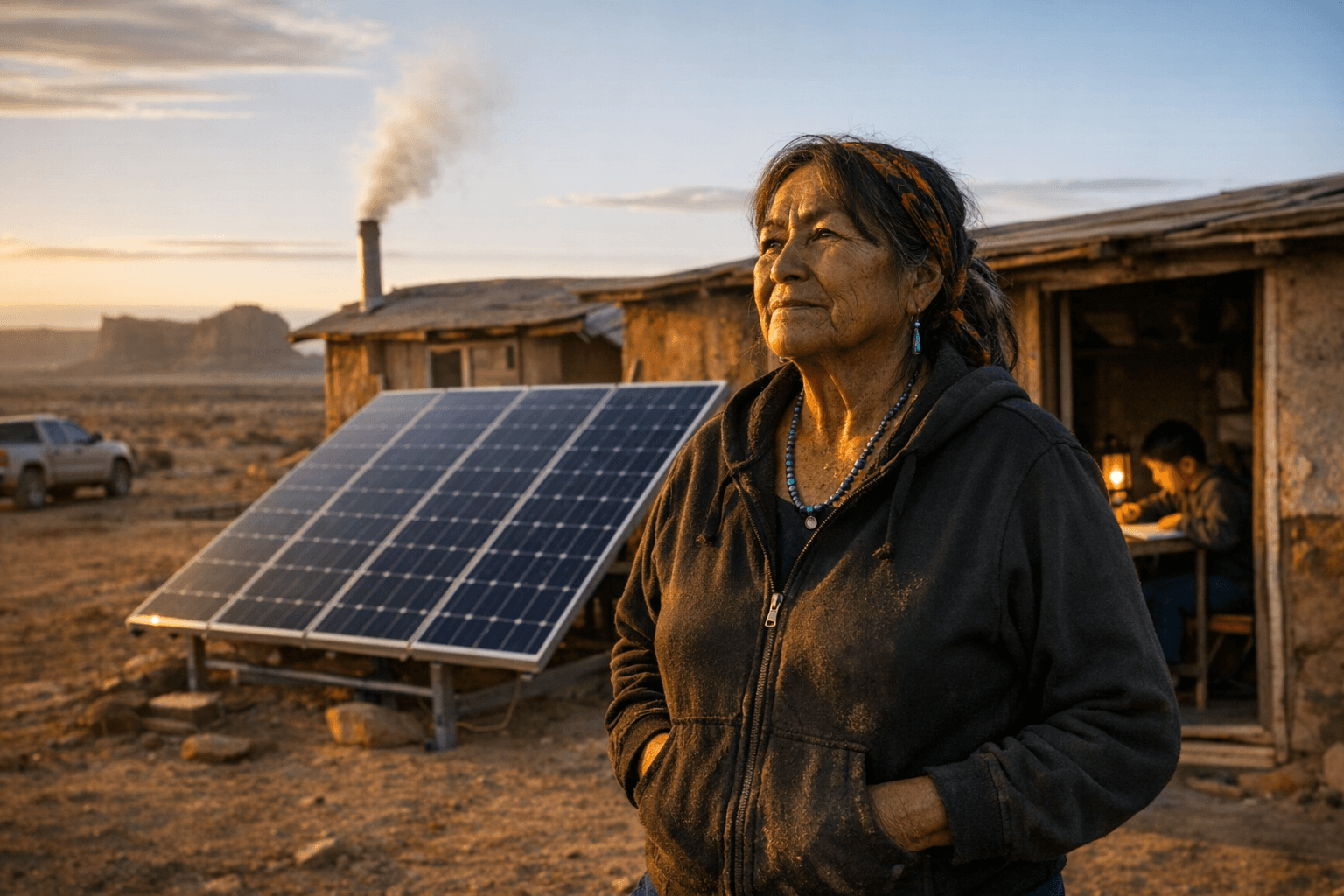
Heart of America has focused on families with school-age children, linking power access directly to education. That means being able to finish homework after dark, read at night, charge devices for school communication and keep a more stable home environment. The installations reportedly took about an hour per home, and once a system is in place, families can have solar power for years. In practical terms, that can mean lights for a child finishing an assignment, a charged phone for a parent, or cold storage for food and medicine in homes that have gone without grid service.
The effort also fits into a longer, uneven push to electrify the Navajo Nation. The Navajo Tribal Utility Authority and the American Public Power Association have worked for years on Light Up Navajo, a grid-connection campaign that has been operating since 2019. NTUA said in 2025 it was preparing for another spring 2026 round of work, while APPA has said the initiative has reduced first cost for rural electrification and brought volunteer crews, about $440,000 in volunteer time and more than $272,000 in donations. Earlier Heart of America-linked projects also brought off-grid solar to 27 families in 2023 and 38 families in a later related effort.
The Chinle project shows what outside partners can do quickly, but it also shows the scale of the unfinished job. A one-hour installation can change a household overnight; it does not, by itself, replace the slow work of building a system broad enough to serve thousands of Navajo homes that still remain off the grid.
Sources:
Know something we missed? Have a correction or additional information?
Submit a Tip