Benedictine College marks Divine Mercy Sunday amid finals-season stress
In finals season, Benedictine turned Divine Mercy Sunday into a campus reset, welcoming a record 30 students into full communion and centering mercy in daily student life.
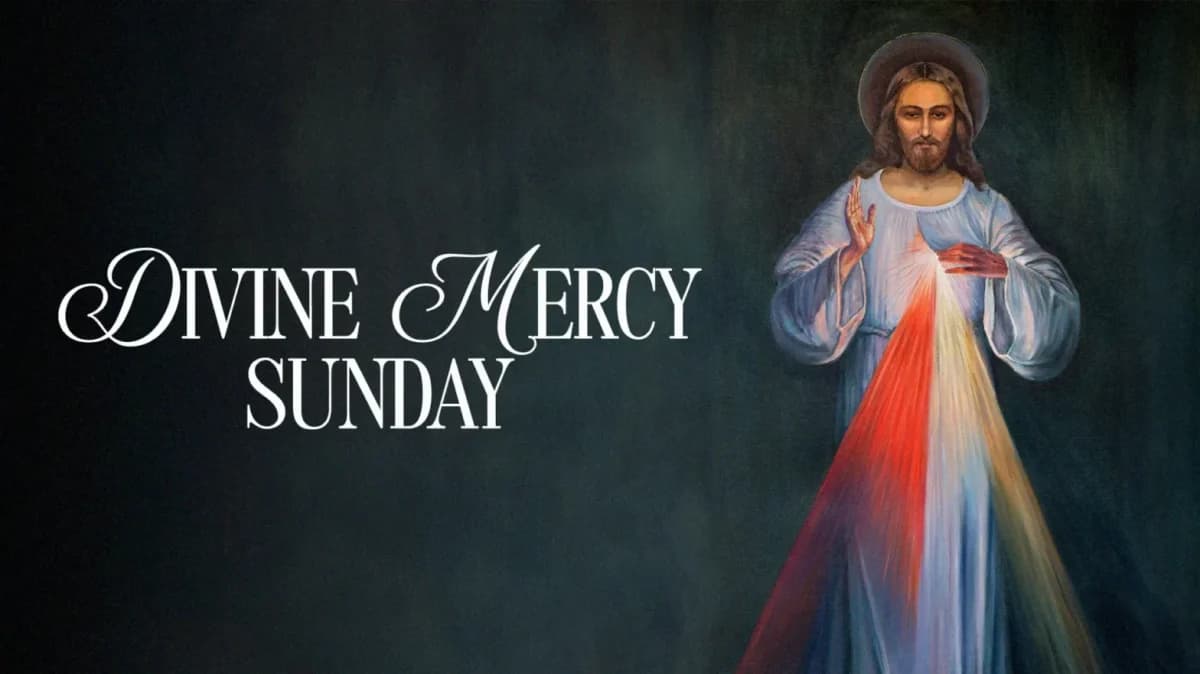
A campus reset between Easter and finals
At Benedictine College, Divine Mercy Sunday lands at exactly the right moment, after Easter’s celebrations fade but before final exams take over every schedule. That stretch is when students are measuring grades, counting remaining assignments, and feeling the short runway to summer, which makes a feast about mercy feel less like a distant church observance and more like a practical invitation to breathe.
The message matters because it speaks directly to pressure. On a residential campus where more than 75% of students live on site and where 2,247 full-time undergraduates were enrolled in September 2025, academic stress is not abstract. It shows up in the library, in late-night study sessions, in dorm conversations, and in the quiet decision to either keep going alone or lean into a community built around faith.
Why Divine Mercy Sunday fits Benedictine’s rhythm
Divine Mercy Sunday is tied to the Second Sunday of Easter, according to the U.S. Conference of Catholic Bishops, and its modern devotion is rooted in Saint Faustina Kowalska. She was canonized by Pope John Paul II on April 30, 2000, in St. Peter’s Square, and the Vatican describes her message as centered on God’s mercy, trust in God, and mercy toward neighbors.
That theological frame matters at Benedictine because the college has long presented campus faith life as both serious and practical. Mercy is not treated as a vague feeling. It is presented as something lived out in sacramental life, in student discipline, and in the routines of a Catholic, Benedictine, liberal arts, residential college in historic Atchison, Kansas.
The Chaplet of Divine Mercy remains an established part of that devotion, but the deeper point is simpler: mercy is not reserved for people who feel spiritually polished. It is meant for students who are tired, distracted, anxious about grades, or worried about the future. In a finals-season setting, that makes the feast unusually immediate.
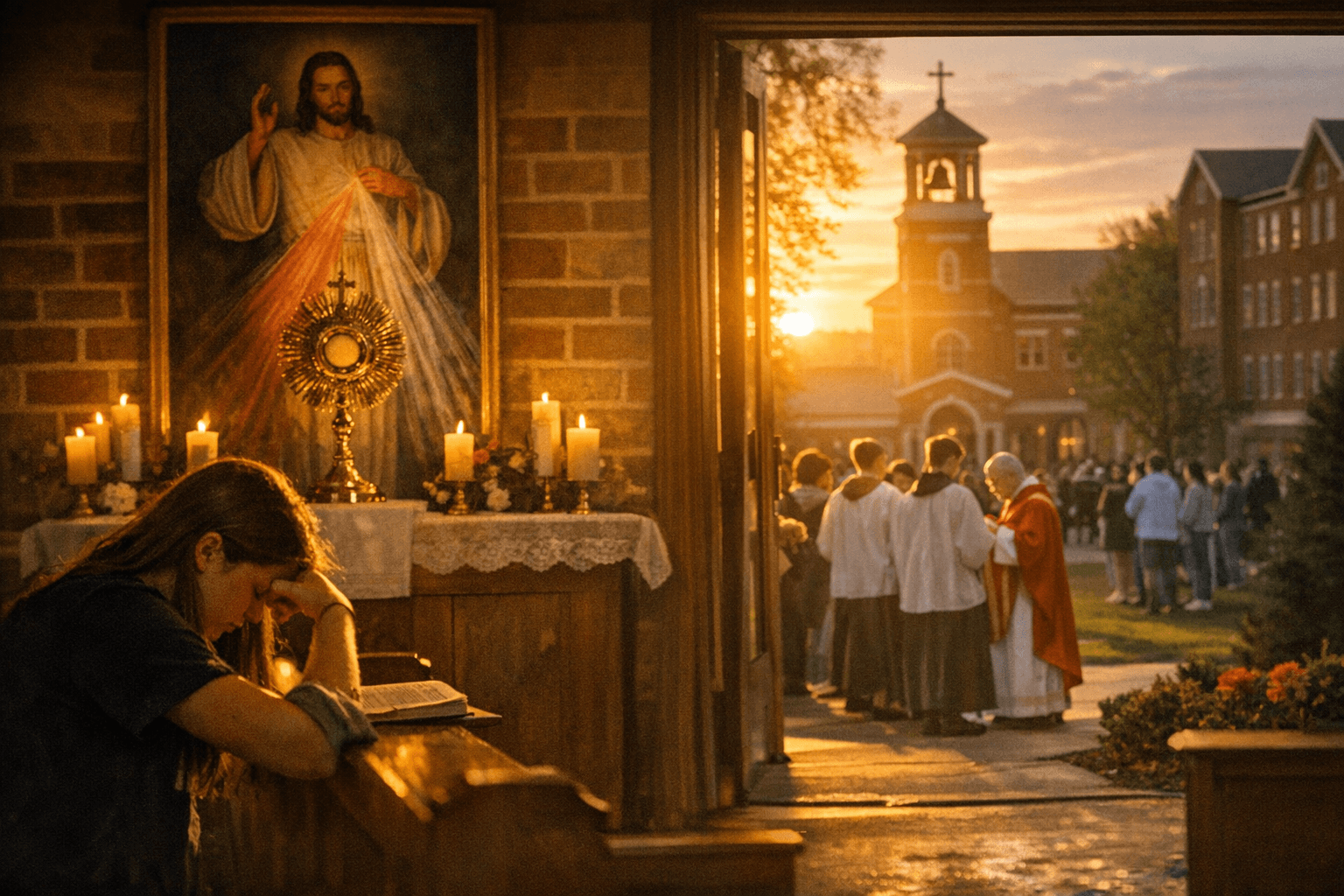
A record welcome into the Church
The strongest sign of that immediacy came in the liturgy itself. Benedictine College welcomed 30 students into full communion with the Catholic Church on Divine Mercy Sunday, the largest group to date. Eight students received all of the sacraments of initiation, while 22 received confirmation after eight months of weekly OCIA meetings.
That is more than a ceremonial marker. It is a visible answer to the question of what faith formation looks like when a campus takes it seriously. Students spent months in weekly preparation, then stepped into a liturgy that tied their personal commitments to the broader life of the Church.
Archbishop Shawn McKnight celebrated the liturgy. McKnight was installed as the fifth Archbishop of the Archdiocese of Kansas City in Kansas on May 27, 2025, giving the moment added weight for a Catholic institution in the same region. Benedictine also identified assistant chaplain Father Christian Schwenka as a leader of the formation process, underscoring that the event was the product of sustained pastoral work, not a one-day occasion.
Why the story resonates in Atchison
For Atchison, this is not just a campus note. Benedictine College is one of the town’s defining institutions, and its liturgical calendar shapes everything from chapel traffic to the emotional tone of spring. When the college gathers around a feast like Divine Mercy Sunday, the effect reaches beyond the students in the pews.
The college’s scale makes that influence significant. With 2,247 full-time undergraduates and a largely residential student body, its rhythms are woven into everyday life in town. That means a liturgical event is never only internal. It becomes part of the social texture of Atchison, where student life, parish life, and the college’s identity overlap.

The timing also matters. Late April is the season when campus energy turns inward, away from public events and toward final projects, exams, and graduation prep. A moment centered on mercy and trust offers a counterweight to that pressure. It tells students that spiritual life does not have to wait for a calmer semester.
What the college culture reveals
Benedictine’s response to Divine Mercy Sunday reflects a broader culture that blends sacrament, routine, and formation. The college’s faith life includes daily Mass, confession, Bible studies, pilgrimages, service projects, and sacramental ministry, all of which create a campus environment where devotion is meant to be visible and habitual rather than occasional.
That culture also shows up in spring programming tied to vocation. Benedictine notes an annual vocation fair and visits from religious orders and diocesan vocation directors, a pattern that reinforces the idea that students are invited to ask not only how they will finish the semester, but what kind of life they are meant to build afterward.
In that context, Divine Mercy Sunday functions as more than a feast. It becomes a campus-wide reset, one that names stress without surrendering to it. For students balancing final papers, exams, jobs, and the ordinary uncertainty of young adulthood, the message is concrete: mercy is not postponed until life gets easier.
That is why the event lands so strongly at Benedictine and why it matters in Atchison. It joins liturgy, identity, and student life in a way that feels both pastoral and immediate, turning the weeks between Easter and finals into a reminder that resilience at a Catholic college is not built on pressure alone, but on trust, formation, and mercy.
This article was produced by Prism’s automated news system from verified source data, official records, and press releases, then run through automated quality and moderation checks before publishing. The system is built and supervised by the people who set the standards it runs under. Read our full AI policy.
Did this article answer your question?