Benedictine missionary builds faith through personal, relational campus ministry
Milani Alo’s ministry at Benedictine shows how steady, personal outreach can shape belonging, faith and persistence for students and athletes.
A ministry built on relationships
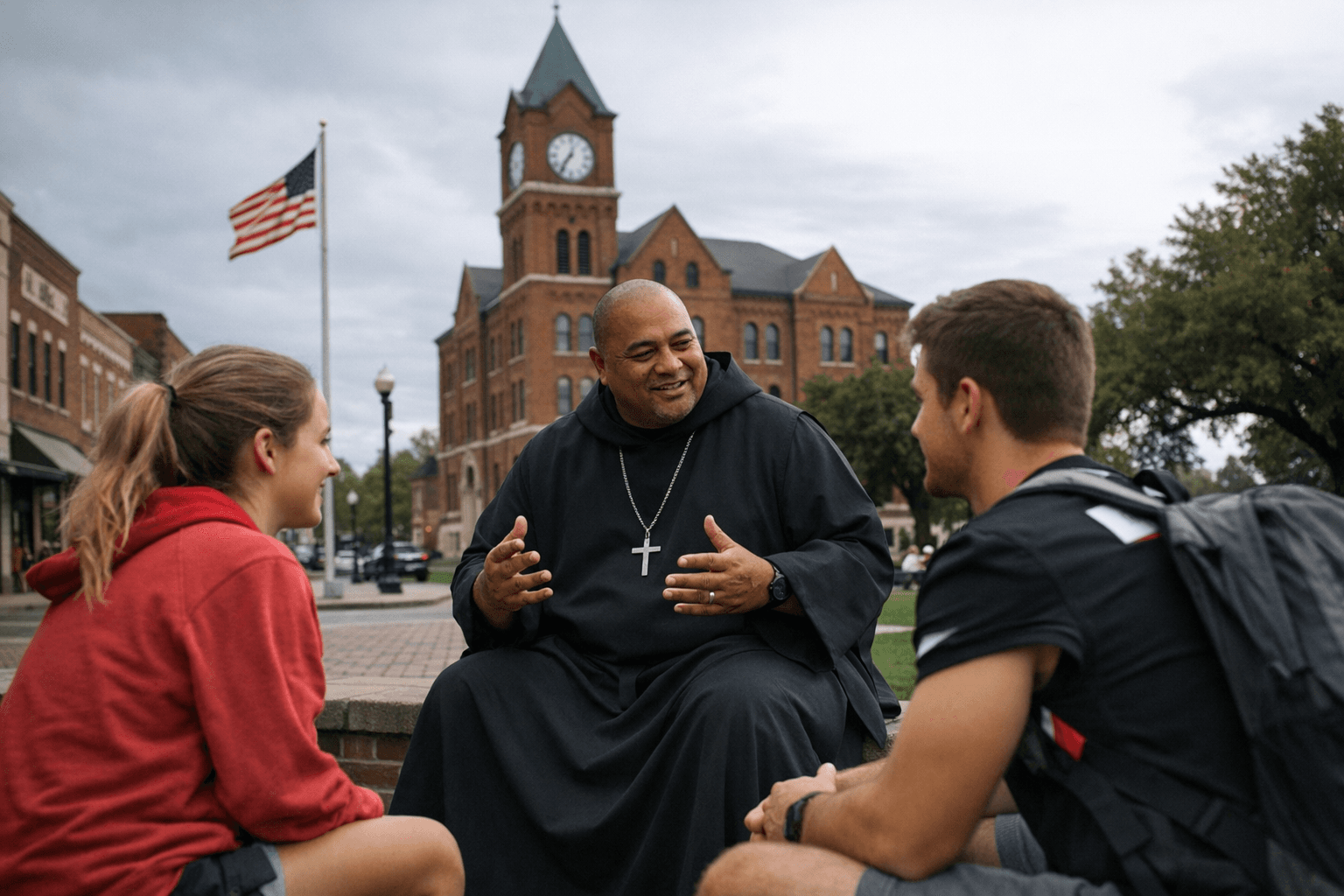
Milani Alo’s work at Benedictine College is built on a simple idea: students are more likely to open up when someone walks with them instead of talking at them. As a Fellowship of Catholic University Students missionary, she focuses on young women and student-athletes, using intentional relationships to support their spiritual lives and help them feel seen, known and loved.
That approach matches the culture Benedictine has spent years building on its Atchison campus. The college’s Mission and Ministry office says its goal is to transform lives in Christ for a life of mission, and it does that through encounters with Jesus Christ in sacraments, outreach and stewardship. At Benedictine, faith formation is not limited to a Sunday message or a formal lecture. It is woven into daily life through repeated contact, mentorship and peer-to-peer trust.
Why this matters in Atchison
For Atchison, the story is bigger than one missionary profile. Benedictine College is one of the city’s most visible institutions, and its ministry habits shape how students experience the school from the moment they arrive. The campus ministry framework includes three daily Masses, daily confession times, perpetual Eucharistic Adoration, and spiritual guidance from monks, sisters, FOCUS and SPO.
That structure gives students more than religious programming. It gives them a consistent support system inside a college environment that can otherwise feel anonymous, demanding or isolating. In practical terms, that matters for persistence and belonging. A student who has a place to pray, a person who remembers her name, and a small group that checks in regularly is more likely to feel anchored in campus life.
How athletics becomes a doorway
Alo’s work with student-athletes is especially important at Benedictine because sports are a major part of the college’s identity. Benedictine lists 19 varsity sports and 4 club programs, and the campus serves more than 2,000 students, including about 800 student-athletes. Roughly half of those athletes are not Catholic, which makes athletics a natural point of contact for spiritual conversation, trust and invitation.
That is where relational ministry has immediate value. Athletes already operate on structured schedules, close teams and shared pressure, which makes them reachable through routine, not just through events. Alo’s approach fits that reality: she is not trying to force a moment, but to make room for conversations that connect competition, identity, friendship and faith.
The results are visible in the way Benedictine’s campus culture keeps linking sports and spiritual formation. In 2024, the college said 19 students entered the Catholic Church on Divine Mercy Sunday, and 17 of them were student-athletes. That number stands out because it shows how deeply the school’s athletic culture and Catholic mission overlap.
FOCUS at Benedictine, from the beginning
Alo’s work also reflects the long partnership between Benedictine and FOCUS. The organization says it began with just two missionaries at Benedictine College in 1998, and Benedictine describes the school as a premier partner and the birthplace of FOCUS. That history matters because it shows the model was not imported as an afterthought. It grew in Atchison and became part of the college’s identity.
FOCUS missionaries generally do not rely on big speeches or polished performances. They build contact over time, meeting students where they already spend time and helping connect ordinary routines to deeper spiritual questions. At Benedictine, that means residence halls, athletic spaces, student friendships and small group settings become as important as chapel and formal ministry events.
That style of outreach is one reason Benedictine stands out in Catholic higher education circles. The college’s campus ministry ecosystem is not simply about protecting doctrine or staging large gatherings. It is about helping students practice faith in daily life, where stress, loneliness, competition and ambition often collide.
What students get from this model
The practical value of Alo’s approach is easy to see in the pressures students face now. College life asks young adults to manage academics, athletics, relationships and future plans all at once. A relational ministry model gives students a place to talk honestly about those pressures without feeling judged or reduced to a problem to solve.
At Benedictine, that can influence the enrollment experience as much as the spiritual one. Students who find mentorship, friendship and a dependable faith presence are more likely to settle in, stay involved and persist through the hard parts of college. That is especially true on a campus where mission and belonging are connected to the college’s broader Catholic identity rather than treated as separate programs.
Rooted in Atchison’s history
Benedictine’s current ministry culture is deeply tied to its local roots. The college traces its heritage to two Benedictine monks who arrived in Atchison in 1856 to found a school. St. Benedict’s Abbey was founded in 1857, and a boarding school opened in 1858 with six students. Today the college sits in historic Atchison on the west bank of the Missouri River, about 45 miles north of Kansas City.
That history helps explain why the college still treats ministry as part of its public identity, not just a private belief system. The monks, sisters and missionaries who shape campus life are carrying forward a tradition that has been local from the start. Alo’s work fits that tradition by making faith personal, practical and present in the places students already live, compete and build their futures.
This article was produced by Prism’s automated news system from verified source data, official records, and press releases, then run through automated quality and moderation checks before publishing. The system is built and supervised by the people who set the standards it runs under. Read our full AI policy.
Did this article answer your question?