Bill Lipscomb Carries Three Generations of Farming Legacy at Autauga County's 3L Ranch
Bill Lipscomb's 3L Ranch on Lipscomb Road has kept cattle on Prattville's soil across three generations, even as Autauga County's suburban edges push closer every year.
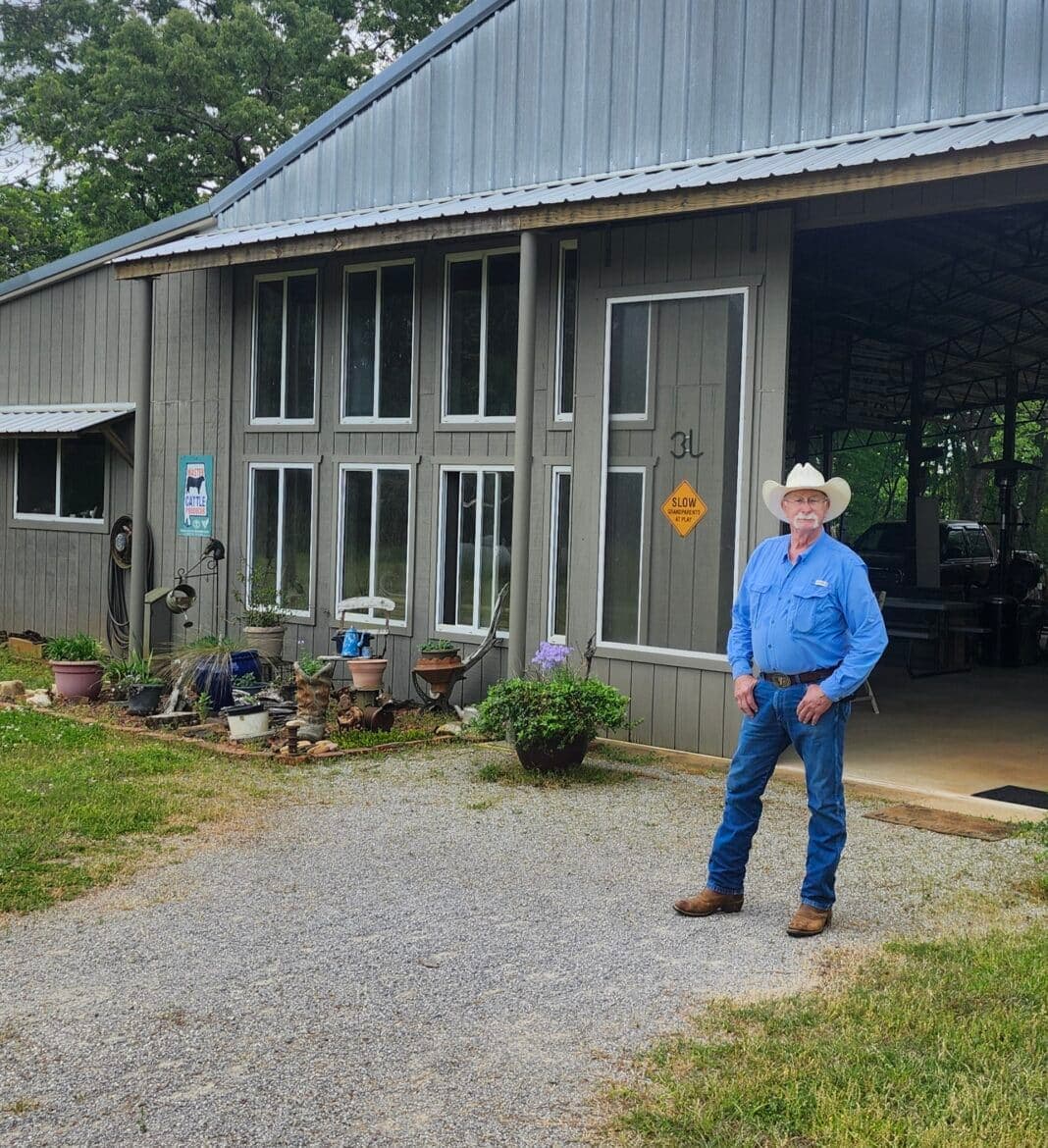
The name on the road tells the story before a word is spoken. Lipscomb Road in Prattville runs through land that Bill Lipscomb's family has worked for three generations, a stretch of Autauga County where the soil still carries the memory of every season his grandparents and parents put into it. Lipscomb now manages 3L Ranch as the third generation to do so, tending cattle, rotating pastures and making daily decisions that connect a family's past to a county's agricultural future.
Three Generations on a Single Piece of Ground
The foundation of 3L Ranch was laid by Lipscomb's grandparents, who established the property and built the working habits that would carry through to his parents' generation and eventually to him. That kind of continuity is rare. Across Autauga County, farmland has steadily converted to subdivisions and commercial corridors, making operations like 3L Ranch a diminishing piece of the county's landscape. What sets 3L apart is not just its age but the deliberate choice, made generation after generation, to stay.
Lipscomb speaks about that choice in terms that go beyond dollars per acre. "We absolutely love it here. There is just no replacement for having a place like this. Having a family together and being able to enjoy each other's company," he has said of the ranch. That sentiment anchors everything about how 3L operates: not as a purely transactional enterprise but as a place where family identity and agricultural work are inseparable.
What Running 3L Ranch Actually Looks Like
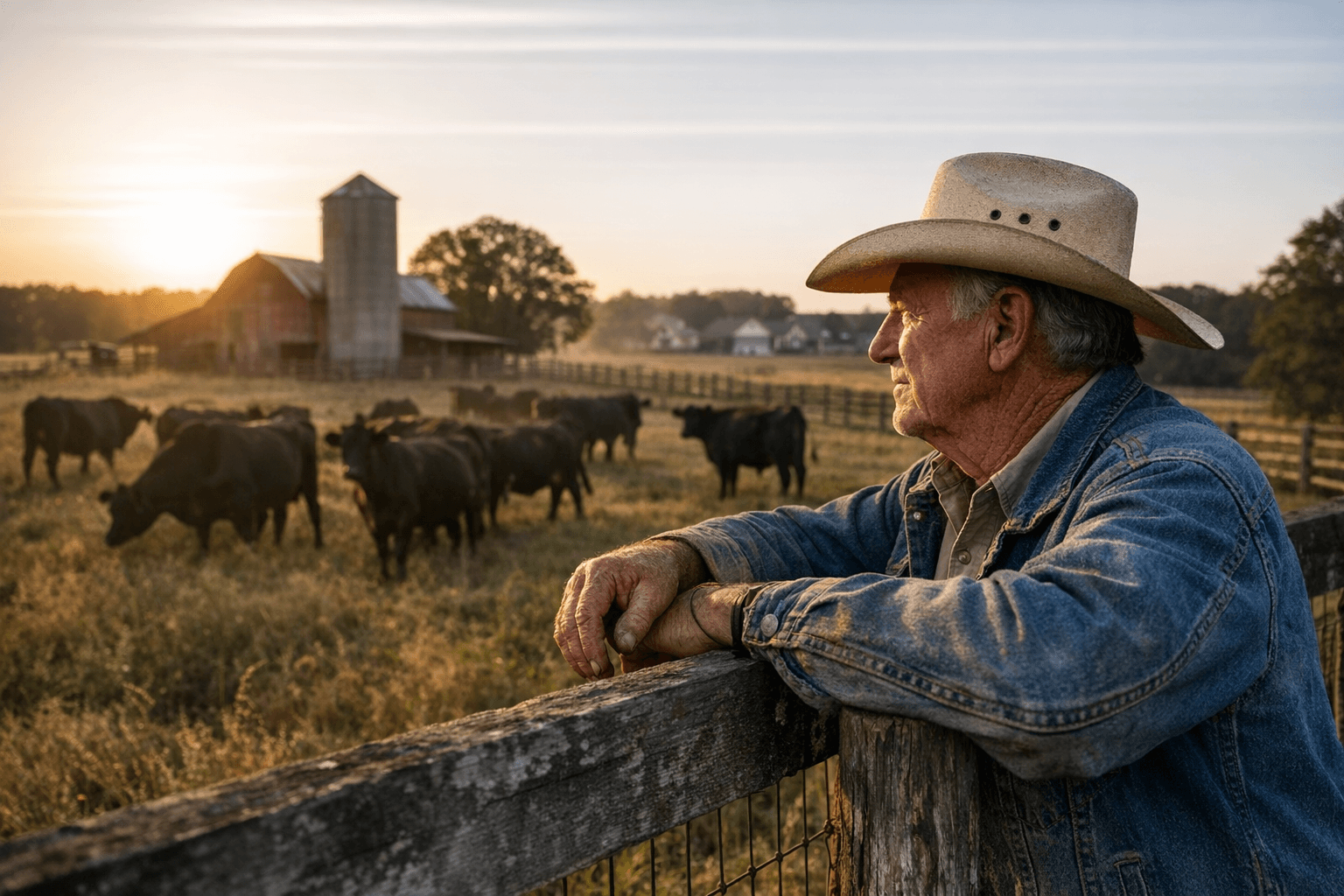
The day-to-day reality of 3L Ranch is centered on cattle production and the intensive land management that supports it. Lipscomb oversees grazing rotations to prevent overgrazing and maintain pasture health, produces hay to carry the herd through leaner seasons and coordinates veterinary care as part of routine livestock management. Equipment maintenance and occasional upgrades are a constant financial consideration, as are feed costs and the unpredictability of Alabama weather, which can shift a season's profitability faster than almost any other variable a farmer controls.
Those practical pressures require Lipscomb to blend traditional knowledge, the kind passed down through family observation and hands-on work, with the business discipline that modern farming demands. Managing a mid-sized cattle operation in 2026 means tracking input costs, watching commodity markets and making decisions about when to sell, when to hold and when to reinvest. None of that erases the agrarian knowledge at the core of what 3L does; it layers on top of it.
Rooted in the County's Agricultural Network
No family farm operates in isolation, and 3L Ranch is no exception. Lipscomb draws on the network of resources that Autauga County's agricultural community has built over decades: the county extension service, which provides research-backed guidance on pasture management, soil health and livestock practices; local auctions, which give ranchers a reliable market for cattle; and the informal knowledge-sharing that happens among neighboring farmers who face the same terrain, the same weather and the same economic pressures.
Those community connections are part of what makes a small or mid-sized operation survivable. Extension agents can help a rancher navigate a forage problem or identify a disease before it moves through a herd. A local auction means a farmer does not have to ship cattle hundreds of miles to find a buyer. And a neighbor who has dealt with the same flood plain or clay soil is often the most useful resource of all. Lipscomb's operation benefits from all of it.
The Tension Between Growth and Agricultural Preservation
Autauga County is not the rural backwater it once was. Prattville has grown steadily as a bedroom community, and development pressure on agricultural land is real and ongoing. The existence of 3L Ranch, and operations like it across the county, represents something that cannot be rebuilt once it is gone: open space, functioning local food supply chains and the kind of land stewardship knowledge that only accumulates over generations.
Lipscomb has made a point of passing that knowledge down. Teaching grandchildren about animal care, pasture health and the discipline that farm work requires is a stated priority, and it reflects an understanding that the ranch's long-term survival depends on more than his own continued involvement. If 3L is to remain in the family for a fourth generation, the next generation needs to understand both why the land matters and how to manage it.
The broader implication reaches past the Lipscomb family. Every time a working farm is absorbed by a subdivision or a strip mall, the county loses not just open acreage but accumulated expertise, local supply and the tax and zoning buffers that agricultural land provides to surrounding communities. Decisions made at the county commission, in zoning hearings and in state agricultural policy directly affect whether operations like 3L can remain viable.
What Sustaining Farms Like 3L Will Require
Lipscomb's outlook is optimistic but clear-eyed. Keeping a family farm viable across generations is not a passive achievement; it requires deliberate effort on multiple fronts. On the business side, diversifying income streams and exploring direct-to-consumer sales offer paths to stability that pure commodity production cannot always provide. On the policy side, favorable tax treatment for agricultural land, zoning that does not penalize working farms and rural infrastructure investment all play a role in whether the math works for a third-generation rancher.
Community will matters just as much. Autauga County residents who value open land, locally produced food and the cultural character that farms like 3L contribute to the county have a stake in the decisions that shape agricultural policy and land use. That is not an abstract point. It is the difference between a Lipscomb Road that still runs through working pasture in twenty years and one that does not.
The ranch on Lipscomb Road has survived two previous generational transitions. Whether it makes a third depends on the same combination of family commitment, sound management and community support that kept it standing this long.
This article was produced by Prism’s automated news system from verified source data, official records, and press releases, then run through automated quality and moderation checks before publishing. The system is built and supervised by the people who set the standards it runs under. Read our full AI policy.
Did this article answer your question?