Baker City budget relief may be temporary as benefit costs rise
Baker City balanced this year’s budget without cutting police or fire, but rising retirement and health insurance costs could force harder choices next cycle.

Baker City got through its latest budget season without major cuts to police or fire, but the biggest financial pressure in city hall is building where residents cannot easily see it: employee benefits.
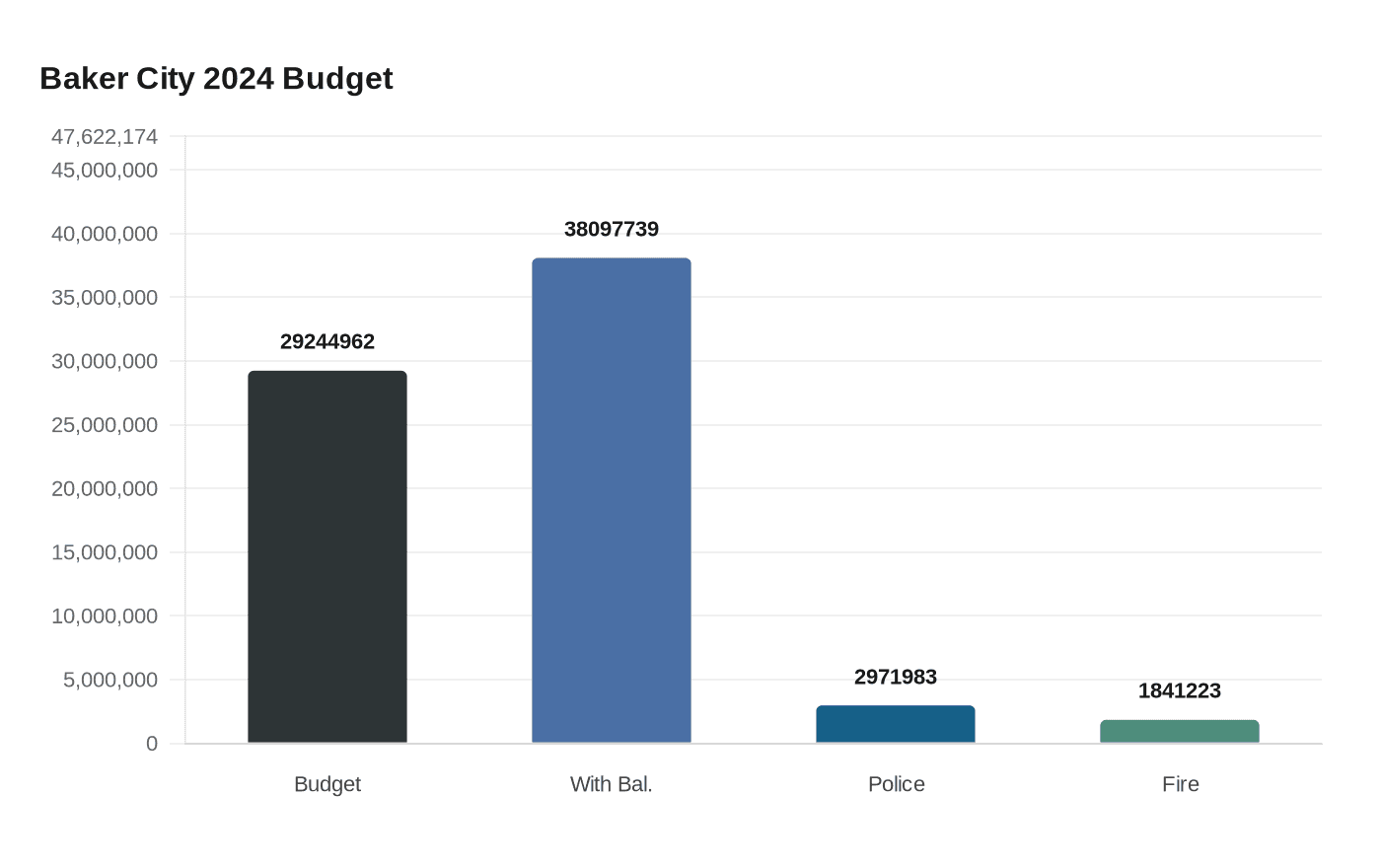
City Manager Barry Murphy told the Baker City Budget Board on May 20, 2024, that the city’s financial position had improved from the year before and that the proposed spending plan did not require reductions in the Police Department or Fire Department. The council then unanimously adopted the 2024-25 budget on June 25, 2024, totaling $29,244,962, or $38,097,739 when unappropriated ending fund balances were included.

The adopted budget set aside $2,971,983 for police and $1,841,223 for fire, two of the largest recurring costs in a city Baker City’s size. Those numbers matter because the city has already been forced to shrink services in the past. Ambulance operations ended effective Oct. 1, 2022, and the city’s proposed 2023-24 budget message said the General Fund and State Tax Street Fund did not have enough money to cover service-level spending.
Now, the next squeeze appears likely to come from retirement and health insurance. Oregon Public Employees Retirement System says PHIP is the retiree health insurance program for eligible PERS retirees, spouses and dependents, with Medicare and non-Medicare coverage and dental benefits. State budget materials for 2025-27 show employer payroll rates were adopted in September 2024, and collared net pension rates for Tier 1 and Tier 2 workers climbed from 21.2% of payroll in 2023-25 to 25.3% in 2025-27. That kind of increase can hit city budgets even when local tax collections stay flat.
The pressure is especially sensitive in public safety, where staffing and overtime can move quickly if benefit costs rise faster than revenue. Baker City voters rejected a five-year property tax levy in May 2024 that would have raised more than $4.5 million for police and fire, narrowing one potential source of relief. In June 2024, Murphy proposed redirecting a share of lodging-tax revenue to Baker City for public safety, saying the city had generated 80% of the county’s lodging-tax revenue over five to 10 years.
That leaves Baker City heading into future budgets with fewer easy options. If retirement and health insurance costs keep climbing, city leaders may face a choice among higher revenues, trimmed services, or another round of tradeoffs that reaches well beyond the annual budget vote.
This article was produced by Prism’s automated news system from verified source data, official records, and press releases, then run through automated quality and moderation checks before publishing. The system is built and supervised by the people who set the standards it runs under. Read our full AI policy.
Did this article answer your question?