Baltimore culls nearly 230 deer from parks, donates meat to food banks
Baltimore’s first deer management program removed nearly 230 deer from city parks, and most of the venison is heading to the Maryland Food Bank.
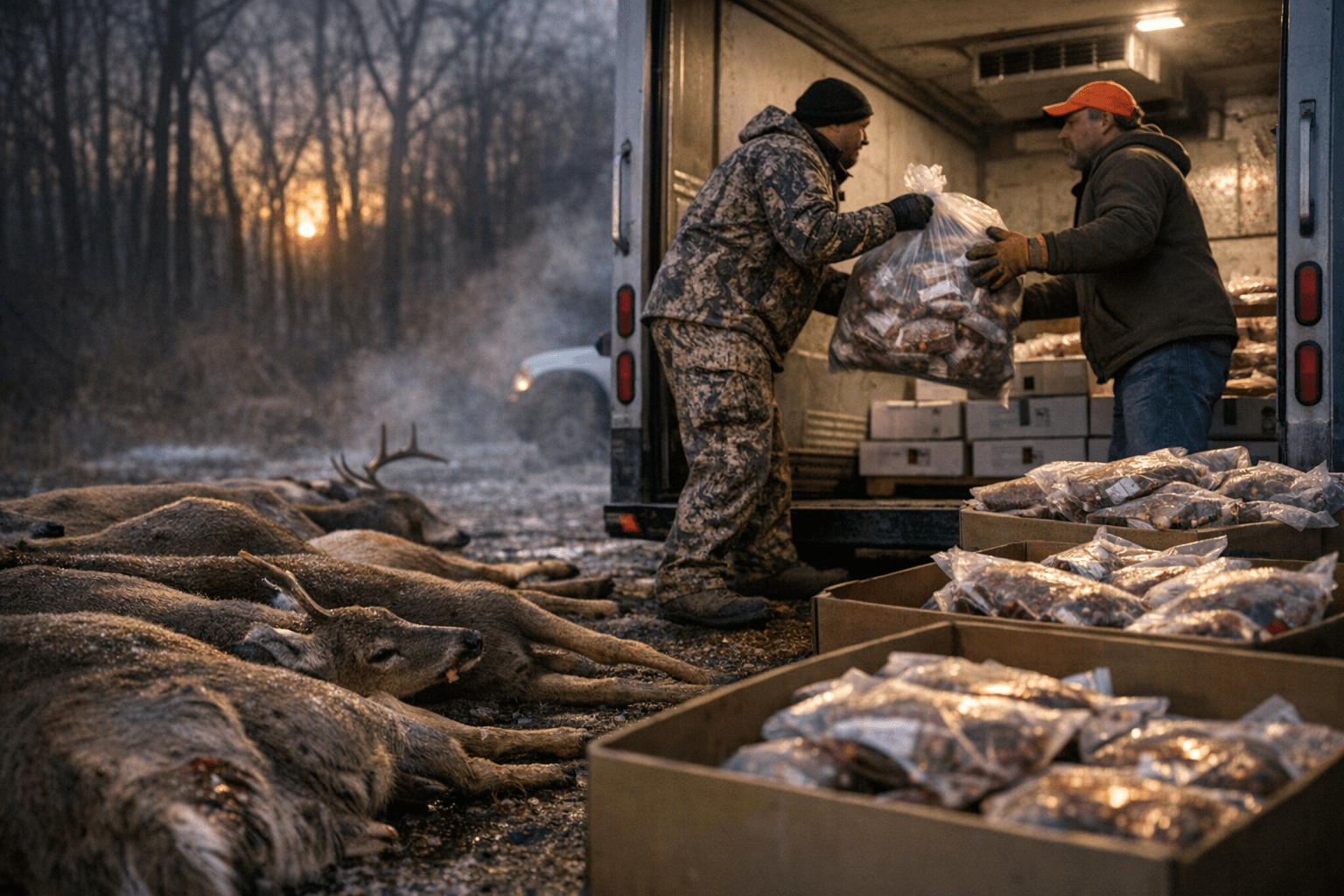
Baltimore has removed nearly 230 deer from parks including Druid Hill Park, Herring Run Park and Gwynns Falls/Leakin Park, turning a long-running wildlife problem into a food supply for local charities.
The city said most of the harvested venison from its first deer management program was donated to the Maryland Food Bank for distribution to organizations serving Baltimore City residents. The effort, which ran from March through April, was launched after years of planning, scientific analysis and community engagement that began in January 2025.
City officials said the program was designed to protect forest regeneration in some of Baltimore’s biggest natural areas and reduce deer-related damage across the park system. Baltimore City Recreation & Parks said it cares for more than 2,300 acres of natural areas inside city parks, while the city as a whole has more than 4,000 acres of parks and thousands of trees to maintain.
The deer culls focused on the city’s largest forested parks, where overpopulation had become severe enough to threaten both the landscape and public safety. In early 2025, wildlife professionals used thermal-imaging surveys in eight parks and surrounding green spaces and found deer densities in some areas were three to 21 times higher than recommended levels for healthy forests. The city also pointed to a 2015 USDA-APHIS survey of three city parks as part of the background for the effort.
Baltimore said the overabundance was contributing to failure of young trees to regenerate, deer-vehicle collisions, property damage and broader ecological harm. The work was carried out in coordination with USDA-APHIS wildlife biologists with firearms expertise, a detail that underscored how closely the city has tied the program to public safety and forest management rather than a one-time animal removal.
The city said annual deer surveys will continue between October and March to track population changes and guide future decisions. At the same time, park restoration remains part of the broader response. In Herring Run Park, the draft master plan recommends planting more than 15 acres of new woodlands and carrying out invasive-species removal and forest restoration projects in more than 20 locations.
For Baltimore, the program now links three systems that rarely overlap so visibly: park operations, wildlife control and food access. What was once an overpopulation problem in the city’s largest wooded parks is now also sending meat to food banks serving neighborhoods across Baltimore.
This article was produced by Prism’s automated news system from verified source data, official records, and press releases, then run through automated quality and moderation checks before publishing. The system is built and supervised by the people who set the standards it runs under. Read our full AI policy.
Did this article answer your question?