Baltimore expands OOPS Tag recycling checks to cut contamination citywide
A plastic bag or greasy box can leave a Baltimore recycling cart tagged instead of emptied. DPW says the citywide checks are meant to cut contamination costs and save more material.
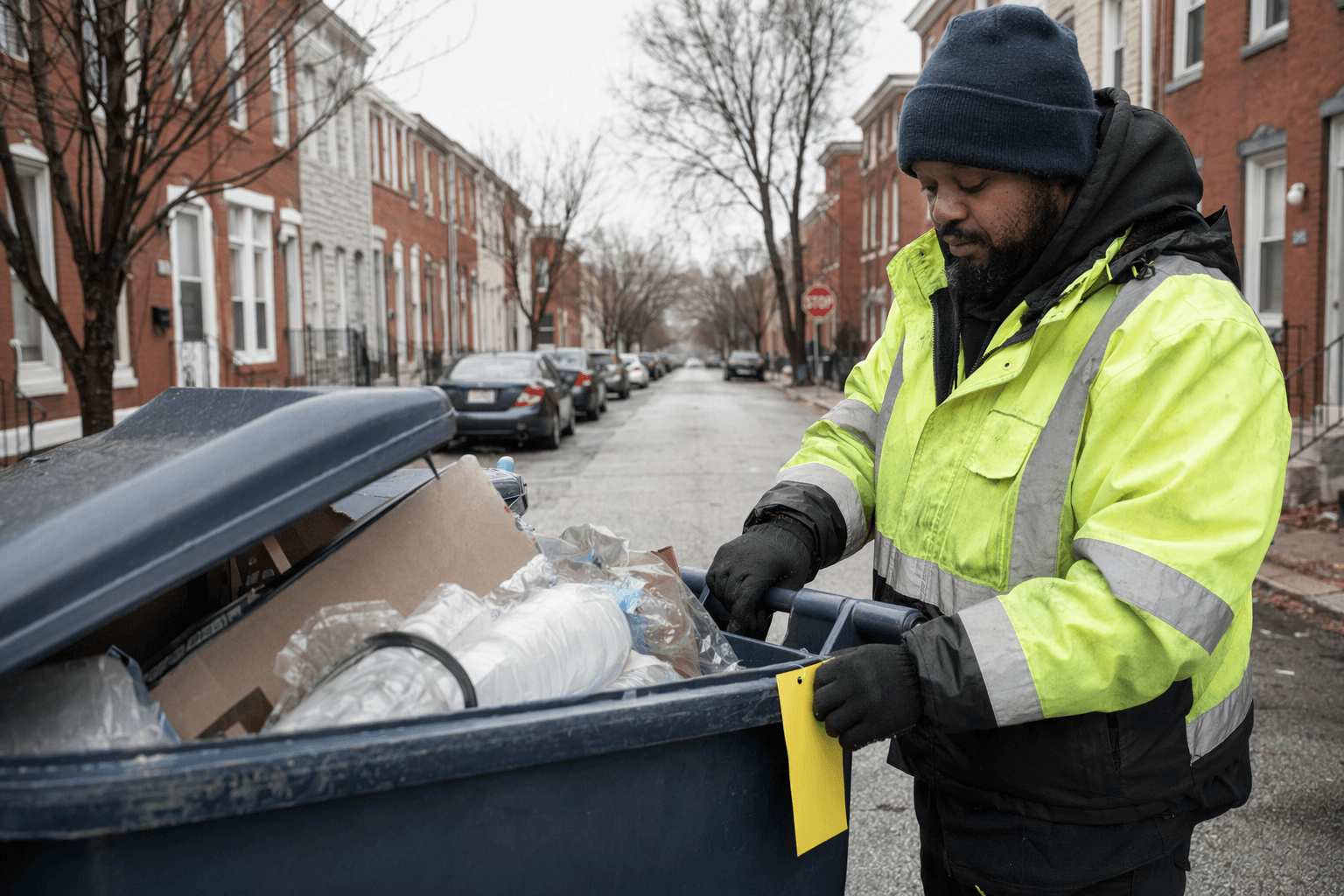
A plastic bag, a greasy takeout container or a handful of wires can be enough to leave a Baltimore recycling cart sitting at the curb with an OOPS tag instead of being emptied. For households, that means sorting the load again before the next pickup. For the city, DPW says it means higher processing costs and more material that can no longer be reused.
Baltimore’s Department of Public Works launched the OOPS Tag Recycling Initiative on Feb. 24, 2026, and has been using it citywide to spot contamination before it spreads through the recycling stream. Crews visually check bins, and when they find trash, food residue or other nonrecyclable items mixed in with recyclables, they leave a tag explaining the problem so residents can fix it before the next collection day. DPW division chief Mike Lucas described the message as simple: clean it, contain it and curb it.
The city says the most common contaminants include plastic bags and packaging film, batteries, hoses and wires, textiles and clothing, construction and demolition debris, and food residue left on containers. Baltimore’s accepted curbside recycling still comes down to clean paper and cardboard, metal cans, plastic bottles and containers, and glass bottles and jars. The city’s guidance is clear that items should be empty, clean and dry, and when in doubt, throw it out.
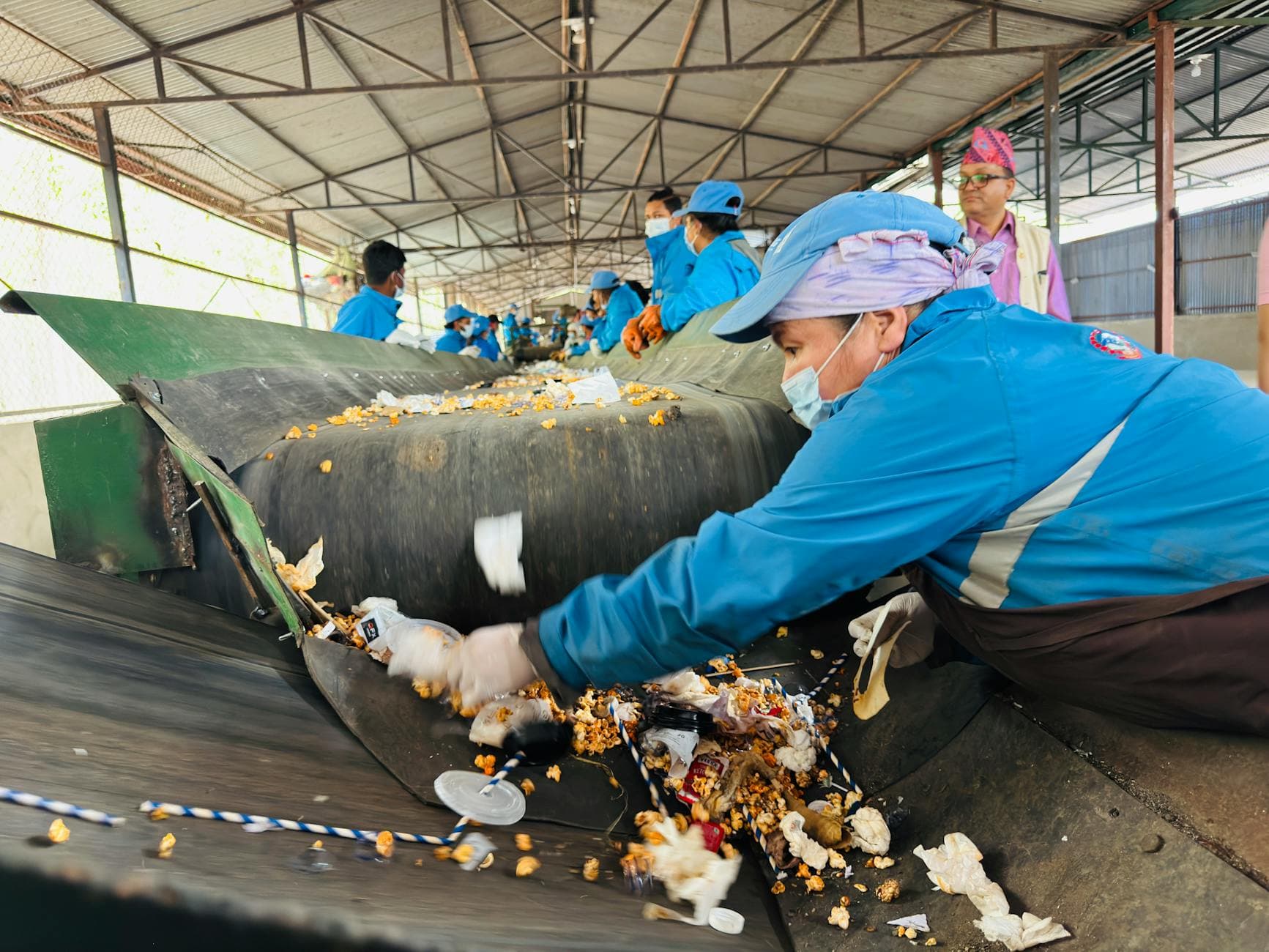
That matters in a system that serves about 200,000 households and uses single-stream recycling, where mixed recyclables are sorted later at the Waste Management Recycle America Materials Recovery Facility in Elkridge, Maryland. Baltimore says contaminated items are removed there before the remaining materials are sorted by commodity, baled and shipped to vendors that turn them into new products. Plastic bags and film can tangle sorting equipment, while large items such as propane tanks and electronics can damage machinery or disrupt operations.
The tagging effort also fits into a longer waste-planning push. Maryland requires Baltimore to maintain a 10-year solid-waste management plan, and the current plan was adopted by the City Council on Dec. 2, 2013 and approved by the Maryland Department of the Environment on March 3, 2014. The updated 2024-2033 plan was developed with Geosyntec Consultants and drew more than 700 public comments, with input from environmental advocates, businesses, schools and hospitals.
Baltimore has already invested heavily in recycling collection. In 2021, the city delivered nearly 200,000 free curbside recycling carts in a modernization partnership valued at more than $10 million with The Recycling Partnership. Now DPW is betting that direct feedback at the curb will do what broader messaging has not: keep cleaner loads moving, lower contamination costs and stop usable paper, cardboard, cans and bottles from ending up as trash.
This article was produced by Prism’s automated news system from verified source data, official records, and press releases, then run through automated quality and moderation checks before publishing. The system is built and supervised by the people who set the standards it runs under. Read our full AI policy.
Did this article answer your question?