Baltimore police, fire face major overtime overruns amid staffing shortages
Baltimore police are heading $13.4 million over their overtime budget as the city wrestles with 2,700 vacancies and fresh pressure on tax dollars.

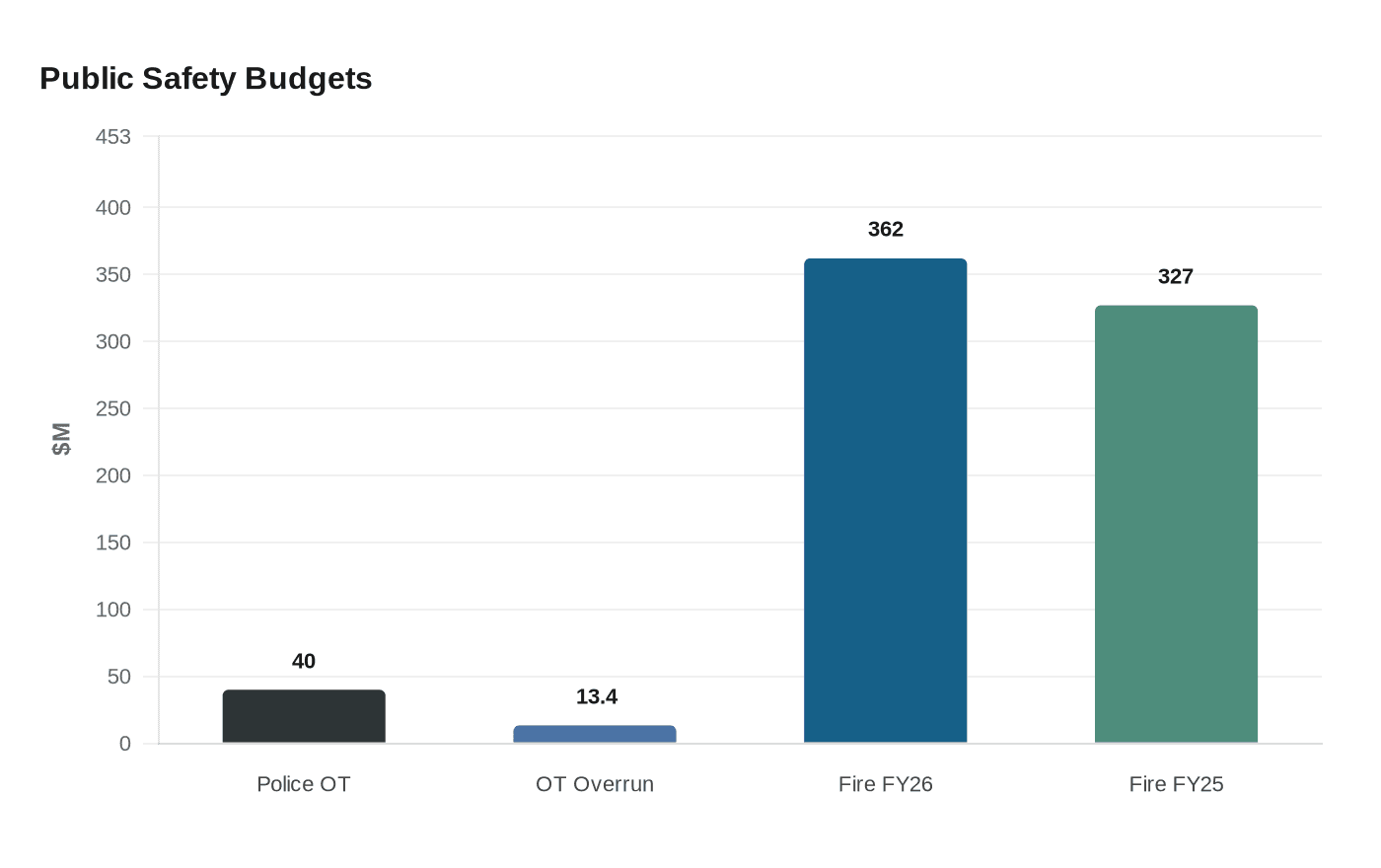
Baltimore’s police and fire budgets are colliding with the city’s staffing crisis, and the fight is now sitting squarely in City Council chambers. Police finance chief Shallah Graham told council members that the Baltimore Police Department’s $40 million overtime budget was on pace to run about $13.4 million over, a number that drew sharp questioning from Council President Zeke Cohen about whether the agency would need a supplemental appropriation.
Graham said the department could not erase the overage without cutting services. That answer underscored the basic problem driving the dispute: Baltimore leaders have said the city has more than 2,700 vacant positions, including hundreds in police, fire and EMS, and 530 of those jobs had been open for at least 18 months. City officials have linked those vacancies to overtime spending, arguing the city is using extra pay to keep essential services moving even though the pattern is not sustainable.
The same pressure is showing up in the Baltimore City Fire Department’s proposed fiscal 2026 budget, now set at $362 million, a 10.7% jump from the $327 million allocated the year before. The proposal would shift $75 million in EMS revenue into the general fund and includes nearly $8 million in state and federal grants. Fire Chief James Wallace has said staffing shortages, especially in paramedic slots, are forcing the department to send fire suppression personnel into EMS assignments and then backfill those posts with overtime.
Wallace has described the department’s minimum daily staffing needs as 242 suppression personnel and 65 EMS personnel, or 307 total, to meet obligations. He has also pointed to recruitment and retention efforts meant to ease the strain, including a YouthWorks cadet pilot tied to Baltimore City Public Schools, broader outreach and a contracted testing vendor intended to speed hiring. The department has also turned to geofencing and artificial intelligence in its 911 call center to improve deployment.
The budget fight is not new. In March 2025, city officials said overtime and other spending forced nearly $68 million in retroactive budget reshuffling, and the fire department alone required a $33.36 million injection to cover overtime tied to sworn vacancies and unbudgeted EMS contractual services. Budget Director Laura Larsen said staffing shortages were driving much of the pressure.
Baltimore police are also still operating under a federal consent decree tied to the Freddie Gray case, which makes rapid vacancy reductions harder to achieve and more politically sensitive. Cohen and Councilmember Jermaine Jones have pushed for tighter accounting and firmer controls, but public safety leaders have said the city’s current staffing gaps leave few immediate alternatives beyond overtime and another round of fiscal triage.
This article was produced by Prism’s automated news system from verified source data, official records, and press releases, then run through automated quality and moderation checks before publishing. The system is built and supervised by the people who set the standards it runs under. Read our full AI policy.
Did this article answer your question?