Heat wave fuels fish kill and foul smell in Baltimore harbor
Dead fish and crabs turned the Inner Harbor into a summer stink, while state officials tested water from Canton Waterfront Park to Locust Point.
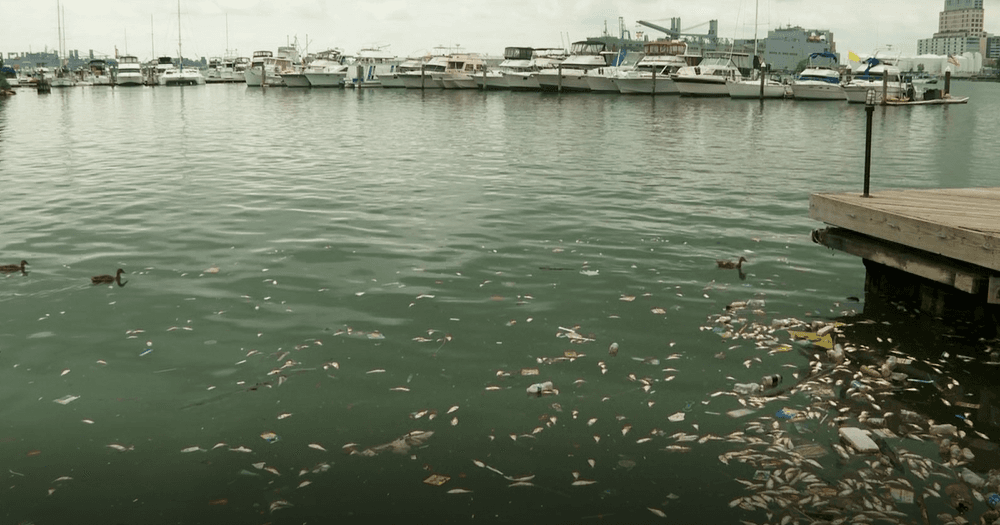
Dead fish and crabs washed up across Baltimore’s Inner Harbor, and the smell reached downtown, Fells Point and Locust Point as the city endured another stretch of extreme heat. The Maryland Department of the Environment estimated the surface kill at about 1,000 menhaden, 126 blue crabs and a small number of other fish species, with impacts visible from Canton Waterfront Park to South Ann Street in Fells Point and across the harbor near Domino Sugar.
Maryland officials were investigating the July 10 fish kill, and low dissolved oxygen tied to a localized pistachio tide was the explanation. Hot water holds less oxygen, and when the harbor warms quickly, fish and crabs can suffocate at the surface or in shallow water. Gussie Maguire, a Maryland staff scientist with the Chesapeake Bay Foundation, said extreme heat warms the water and lowers oxygen levels, creating dead zones that stress fish and other wildlife.
Baltimore’s Inner Harbor saw a pistachio tide on Sept. 3, 2024. National Aquarium officials said at the time that the color shift was linked to temperature changes rather than necessarily poor water quality. A larger Harbor kill in September 2025, estimated at 25,000 dead Atlantic menhaden from Canton to Locust Point, followed.
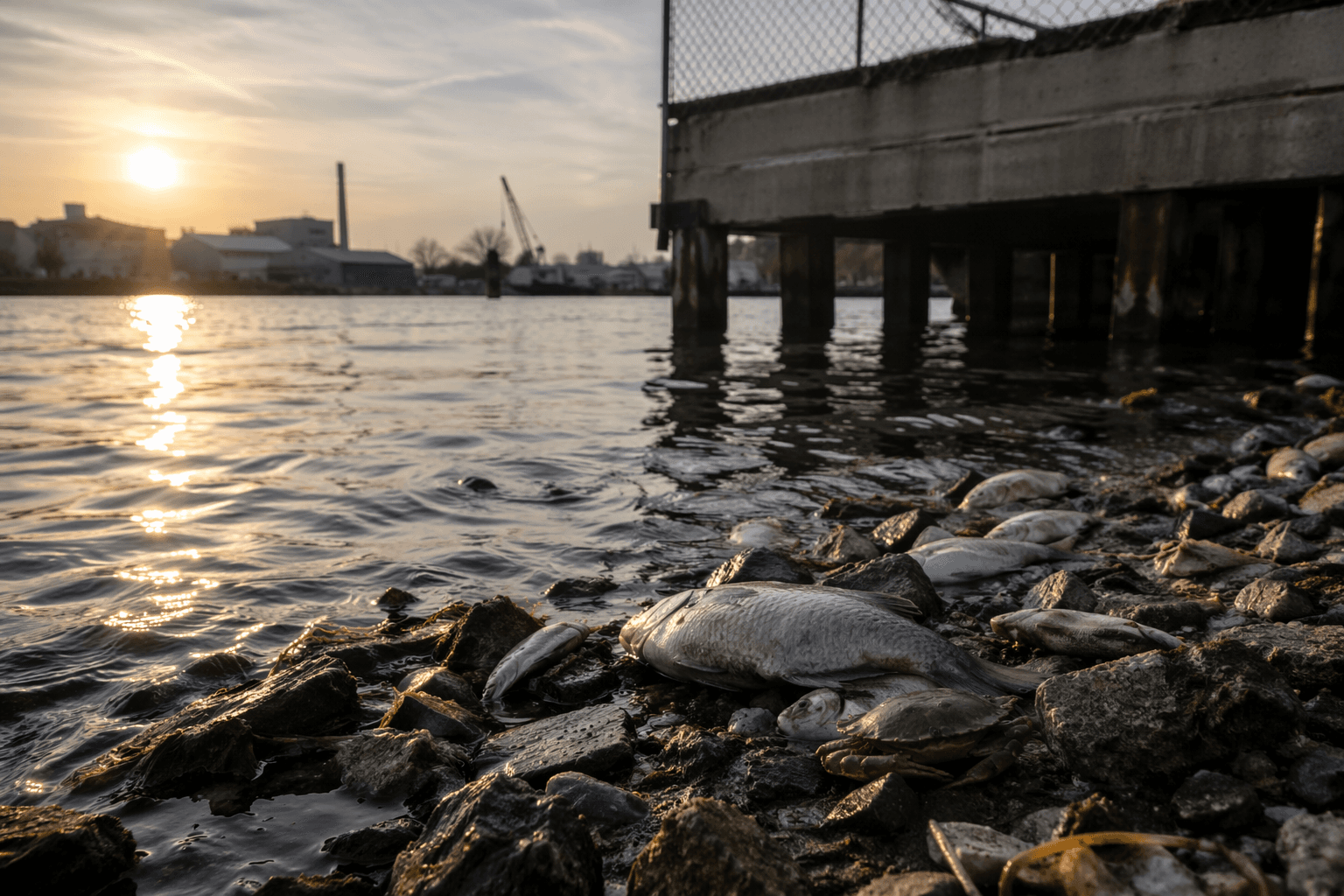
Chesapeake Bay dead zones form every summer, driven mainly by algae blooms fed by nitrogen and phosphorus pollution, and Baltimore’s waterfront problems are compounded by sewage overflows, stormwater runoff and trash pollution.
The Department of Natural Resources uses Baltimore/Washington International Thurgood Marshall Airport temperature forecasts in its striped bass summer advisory and warns anglers to use extreme care when air temperatures are forecast at 90 to 94 degrees. It also advises against catch-and-release of medium and large striped bass in brackish Bay water warmer than 80 degrees and air temperatures warmer than 95 degrees.
This article was produced by Prism’s automated news system from verified source data, official records, and press releases, then run through automated quality and moderation checks before publishing. The system is built and supervised by the people who set the standards it runs under. Read our full AI policy.
Did this article answer your question?