Park Avenue affordable housing project adds 44 apartments, retail space
Forty-four affordable apartments opened on Park Avenue with cafe and restaurant space, a small but visible bet on rebuilding Baltimore’s West Side.
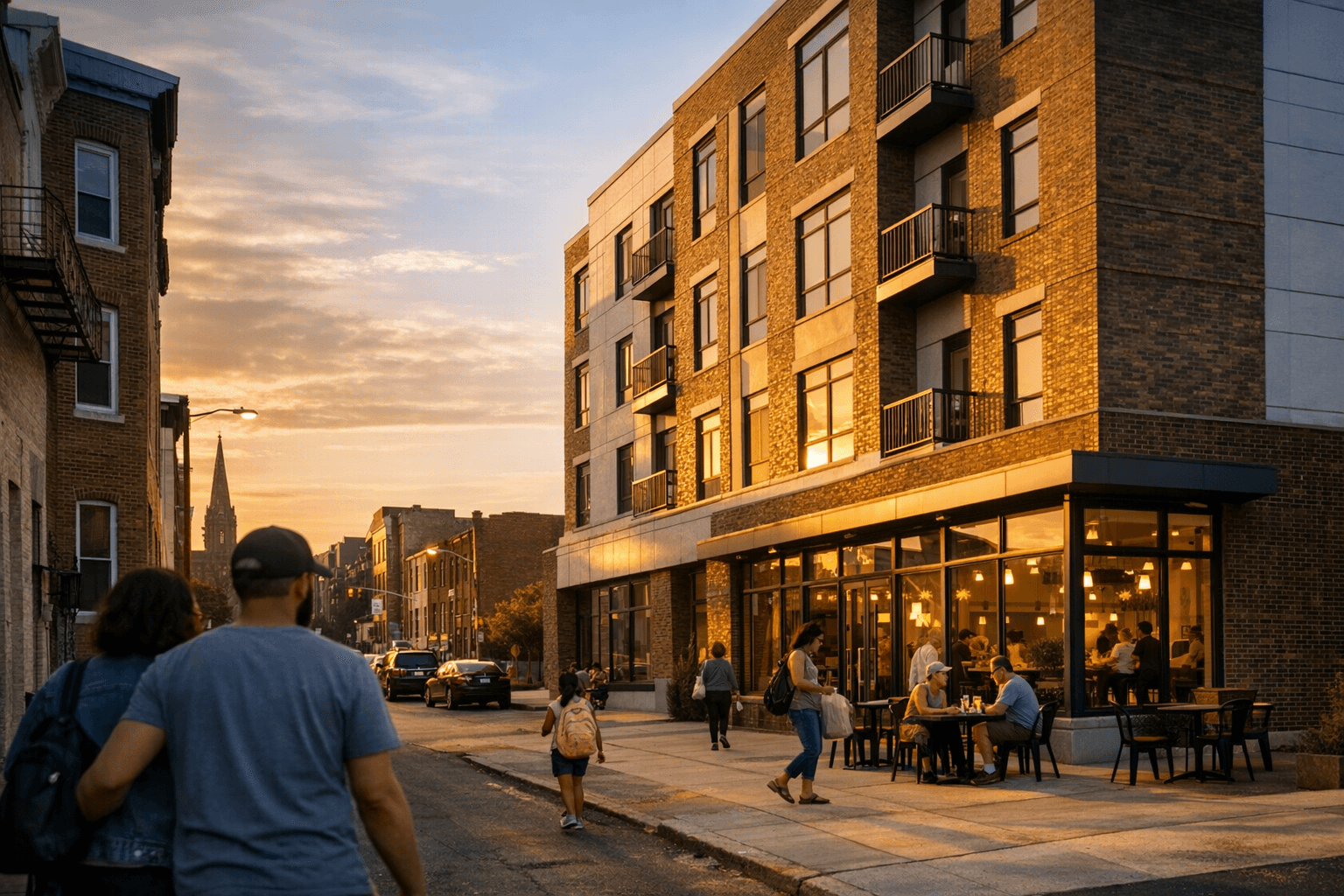
Forty-four affordable apartments and new ground-floor retail space have opened on Park Avenue, giving Baltimore’s West Side a concrete boost after years of vacancy and disinvestment. The project includes plans for a cafe and a restaurant, a mix that city leaders hope will bring more foot traffic to a stretch of downtown that has long needed daily activity, not just new addresses.
The opening is being treated as more than a ribbon cutting. City leaders and developers framed the building as a neighborhood milestone and a small mixed-use anchor that could help change the feel of the block while supporting more investment nearby. Councilman Zac Blanchard said the transformation of downtown’s west side is especially visible from the project site, a sign of how tightly this new building is linked to broader redevelopment goals.
The project matters because Baltimore still faces a stubborn housing gap for working families, and affordable units remain hard to find in many parts of the city. By adding 44 apartments at prices meant to stay within reach, the Park Avenue development puts new homes in a corridor where planners want both density and stability. The retail space is part of that calculation as well. A cafe and restaurant would give neighbors a reason to stop in, help animate the street and, city officials hope, create the kind of everyday activity that can make surrounding properties more attractive to tenants and investors.
The opening also fits into a larger policy push. Baltimore City’s Department of Housing and Community Development, created in 1968, says its mission is to support safe, decent housing and investment in neighborhoods. The city’s affordable-housing programs help finance new rental homes and rehabilitation projects across Baltimore, and the Park Avenue project arrives as those tools are being scaled up.
That includes the Citywide Affordable Housing TIF district, which Mayor Brandon Scott signed into law on December 3, 2024. City officials say it was the first non-contiguous TIF district in Baltimore and in the United States. Baltimore has already authorized the first $65 million in bonds under the district, out of $150 million planned over its life, showing how aggressively the city is trying to use public financing to speed up affordable housing and redevelopment.
Park Avenue is not moving in isolation. Earlier plans called for a 94-unit, $30 million apartment project in the 400 block, and Sojourner Place at Park, a 42-unit affordable housing development, advanced nearby. Together, those projects suggest the West Side is not just getting one new building but a broader redevelopment pattern, with housing, retail and public financing all being used to rebuild a downtown corridor block by block.
This article was produced by Prism’s automated news system from verified source data, official records, and press releases, then run through automated quality and moderation checks before publishing. The system is built and supervised by the people who set the standards it runs under. Read our full AI policy.
Did this article answer your question?