Denmark High School’s historic campus highlights Black education legacy
Denmark’s old school buildings still shape civic life in Bamberg County. Denmark High School and Voorhees show how Black education remains a living community asset, not a closed chapter.

Denmark High School still stands as one of the clearest physical markers of Black education in Denmark, but its current vacancy makes its future just as important as its past. The building’s history ties together school choice, local identity, and preservation decisions that will affect how this corner of Bamberg County remembers its own story.
Denmark High School as a civic landmark
The current Denmark High School building was completed in 1920 and is listed by the South Carolina Department of Archives and History as an excellent example of Classical Revival educational architecture. The school was significantly enlarged in 1932 and again in 1948, a sign that it continued to matter as Denmark grew and as local education needs changed. It served the town from 1920 to 1985, and it was added to the National Register of Historic Places on March 29, 2001.
The building’s design gives it a stronger presence than a simple schoolhouse. Preservation records point to likely architect Charles Coker Wilson, and the details stand out: a hipped roof with gray slate, exposed rafter tails, and a restrained Classical Revival language that matches other Wilson school buildings of the era. Those architectural features matter because they explain why the structure is more than old brick and wood. It is a surviving example of how public education was given form in a Black school context in rural South Carolina.
The school site also carries a layered history. A historical marker identifies the first Denmark School, designed by Charles Coker Wilson, as completed in 1908 and once standing adjacent to the present building. When that earlier school was later demolished in the 1960s, the 1920 high school building was put back into service as the elementary school. That reuse continued until 1985, when a new elementary school was built. Today, Denmark High School remains vacant, which places pressure on preservation efforts and raises the practical question of how a landmark with such local meaning should be used next.
A school site that tells a longer Black education story
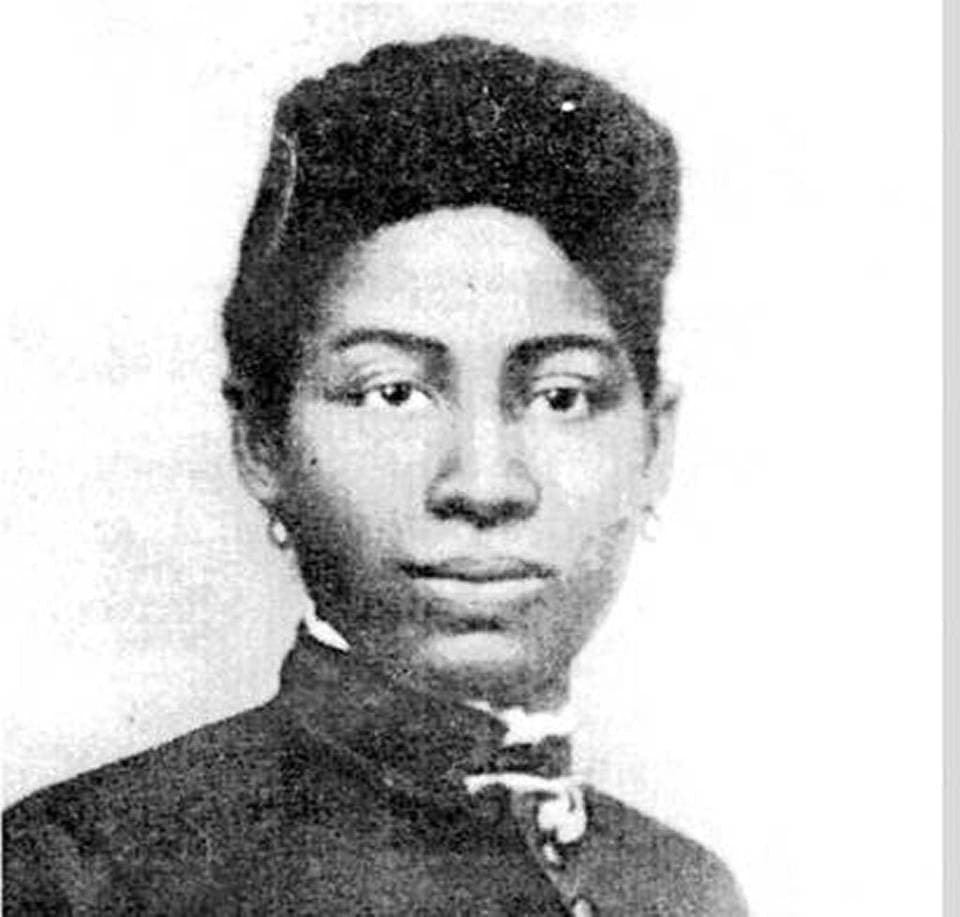
Denmark High School does not stand alone. Its value becomes clearer when placed beside the broader educational landscape shaped by Voorhees University in Denmark. The Voorhees College Historic District includes 13 contributing buildings built between 1905 and 1935, and state archives describe it as significant for pioneering higher education for African Americans in the region. That history begins with Elizabeth Evelyn Wright, who founded the school in 1897.
The university’s own history places the opening of the school in 1902 with support from Ralph Voorhees. It later became Voorhees School and Junior College in 1947, Voorhees College in 1962, and Voorhees University in 2022. Just as Denmark High School reflects the town’s K-12 history, Voorhees shows the broader pipeline of Black educational opportunity that helped anchor Denmark as a center of learning in the region.
The physical scale of that campus underscores the point. Voorhees sits on 380 acres, giving it room not only for classrooms and student life, but also for a historic district that can still be read across the landscape. Booker T. Washington Hall, built in 1905, is one of the clearest examples of how that heritage remains active rather than frozen in place. The building underwent a $500,000 renovation completed in mid-July 2022, and the work included roof replacement, fascia and eaves repairs, period-appropriate downspouts, painting, new handrails, and new columns and doors.
That renovation was part of an $8.6 million National Park Service grant program for historically Black colleges and universities. The scope of that support matters because it shows preservation functioning as an operating priority, not just a ceremonial one. At Voorhees, upkeep is not only about nostalgia. It is about keeping structures usable, recognizable, and tied to the institution’s educational mission.
Why preservation still matters now
The immediate issue in Denmark is not whether these places are historically important. That is already established by the National Register listing, the historic district designation, and the preservation work underway at Voorhees. The real issue is whether the buildings are being treated as living community assets, or as memories left to sit on their own.

Vacancy is a real test for Denmark High School. A vacant landmark can quickly become a maintenance burden if no one claims responsibility for its future use, and every year of disuse can make rehabilitation harder. In a town where the former high school once absorbed the role of an elementary school for decades, the building has already proved it can adapt. That history gives local leaders, alumni, and preservation advocates a stronger case for finding a use that respects the site’s educational legacy.
Bamberg County has also signaled that Black educational institutions remain part of civic life, not only history. In 2022, county leaders proclaimed the third Tuesday of every February as Denmark Technical College Day. That recognition places Denmark Technical College within the same public conversation about education, pride, and local identity that surrounds Denmark High School and Voorhees. It matters because public honors like that help determine which institutions are seen as central to the county’s future.
A county with a deep preservation footprint
South Carolina’s preservation record gives this local story broader weight. The state has more than 1,300 National Register listings, including more than 160 historic districts. Denmark High School and the Voorhees historic district are part of that larger inventory, but their importance is local first: they show how one county’s school buildings can carry the memory of Black education across generations.
That is why these places cannot be treated as isolated relics. Denmark High School connects the 1908 Denmark School, the 1920 high school, the elementary years that followed, and the vacancy that exists now. Voorhees connects Elizabeth Evelyn Wright’s founding vision, the historic district, and ongoing preservation at Booker T. Washington Hall. Together, they show that the question in Denmark is not simply what was built. It is what gets maintained, what gets used, and what the next generation inherits from the campus landscape already in place.
This article was produced by Prism’s automated news system from verified source data, official records, and press releases, then run through automated quality and moderation checks before publishing. The system is built and supervised by the people who set the standards it runs under. Read our full AI policy.
Did this article answer your question?