Attorney General warns Big Island donors to check charities before storm relief donations
Big Island families face $30 million in county damage, and Anne Lopez says storm-relief scams could siphon donations away from real Kona Low recovery.
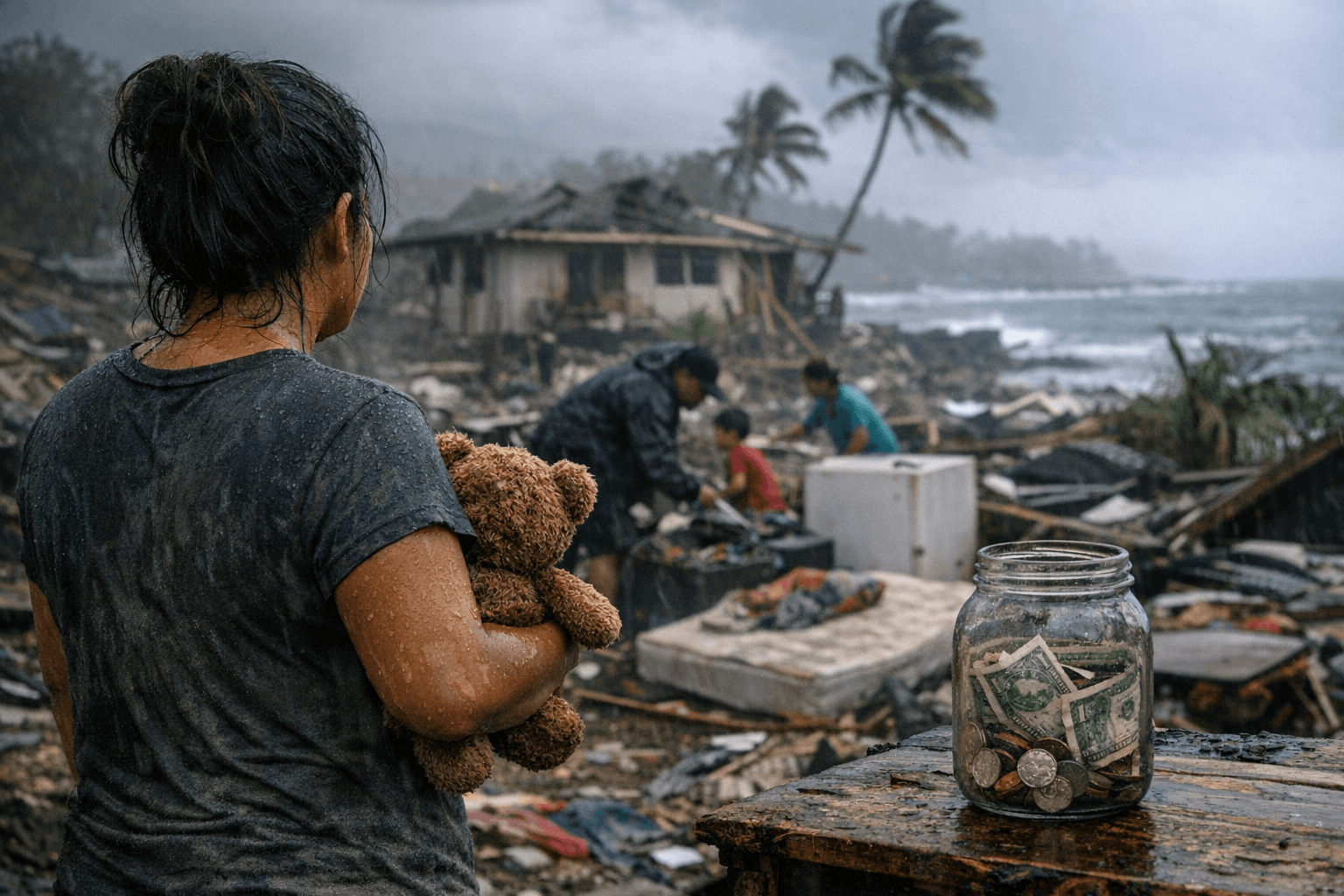
Big Island families are already confronting at least $30 million in county damage and $29 million in residential and commercial losses from the Kona Low storms, and the state is warning that fraudsters may try to ride that generosity straight into donors’ wallets. With relief campaigns multiplying across Hawaiʻi, Attorney General Anne Lopez’s office said the safest money is the money that reaches verified charities and known organizers.
The Department of the Attorney General told donors to check the Hawaiʻi charity registry, the IRS Tax Exempt Organization Search, Charity Navigator, the DCCA Business Search and Federal Trade Commission anti-scam guidance before giving. The Tax & Charities Division also said people should donate to crowdfunding pages only when they know the organizer personally, confirm exactly who is asking for the money and who will receive it, and check where a donation link actually leads. Fundraisers should clearly spell out where the money will go, what fees will be taken, when the money will be sent, what happens if it cannot be delivered to the intended charity and whether donor information will be shared.
The warning comes as the state has built formal recovery channels for storm survivors. An interim Disaster Case Management Program announced April 3 was funded by the state, counties and the Hawaiʻi Community Foundation for 90 days and can deploy up to 40 case managers. Residents affected by the storms can enroll by calling 211. The state has also secured 80 rooms at the Inn at Schofield in Wahiawā through April 30 for displaced residents on Oʻahu, with other households being directed to Hale o Laʻiē and short-term rentals where homes are uninhabitable.
Hawaiʻi Emergency Management Agency has been steering donations toward established partners, including the Salvation Army Hawaiian & Pacific Islands Division, the Hawaiʻi Community Foundation’s Stronger Hawaiʻi fund, the American Red Cross Hawaiʻi, Blood Bank of Hawaiʻi, Aloha United Way, Hawaiʻi Foodbank and the Hawaiian Humane Society. Agency officials have said monetary donations are preferred because they let relief groups buy the exact supplies needed.
The scale of the disaster is visible on the Big Island. County officials reviewed 377 residential damage reports and 76 commercial reports and estimated four homes were destroyed, 30 had major damage, 83 had minor damage and 197 were affected, while six properties could not be accessed because of absentee landlords or road damage. Konawaena High School was forced into distance learning for the rest of the school year after flooding. AccuWeather estimated the back-to-back Kona storms caused about $2 billion in damage and economic loss statewide, with some areas seeing 30 to 60 inches of rain and more than 130,000 customers losing power at the first storm’s peak.
This article was produced by Prism’s automated news system from verified source data, official records, and press releases, then run through automated quality and moderation checks before publishing. The system is built and supervised by the people who set the standards it runs under. Read our full AI policy.
Did this article answer your question?