Big Island mayor declares emergency as severe weather and hazards mount
Saturated ground, 10-foot surf and summit snow pushed Hawaiʻi County into emergency mode as Alameda activated countywide response powers.
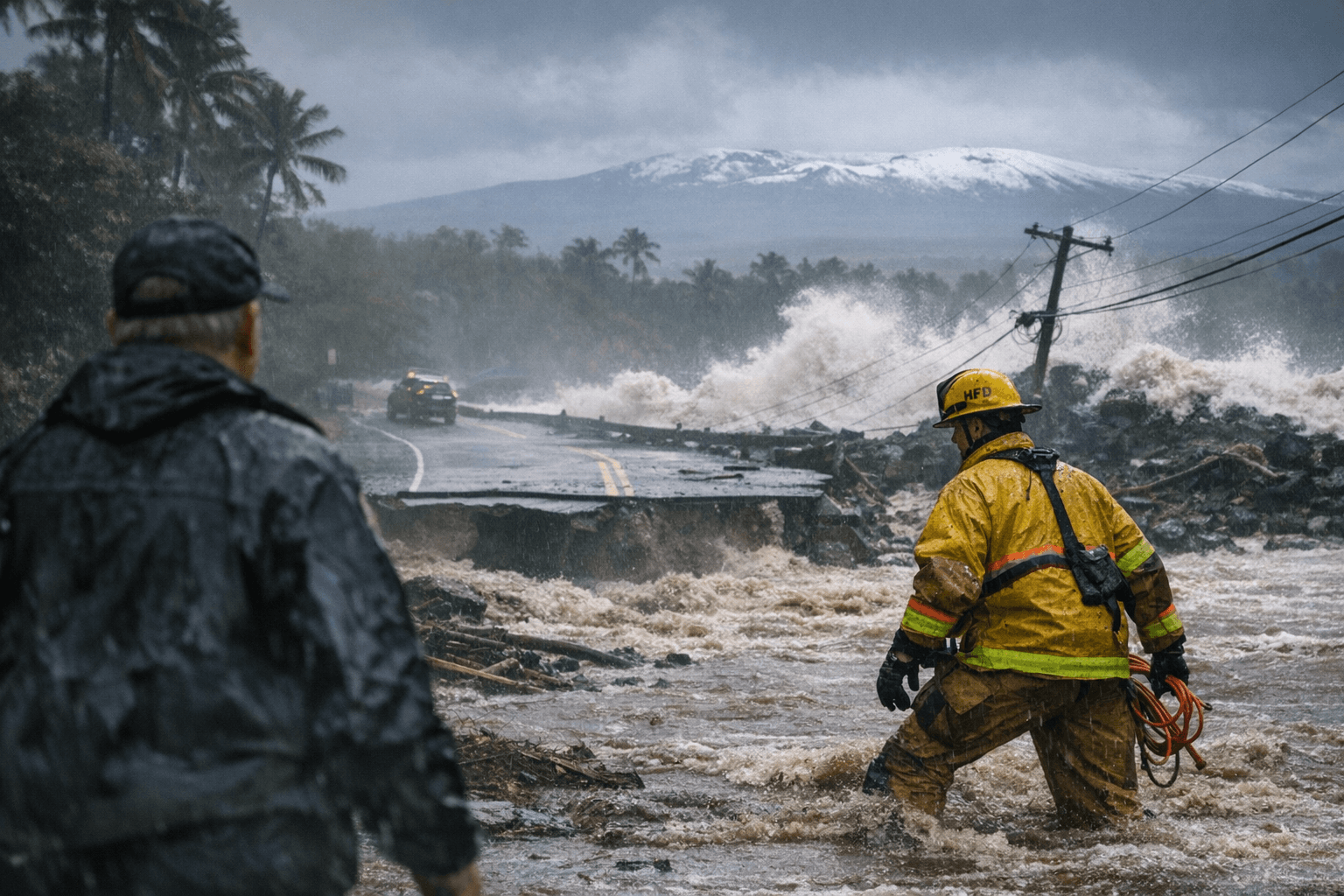
Hawaiʻi County moved back into emergency operations as another severe weather system hit an island already soaked by March storms, with officials citing saturated ground, flood risks, volcanic unrest and dangerous surf all at once. Mayor C. Kimo Alameda issued the local state of emergency at 6 p.m. on April 8, giving county departments broader authority to respond before conditions worsened.
The proclamation covered the entire county and tied the response to Kīlauea Volcano Episode 44 precursory activity, a High Surf Advisory and a Winter Weather Advisory for the summit areas. The surf advisory called for 7- to 10-foot waves, with higher sets to 12 feet along south-facing shores through April 9, while the winter advisory warned of up to 6 inches of snow, a quarter inch of ice and gusts as high as 55 mph at Hawaiʻi Island summits above 12,500 feet.
The county said staff saw enough on April 7 at about 2:42 p.m. to escalate. Its order cited Hawaiʻi Revised Statutes Chapter 127A, the County Charter and county code provisions that allow Alameda to direct immediate action, prioritize resources, coordinate with state and federal partners, request mutual aid and support emergency contracting and personnel mobilization. In practical terms, that means Civil Defense, Public Works and Parks & Recreation can move faster on warnings, road protection, debris response and other life-safety measures.
Officials said the concern was not just the next rain band but the condition of the island itself. The ground throughout Hawaiʻi Island was already saturated from the March 2026 Kona low event, and the county said its soil, waterways, drainage systems and flood-prone areas had far less capacity to absorb another round of heavy rain. That raised the threat of flash flooding, landslides, debris flows and overflowing streams, especially in areas that had already taken storm damage.
The April declaration also showed how quickly the county was stacking responses to overlapping hazards rather than treating each one in isolation. Hawaiʻi County had already declared an emergency on March 12 for the first Kona low and renewed that action on March 20 because the earlier proclamation remained in effect and the ground was still saturated. Shelters were opened on March 13 for residents and visitors, and on April 8 Governor Josh Green said President Trump approved a Major Disaster Declaration for Hawaiʻi, unlocking initial federal support and opening the door to additional aid. For Big Island residents, the message was clear: the county was not waiting for the next loss before acting.
This article was produced by Prism’s automated news system from verified source data, official records, and press releases, then run through automated quality and moderation checks before publishing. The system is built and supervised by the people who set the standards it runs under. Read our full AI policy.
Did this article answer your question?