Officials warn of heavy rain, flash flooding as storms approach Big Island
Another round of rain threatened Hawaiʻi Island while officials tallied $29 million in private losses and at least $30 million more in county damage.

Hawaiʻi Island braced for another soaking before many residents and businesses had finished recovering from the last Kona lows, which left about $29 million in residential and commercial damage and at least $30 million more in losses to county roads, other assets and response costs.
The island-wide private-property estimate came from 377 residential damage reports and 76 commercial damage reports, Adam Weintraub of Hawaiʻi County Civil Defense said. Of the residential cases, four were destroyed, 30 had major damage, 83 had minor damage and 197 were listed as affected. Officials still could not access six properties because of absentee landlords or road damage, a reminder of how quickly repairs can stall when drainage failures and washouts cut off neighborhoods.
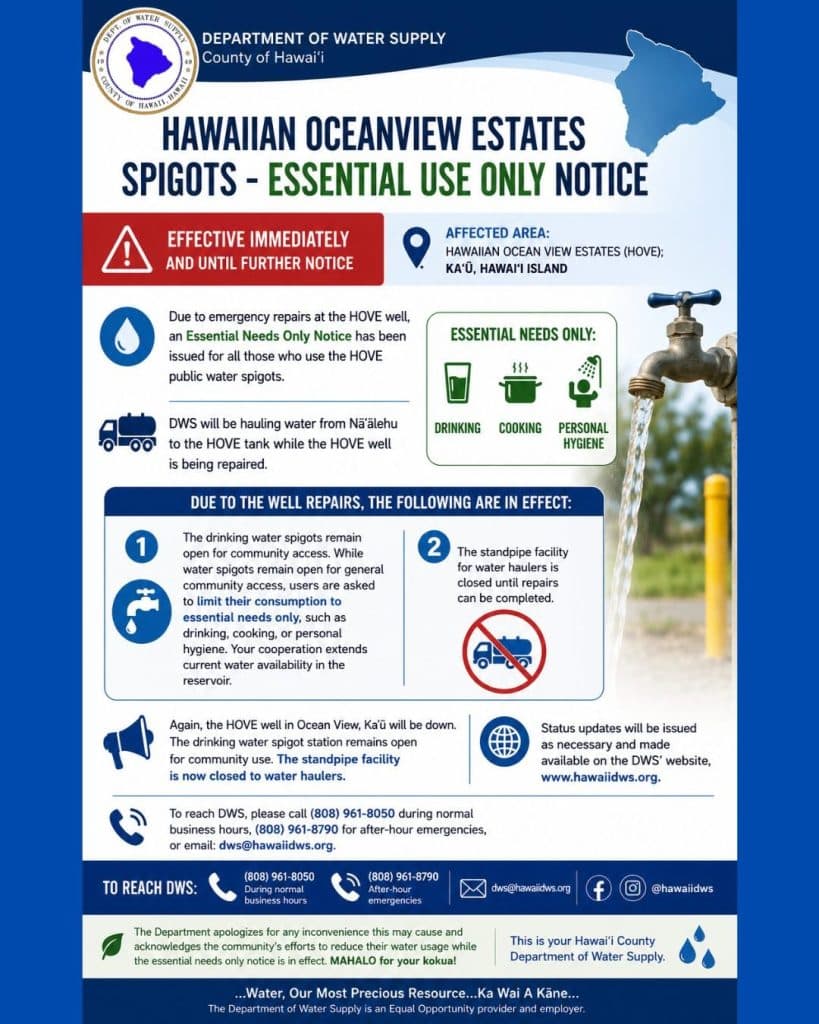
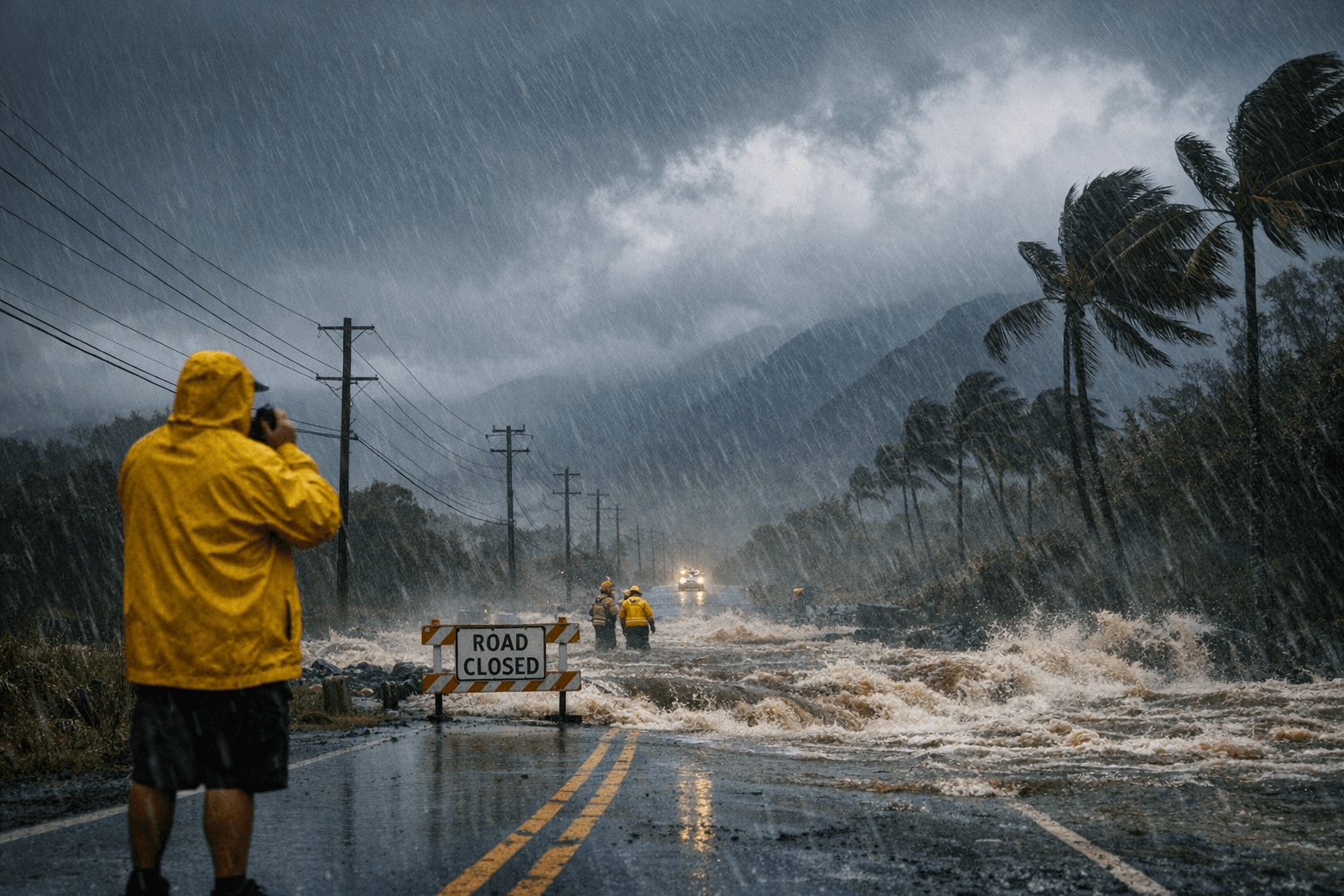
That concern returned with fresh flood warnings as another Kona-low-like system approached the islands. The National Weather Service said flash flooding remained possible on the Big Island because soils were saturated and stream levels were elevated after recent heavy rain. Flooding could redevelop quickly, with road closures, property damage in low-lying areas and landslides among the main threats.
Officials urged residents to monitor alerts, prepare emergency kits and avoid unnecessary travel during heavy rain. They also told people to protect water catchments and septic systems from ash and runoff contamination. For families and businesses trying to dry out from the March storms, the warning meant a second round of cleanup planning before the first round was done.
The damage already had reached schools and daily routines. Konawaena High School moved to distance learning beginning March 30 while remediation continued, and the Hawaiʻi State Department of Education said it was supporting about 850 students through the transition. The department had received nearly 300 storm-damage work orders statewide, with about half involving roof leaks and water intrusion, and it reported more extensive damage on Hawaiʻi Island and Maui. Kealakehe was among the Big Island campuses that took damage in the March storms.
Governor Josh Green said the first Kona Low began around the evening of March 10 and a second system hit from about March 15 through March 23. Green requested a federal major disaster declaration on March 25 after storms that he said caused more than $400 million in damage from the first event alone and were expected to exceed $1 billion statewide. AccuWeather later estimated the statewide damage and economic loss at about $2 billion.
Recovery help was already being pushed through Hawaiʻi Emergency Management Agency, which pointed residents to 2-1-1, temporary shelter options and a Disaster Case Management Program led by Global Empowerment Mission. For Hawaiʻi Island, the challenge was no longer just counting losses. It was keeping fragile roads, schools and homes from taking on another round of water before repairs could catch up.
This article was produced by Prism’s automated news system from verified source data, official records, and press releases, then run through automated quality and moderation checks before publishing. The system is built and supervised by the people who set the standards it runs under. Read our full AI policy.
Did this article answer your question?