Draft clears path for replacement of Hilo’s Four Mile Creek Bridge
The Four Mile Creek Bridge plan cleared its biggest environmental hurdle. The one-lane span carries about 11,000 vehicles a day on Kilauea Avenue.
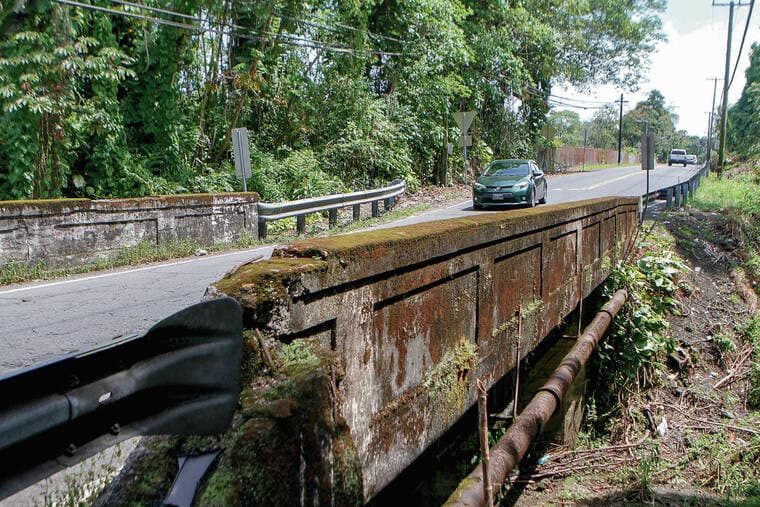
The long-planned replacement of Hilo’s Four Mile Creek Bridge moved closer to reality after a draft environmental assessment found the project would not cause significant adverse environmental impacts. The bridge, just south of Haihai Street on Kilauea Avenue, links Highway 11 with Hilo’s southern outskirts and carries about 11,000 vehicles a day through a one-lane bottleneck that has outlived the traffic it was built to serve.
Built in 1916 and substantially reconstructed in 1964, the bridge has become one of those pieces of old Hilo infrastructure that shapes daily life without drawing much notice until congestion backs up. County officials have treated the replacement as urgent for years, and Dennis “Fresh” Onishi said public works staff expected plans and designs to be finished by the end of the year before the project goes out for bid. He said the wider bridge should also ease pressure on the main Panaewa stretch of Highway 11, where drivers from Puna and Hilo already contend with heavy commuter traffic.
The project is estimated to cost $18 million, with $12 million coming from state funds and $6 million from the county. The Hawaiʻi County Council approved that funding in 2021, but the state money will lapse by July 2027 if work does not begin by then, leaving the timetable for the bridge’s future tied to a narrow window. For a route that affects morning trips from Puna into Hilo and afternoon traffic heading back out of town, any delay would keep the old one-lane crossing in place longer than planners want.
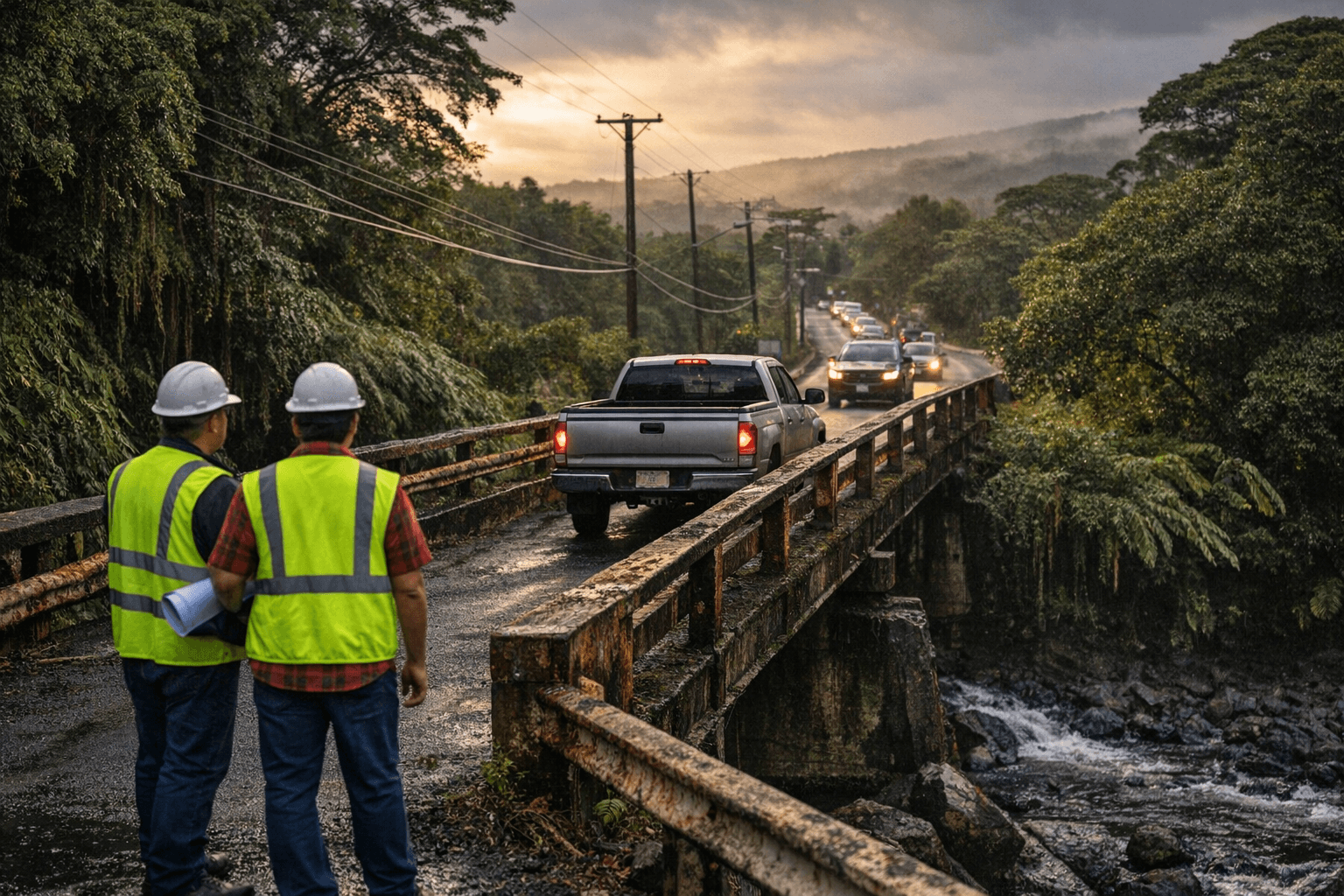
The replacement would do more than widen the bridge itself. The plan includes north- and south-bound through lanes, a westbound left-turn lane from Kilauea onto Haihai, a northbound left-turn lane from Haihai to Kilauea, bike lanes, shoulders, raised sidewalks, buffers, a traffic signal at the Kilauea-Haihai intersection and ADA-accessible curb ramps. It would also widen roadway on the east side of the intersection. To make room, the county would need to acquire about 1.2 acres of adjacent land, including 0.9 acres owned by the state and 0.3 acres in private hands.
Public discussion of the bridge has stretched back at least to a July 6, 2023 community meeting at Waiākeawaena Elementary School Cafeteria, where the county said the session would focus on planning and design. That long paper trail now points to a project that has cleared an important hurdle, but still depends on design work, right-of-way acquisition and the funding clock to keep moving forward.
This article was produced by Prism’s automated news system from verified source data, official records, and press releases, then run through automated quality and moderation checks before publishing. The system is built and supervised by the people who set the standards it runs under. Read our full AI policy.
Did this article answer your question?