Flooding boosts mosquito populations on Hawaii Island, health officials warn
Flooded yards and catchment systems across Kona are feeding a mosquito boom, and health officials warn the same standing water can also raise dengue risk.
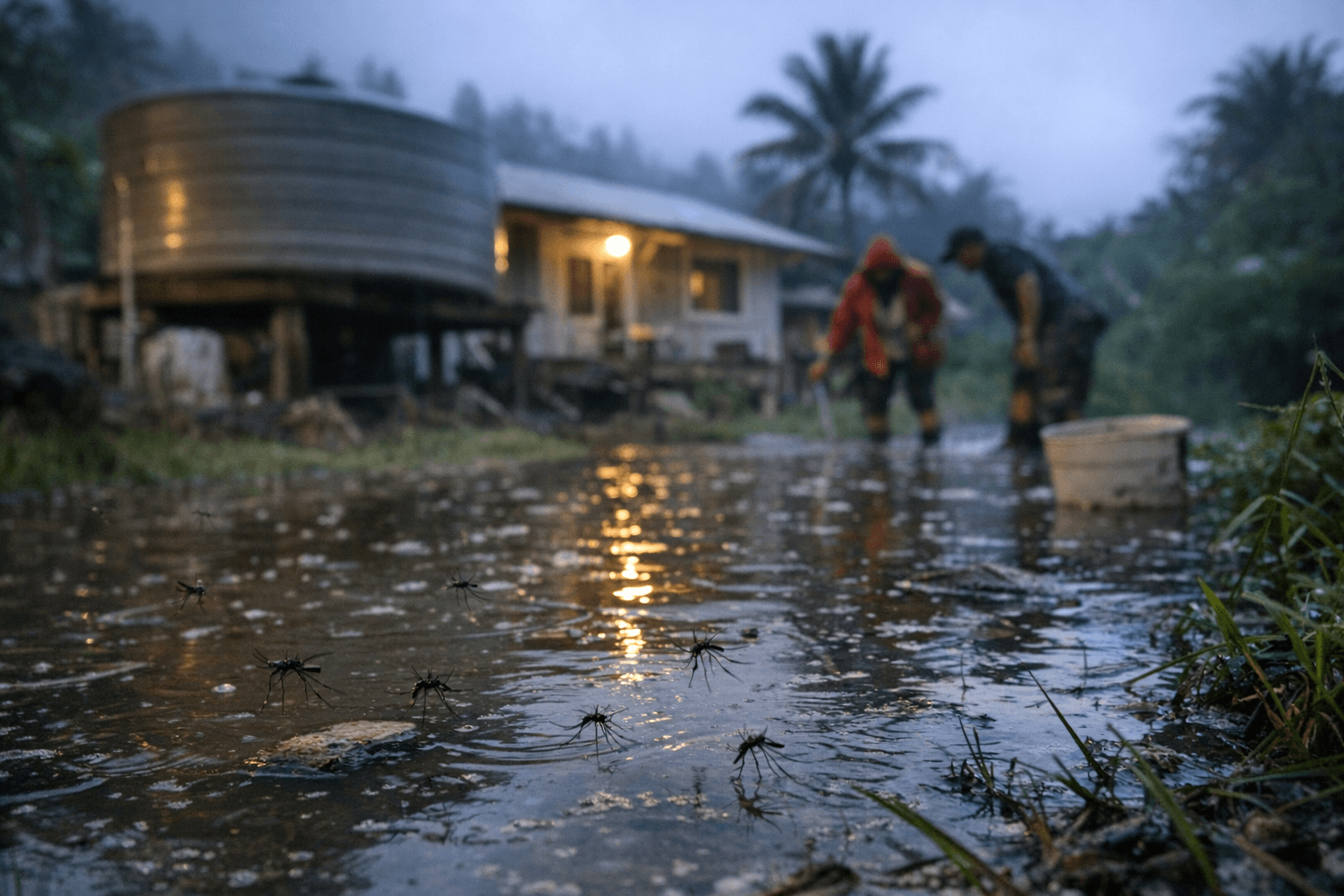
Standing water left behind by Kona storms is turning flooded yards, gutters and catchment systems into mosquito nurseries across Hawaiʻi Island, adding another health problem for residents and a fresh nuisance for visitors.
The Hawaiʻi Department of Health says mosquitoes can surge after flooding because water trapped in containers, tarps, gutters and rain catchment systems gives them a place to breed. The department’s Vector Control Branch says mosquito control is a year-round task in Hawaiʻi because of the tropical climate and the steady flow of tourists, a reminder that the problem affects both local quality of life and the visitor experience.
The concern goes beyond itchy bites. The state says Hawaiʻi has Aedes mosquitoes capable of transmitting dengue, chikungunya and Zika, although those mosquitoes do not naturally carry the viruses and would have to bite an infected person first. Even so, the department has treated mosquito control as a public health priority for decades because local outbreaks can spread quickly once the insects take hold.
Health officials tied the recent mosquito increase to the March Kona Low systems that brought severe winds, historic rainfall and major flooding across the state. In a March 27 medical advisory, the department warned that the storms also created broader health risks, including injury, infectious disease, mold exposure and mental-health impacts. A statewide Flood Watch from April 8 through April 10 and lingering moisture over the eastern end of the state on April 11 kept rain chances elevated and left more standing water behind.
The department says the immediate fix is simple but urgent: drain standing water at least once a week from containers, tarps, gutters and catchment systems, and repair damaged screens so mosquitoes cannot get inside. Businesses with outdoor storage, rain catchment or open drainage areas have the same responsibility as homeowners, especially in flood-affected parts of Kona and other soaked communities on Hawaiʻi Island.
The warning also lands against a familiar dengue backdrop. Hawaiʻi has had three local dengue outbreaks since 1946, including the 2015-2016 Hawaiʻi Island outbreak that produced 264 confirmed cases, 238 of them among island residents. In March, the department also reported travel-related dengue cases and pointed to recent storms as another reason to eliminate standing water before mosquito numbers climb further.
This article was produced by Prism’s automated news system from verified source data, official records, and press releases, then run through automated quality and moderation checks before publishing. The system is built and supervised by the people who set the standards it runs under. Read our full AI policy.
Did this article answer your question?