Forest Service closure threatens vital ōhia research in Hilo
If Hilo’s ōhia labs close, Big Island forests could lose the local warning system tracking a disease that has already killed over one million trees.
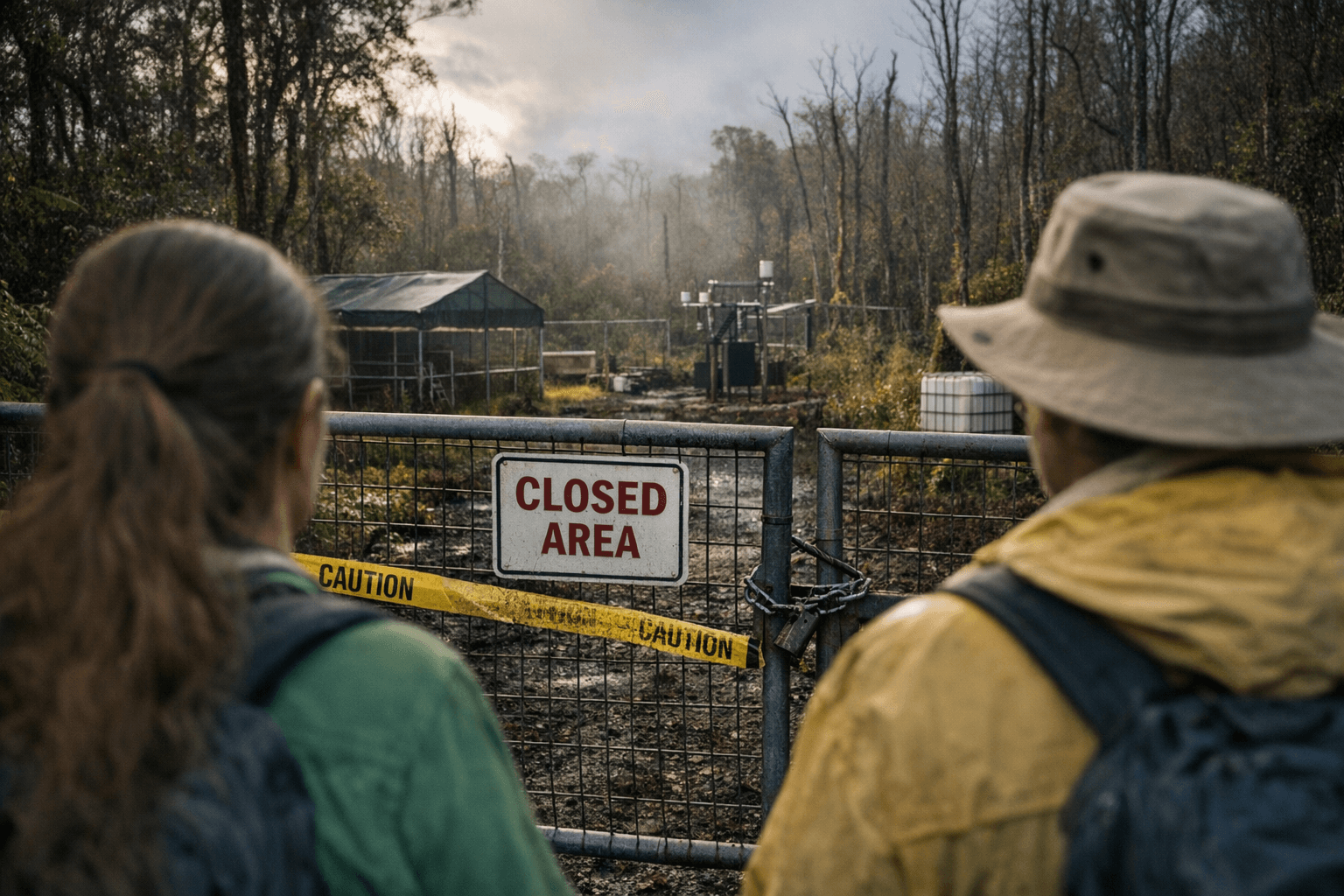
The loss would not be confined to a federal office on Hilo’s Nowelo Street. If the U.S. Forest Service shuts down its Pacific research facilities in town, Hawaii Island could lose the lab capacity that has tracked ōhia death, invasive pests and forest change for years, leaving watersheds, native forests and outbreak response more vulnerable at the exact moment those threats continue to spread.
The Institute of Pacific Islands Forestry is based at 60 Nowelo Street in Hilo and is described by the Forest Service as a source of scientific and technical information needed to restore, conserve and sustain tropical forests and wetlands across the Pacific. Forest Service Service First materials say the same building also houses the U.S. Fish and Wildlife Service under a collocation arrangement, tying the site to a broader federal field presence that has supported island biosecurity work well beyond a single project.
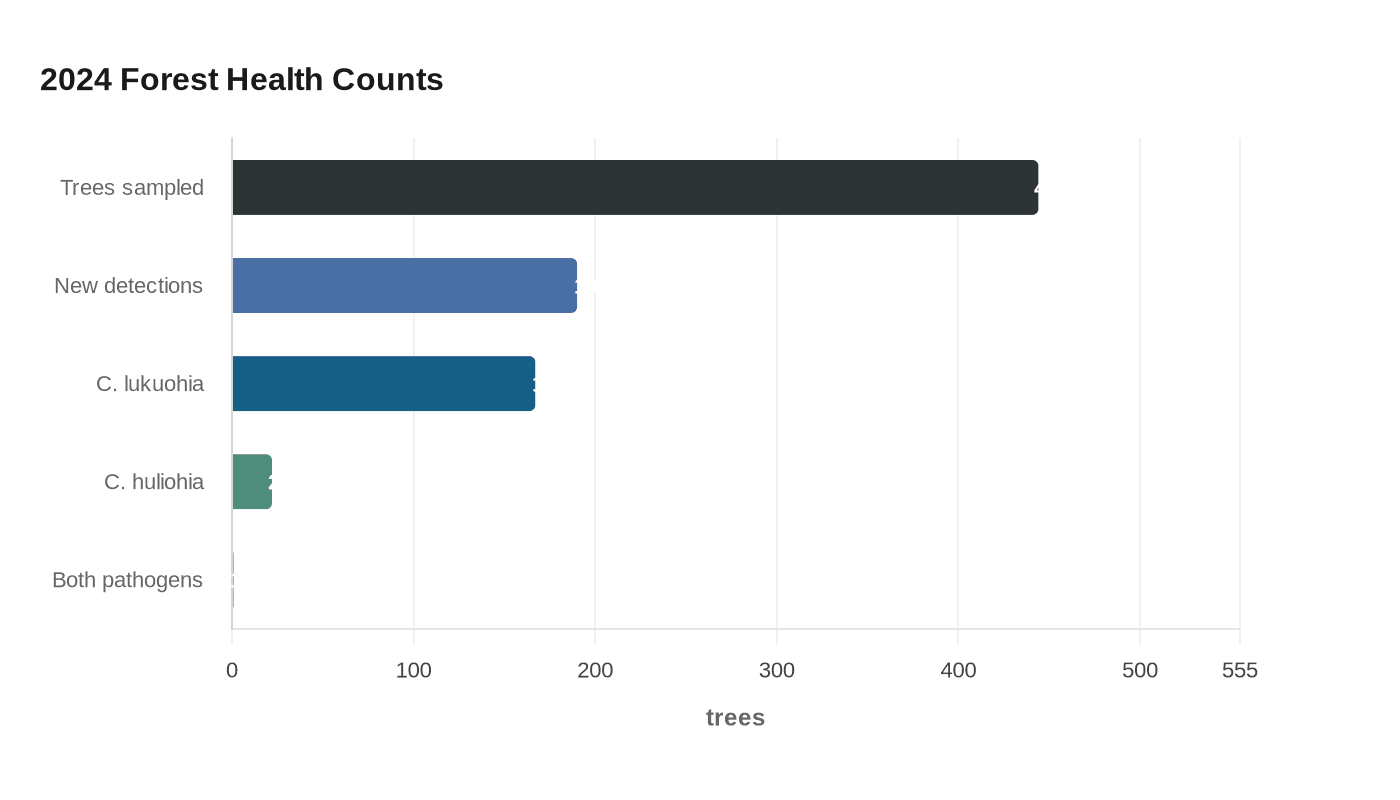
The highest-stakes work centers on ōhia, the backbone of Hawaiian forests. The native tree covers nearly one million acres and contains 41% of all live-tree carbon sequestered on the islands. Rapid Ōhia Death, first detected in 2012, has already killed more than one million ōhia trees across 270,000 acres, and it has been documented on Hawaii Island, Kauai, Maui and Oahu. Forest Service forest-health data show the problem is still active: in 2024, crews sampled 444 trees and recorded 190 new detections, including 167 cases of C. lukuohia, 22 of C. huliohia and one tree with both pathogens.
Those numbers are part of a long-running response centered on Hilo and built with state, university and federal partners. A 2018 report said Gov. David Ige released an additional $1.3 million for outreach and research in the battle against rapid ōhia death, including a shared geospatial database for aerial surveys, ground surveys and lab results. A 2019 report said aerial surveys had already covered more than 1 million acres of ōhia forest potentially affected on Hawaii Island, Kauai and parts of east Maui.
The Hilo operation also reaches into other invasive-species threats. Hilo-based scientists have worked on pests including little fire ants, and Forest Service and APHIS materials show the site’s research supports control efforts tied to rats and other species that damage native ecosystems and agriculture. Earlier coverage also described Hilo-based scientists launching helicopter operations against invasive ants in East Maui, underscoring how much island response depends on local expertise that cannot be rebuilt quickly once lost.
That is why the closure threat matters far beyond federal staffing. The question for Hawaii County is whether the next outbreak will still have a Hilo lab to confirm it, track it and push a field response before it spreads. If that capacity disappears, so does a piece of island-specific knowledge that has taken years to assemble and may be impossible to replace in time.
This article was produced by Prism’s automated news system from verified source data, official records, and press releases, then run through automated quality and moderation checks before publishing. The system is built and supervised by the people who set the standards it runs under. Read our full AI policy.
Did this article answer your question?