Hawaii Tourism Faces Rising Costs as Global Fuel Prices Surge
Jet fuel hit $167 per barrel on March 13, a 3-year high driven by Strait of Hormuz conflict, threatening higher fares and fewer seats to Kona and Hilo.

U.S. jet fuel prices hit $167 per barrel on March 13, the highest level since January 2023, after spiking roughly 60% in the days following the escalation of conflict involving Iran, and the price tag for flying to Kona or Hilo is expected to reflect it.
The crisis traces to Iranian threats to close the Strait of Hormuz, a passage through which roughly one-fifth of the world's oil flows, and the resulting disruption to merchant shipping. Crude prices briefly neared $120 a barrel on March 9 before dipping toward $90, then surging again after Iran signaled it would maintain economic pressure. Jet fuel prices climbed 15% in a single week. Argus Media data shows the average U.S. jet fuel price jumped from $2.50 to $3.93 per gallon. Singapore kerosene, a benchmark for Asia-Pacific aviation, climbed 114% to above $200 per barrel before hitting a record $240 on March 4.
For Hawai'i, where more than 90% of visitors arrive by air and nearly all goods are imported, the exposure is immediate. The transpacific routes that serve Ellison Onizuka Kona International Airport at Keahole and Hilo International Airport are among the most fuel-intensive in the world, making the Big Island's air lifeline acutely sensitive to global refining costs.
United Airlines CEO Scott Kirby told employees the carrier is planning for oil to reach as high as $175 a barrel and remain above $100 through the end of 2027. At those prices, United's annual fuel bill would climb by roughly $11 billion, more than double its best-ever annual profit, with every single dollar of increase already adding $116 million to its projected 2026 fuel costs. Jeffrey Eslinger of the Hawai'i Visitors and Convention Bureau said the full airfare impact has not yet materialized, though United is already warning customers that prices are rising.
The damage is further along among international carriers. Air New Zealand, which serves Hawai'i, announced March 12 that it would cut 5% of its scheduled flights, roughly 1,100 services, through early May, requiring rebooking for approximately 44,000 passengers. Qantas, SAS, Air India, Cathay Pacific, Hong Kong Airlines, and Thai Airways have all raised fares or added fuel surcharges, with analysts warning that any reduction in Pacific route capacity could push prices higher on competing U.S. carriers as well.
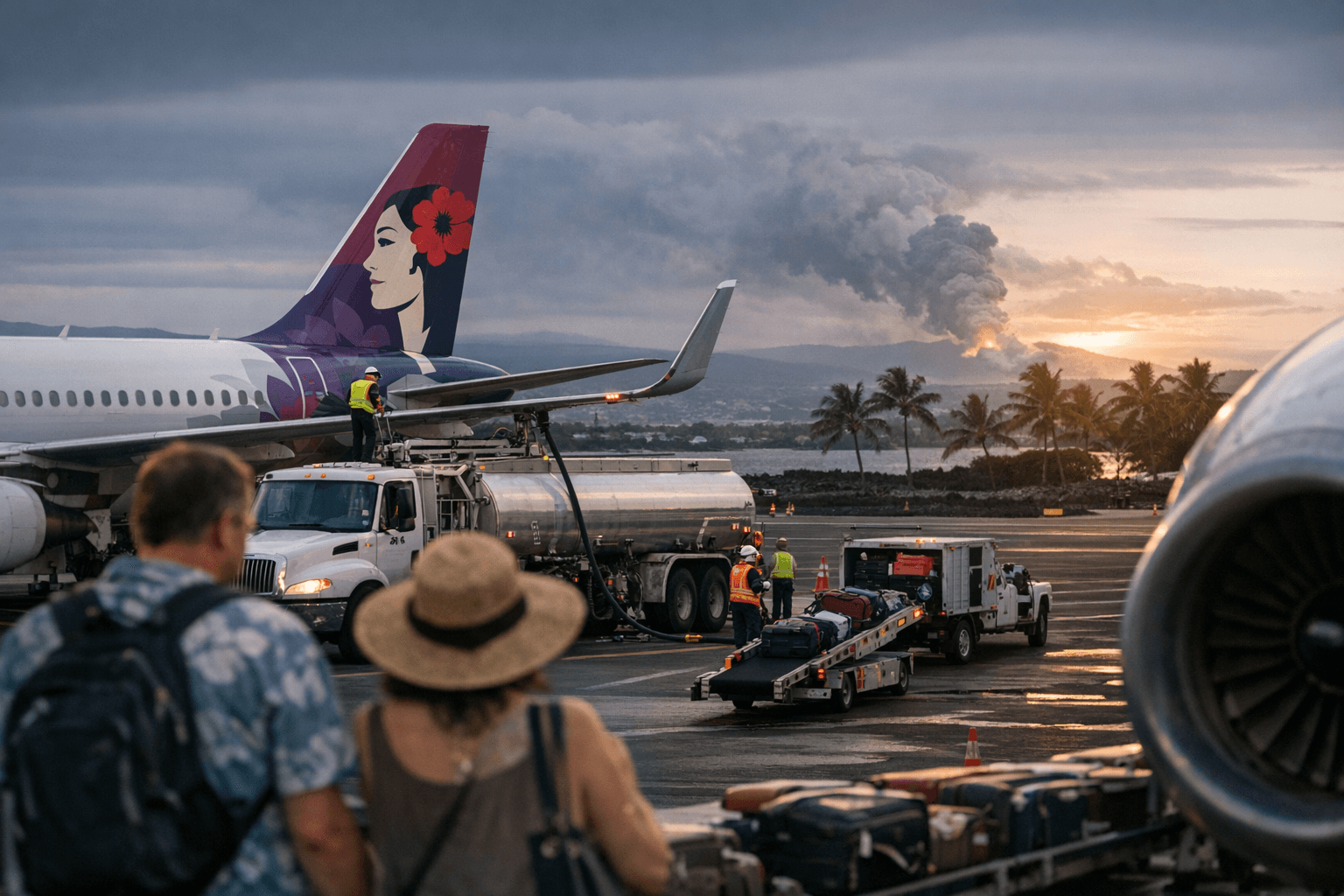
The Trump administration issued a temporary waiver of the century-old Jones Act to allow foreign-flagged vessels to carry fuel and goods between U.S. ports, aiming to reduce the risk of localized supply shortfalls. But Brad DiFiore, co-founder and managing director at Ailevon Pacific, was blunt about the waiver's limits for airlines: "I don't think it will have any measurable impact on airlines, especially if it isn't long term." Transportation costs governed by the Jones Act represent only a fraction of jet fuel pricing, which is set primarily by global crude oil markets and refining costs.
DiFiore noted that inter-island service, which burns far less fuel than transpacific flights, is unlikely to be significantly affected. But he called the broader environment "not ideal," observing that airlines struggle most when fuel costs rise faster than fares can be adjusted to compensate.
For Big Island hotel workers, tour operators, and farmers who rely on air cargo to move perishable products, the spike arrives at a fragile moment in the island's tourism recovery. If transpacific seat capacity contracts and ticket prices climb, fewer visitors will book the trips that sustain Kona's resort corridor and Hilo's east-side economy alike.
This article was produced by Prism’s automated news system from verified source data, official records, and press releases, then run through automated quality and moderation checks before publishing. The system is built and supervised by the people who set the standards it runs under. Read our full AI policy.
Did this article answer your question?