Hawaiian Electric Warns Big Island Customers of 20-30% Bill Increases
Big Island electricity bills could jump 20-30% starting in May as the Iran conflict drives global oil prices up roughly 50% since late February.
Hawaii Electric Light Company customers on the Big Island are bracing for monthly electricity bills that could climb 20 to 30 percent starting in May, a direct consequence of the U.S.-Israel military strikes on Iran that upended global oil markets beginning February 28.
HELCO, the Big Island subsidiary of Hawaiian Electric, will see the increase arrive one to two months after Oʻahu customers, whose April bills are already higher. The lag reflects when HELCO purchased its fuel supplies, at what price, and when those shipments reached the island. June bills will carry the full weight of the surge.
The price spike traces to a chain of events set in motion when the United States and Israel launched joint strikes on Iran on February 28. Iran responded by closing the Strait of Hormuz, the 20-to-40-mile-wide waterway through which roughly 20 percent of the world's daily oil supply and 20 percent of its liquefied natural gas flows. The International Energy Agency characterized the resulting disruption as the "largest supply disruption in the history of the global oil market." Brent crude jumped 10 to 13 percent to around $80 to $82 per barrel within days and climbed roughly 50 percent over the course of March. The U.S. Energy Information Administration now projects Brent crude will remain above $95 per barrel, and some Wall Street analysts are weighing the possibility of prices reaching $200 per barrel if the Strait stays closed. To slow the spiral, the U.S. released 172 million barrels from the Strategic Petroleum Reserve as part of a coordinated 400-million-barrel international release, the largest on record.

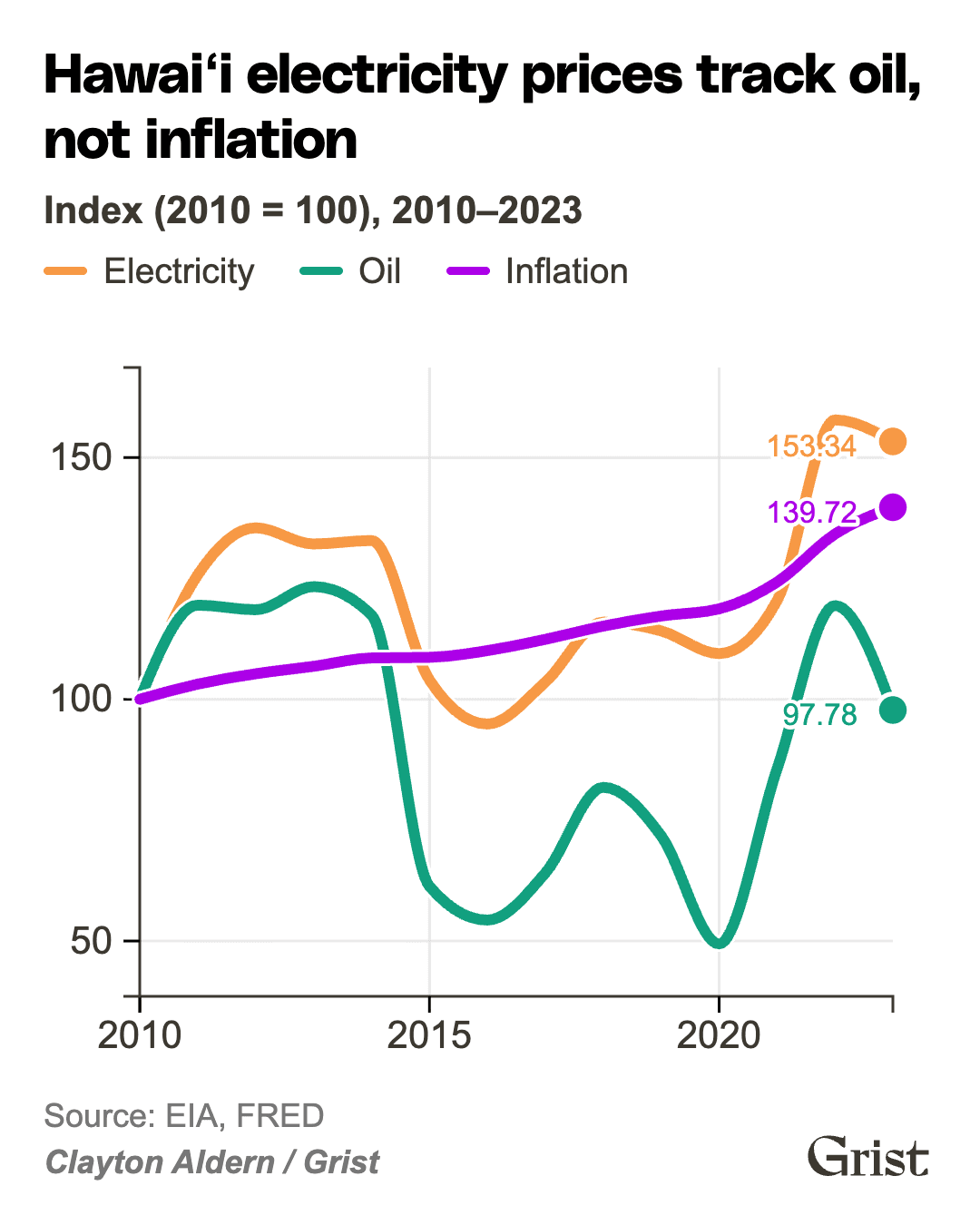
Although none of Hawaii's imported oil physically travels through the Strait of Hormuz, the state is fully exposed to global market prices. Hawaiian Electric used approximately 786,000 barrels of oil per month in 2025 to generate electricity, purchasing its crude under a fuel supply contract with Par Hawaii. More than 80 percent of all energy consumed in Hawaii for electricity, surface transportation, and air travel comes from imported fossil fuels. The mechanism that turns global price shocks into higher monthly bills is the Energy Cost Recovery Clause, shown on bills as the "Energy Cost Adjustment" and regulated by the Hawaii Public Utilities Commission. It allows Hawaiian Electric to pass fluctuating fuel costs directly through to customers with little buffer.
Rebecca Dayhuff Matsushima, Vice President of Customer Service at Hawaiian Electric, acknowledged the strain. "We recognize that Hawai'i already faces a high cost of living and that any increase in energy costs places an additional burden on our families and businesses. We want our customers to be informed, prepared, and supported as we navigate this period together," she said. Starting April 6, Hawaiian Electric is offering interest-free payment plans for up to six months to help customers spread out billing spikes. "We're committed to supporting our communities during times of uncertainty and we're hopeful this price surge ends quickly," Matsushima added.
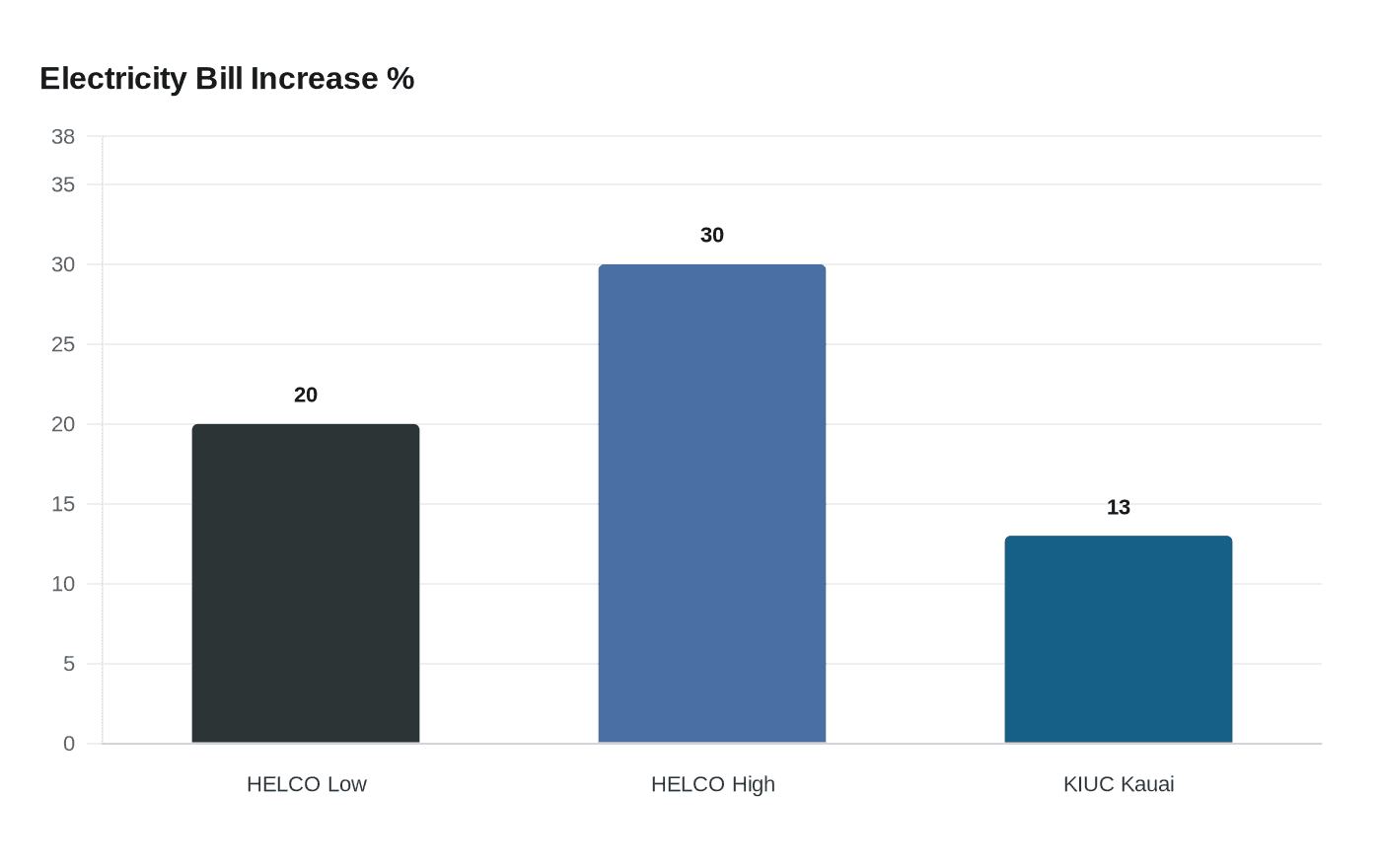
The contrast with Kauaʻi sharpens what is at stake in the long run. Beth Amaro, spokesperson for the Kauaʻi Island Utility Cooperative, said Kauaʻi rates are expected to rise only about 13 percent, from $0.38 to $0.43 per kilowatt hour, adding roughly $25 per month for the average customer. "Fortunately, 50% of KIUC's power is generated from fixed-price renewable sources which aren't impacted by global oil pricing," Amaro said. "This buffers our members from these spikes and will be even more effective as we move toward 100% renewable generation."
That gap reflects a structural exposure the Iran conflict has only amplified. Hawaiian Electric's average effective rates already rose more than 30 percent between 2015 and 2025, and the company has separately sought regulatory approval for rate increases covering 2026 and 2027, citing $170 million in needed revenue including $83 million tied to inflation since 2021. State law requires Hawaii to reach 100 percent renewable electricity generation by 2045. How quickly bills stabilize will depend entirely on how long the Strait of Hormuz remains closed, a timeline that no analyst has yet been able to forecast with confidence.
This article was produced by Prism’s automated news system from verified source data, official records, and press releases, then run through automated quality and moderation checks before publishing. The system is built and supervised by the people who set the standards it runs under. Read our full AI policy.
Did this article answer your question?