Hilo researchers grow nematodes to fight invasive beetle on Hawaii island
In Hilo, researchers are multiplying tiny nematodes that could help Puna growers fight a beetle already damaging kukui, breadfruit, citrus and cacao.
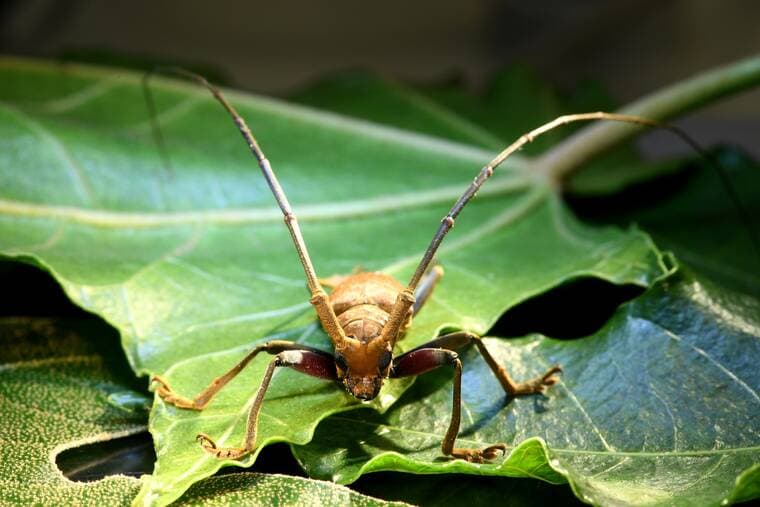
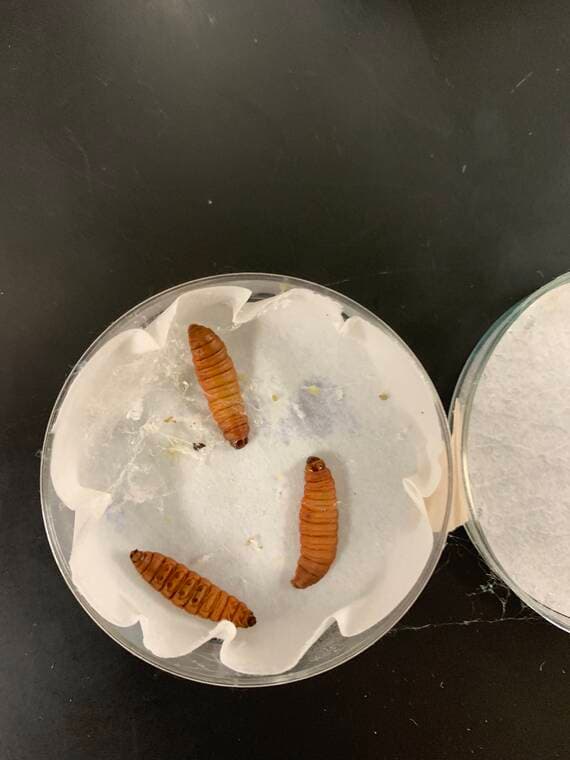
In a Hilo lab, Emma Stierhoff is using dead galleria moth larvae to grow microscopic nematodes that could become a field weapon against the Queensland longhorn beetle, a pest that has been wreaking havoc on Hawai‘i Island farmers and threatening trees that feed families, support orchards and shade rural lots.
The beetle, Acalolepta aesthetica, is native to Queensland, Australia, and was first reported in Hawai‘i County around July 2009 on a residential property in Hawaiian Acres, in the Puna district. University of Hawai‘i researchers say its range is believed to be expanding slowly across Puna and into neighboring districts. They have documented larvae in kukui, breadfruit, trumpet tree, citrus and cacao, showing how far the insect can reach across both agricultural and culturally important plants. Researchers also believe stressed host plants may draw the beetles in, which means drought, disease and other damage can make an infestation worse.
That spread matters because every affected tree can mean lost fruit, extra labor and more pressure on already thin farm margins. A University of Hawai‘i characterization study surveyed 1,087 trees as it tracked the pest’s host range, underscoring how widely growers must now look for damage. Big Island coverage in 2020 said the beetle had already caught farmers’ attention in spring 2018 and may have spread to the west side of the island. A 2026 University of Hawai‘i thesis said both the Queensland longhorn beetle and the plumeria long-horn borer are established on Hawai‘i Island, a sign that longhorn beetles are no longer a short-term nuisance but a continuing management problem.

The answer researchers are testing is entomopathogenic nematodes, a group of beneficial worms that kill insects with the help of bacterial symbionts. USDA materials say more than a dozen species have been commercialized as biopesticides and are used as environmentally friendly biocontrol agents. Roxana Myers, a USDA research plant pathologist who specializes in nematodes, has framed them as natural hunters that can help suppress pests without relying on broad chemical sprays.
Local production is the key hurdle. Hawai‘i’s quarantine restrictions make it difficult to import nonnative animals and microorganisms, and USDA research notes that introduced strains often fail to persist in the field. That is why the work in Hilo matters: if researchers can isolate and mass-rear nematodes already present in Hawai‘i, the island could gain a tool that is easier to permit, more likely to survive in local soil and more practical for growers to use.
Liko Na Pilina, the University of Hawai‘i project housing much of the work, was built to restore degraded lowland wet forest by creating hybrid ecosystems with native and non-invasive introduced species. It began with a Strategic Environmental Research and Development Program grant to Rebecca Ostertag, Susan Cordell and Peter Vitousek. If the beetle-fighting nematodes prove viable, the first relief would likely reach Puna, Hawaiian Acres and other East Hawai‘i districts where the pest was first detected and where it has already put crops and trees under pressure.
This article was produced by Prism’s automated news system from verified source data, official records, and press releases, then run through automated quality and moderation checks before publishing. The system is built and supervised by the people who set the standards it runs under. Read our full AI policy.
Did this article answer your question?