Hālau Hi‘iakaināmakalehua wins Merrie Monarch, Faith Paredes named Miss Aloha Hula
Hālau Hi‘iakaināmakalehua swept major awards at Merrie Monarch, while Faith Kealohapauʻole Paredes added Miss Aloha Hula and the Hawaiian Language Award.
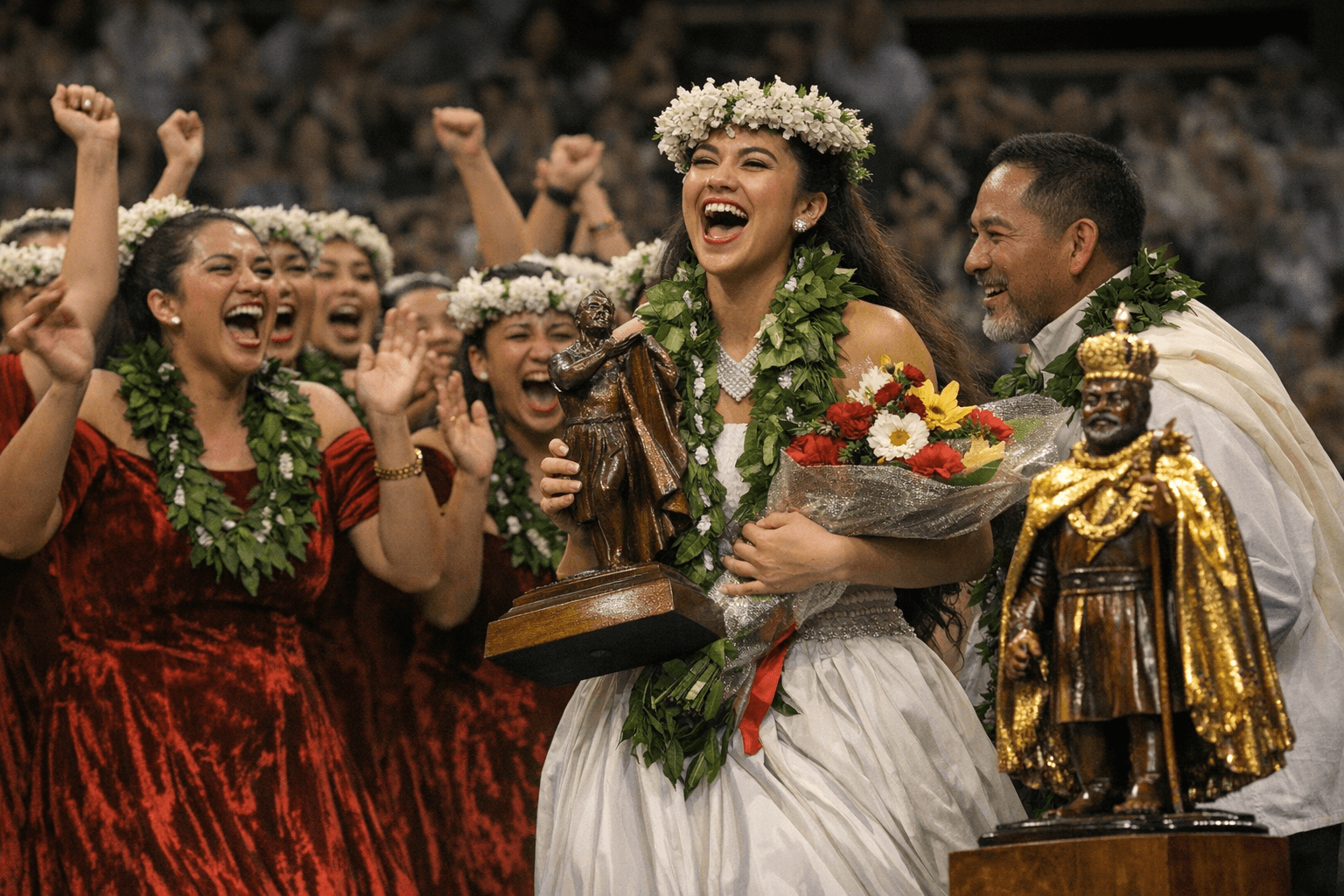
Hilo’s biggest cultural week ended with a familiar surge of pride and a clear reminder of what Merrie Monarch means to the Big Island: Hālau Hi‘iakaināmakalehua rose to the top, and Faith Kealohapauʻole Paredes claimed the Miss Aloha Hula crown. The festival’s official results showed the Oʻahu-based hālau, under Kumu Robert Keano Ka‘upu IV, taking Overall, Kāne Overall, Kāne Kahiko, Kāne ʻAuana, and Wahine Kahiko in the 2026 competition.
Paredes, who dances with Hālau Kekuaokalā‘auʻiliahi, added another marquee title to the week by winning Miss Aloha Hula 2026. She also earned the Hawaiian Language Award, underscoring how closely the festival still ties performance to ʻōlelo Hawaiʻi, chant, and the preservation of tradition. In a competition where every hand motion and vocal cadence carries weight, the language prize marked her as one of the festival’s standout individual performers.
The 63rd Merrie Monarch Festival ran April 5 through April 11 in Hilo, with the invitational hula competition held April 9 through April 11 at Edith Kanakaʻole Stadium. The week also brought the Ho‘olaule‘a, the Hawaiian arts and crafts fair at Afook-Chinen Civic Auditorium and the Butler Buildings, and the Royal Parade through downtown Hilo, turning the city into the center of the Hawaiian cultural world. Even as the top prizes went home with dancers from Oʻahu and Maui, the event remained unmistakably Hilo’s, filling local streets, venues, and businesses with visitors and families who plan their year around this festival.
That is why Merrie Monarch carries so much more weight than a list of winners. It is a cultural anchor for Hilo and a major driver for hotels, restaurants, vendors, and visitor traffic during one of the island’s most visible weeks. The festival’s own history says it began in 1964 and shifted in 1971, under Dottie Thompson, into a hula-centered celebration meant to reflect King David Kalākaua’s ideals of perpetuating Hawaiian traditions, language, and arts. More than half a century later, that mission still shapes how the event is felt across the Big Island.
For the hālau, the victories add prestige that will follow the dancers and their kumu well beyond this season. For Hilo, they reinforce why Merrie Monarch remains one of the strongest symbols of place and continuity on the island, with the 64th annual festival set to return March 28 through April 3, 2027.
This article was produced by Prism’s automated news system from verified source data, official records, and press releases, then run through automated quality and moderation checks before publishing. The system is built and supervised by the people who set the standards it runs under. Read our full AI policy.
Did this article answer your question?