Kīlauea summit eruption ends after nine hours, alert level lowered
Episode 46 hurled lava 650 feet high, dropped ash on Highway 11 and shut down in nine hours, but Kīlauea’s summit stayed far from quiet.
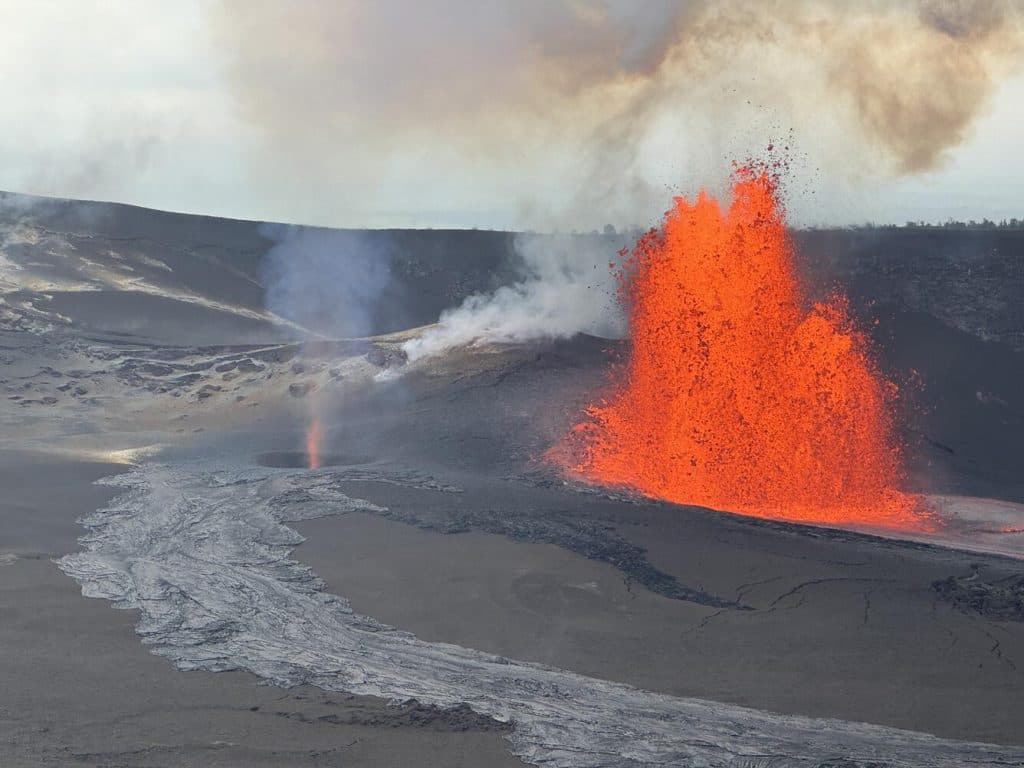
A nine-hour burst from Kīlauea’s north vent sent fountains as high as 650 feet, pushed a plume to about 20,000 feet and scattered tephra onto Highway 11 before ending the same day, another reminder of how fast summit conditions can change on Hawaii Island.
The U.S. Geological Survey and Hawaiian Volcano Observatory said Episode 46 of the ongoing summit eruption began at 8:17 a.m. HST on May 5 and stopped at 5:22 p.m. HST, after 9 hours of continuous lava fountaining from the north vent. After the episode ended, HVO lowered Kīlauea from Volcano Alert Level Watch to Advisory and changed the Aviation Color Code from Orange to Yellow, signaling reduced ground and air hazards but not a return to normal conditions.
The short burst came after about 19 hours of precursory lava overflows that began the afternoon of May 4. During the episode, the plume rose northeastward and reached about 20,000 feet above ground level around 10:30 a.m. Minor tephra fallout was reported to the north-northwest and northeast of the vents, and fine ash and Pele’s hair were reported in Mountain View. Later, USGS said tephra fell along Highway 11 between mile markers 30 and 34 and in adjacent communities. On the park road itself, tephra as large as 6 inches was observed.
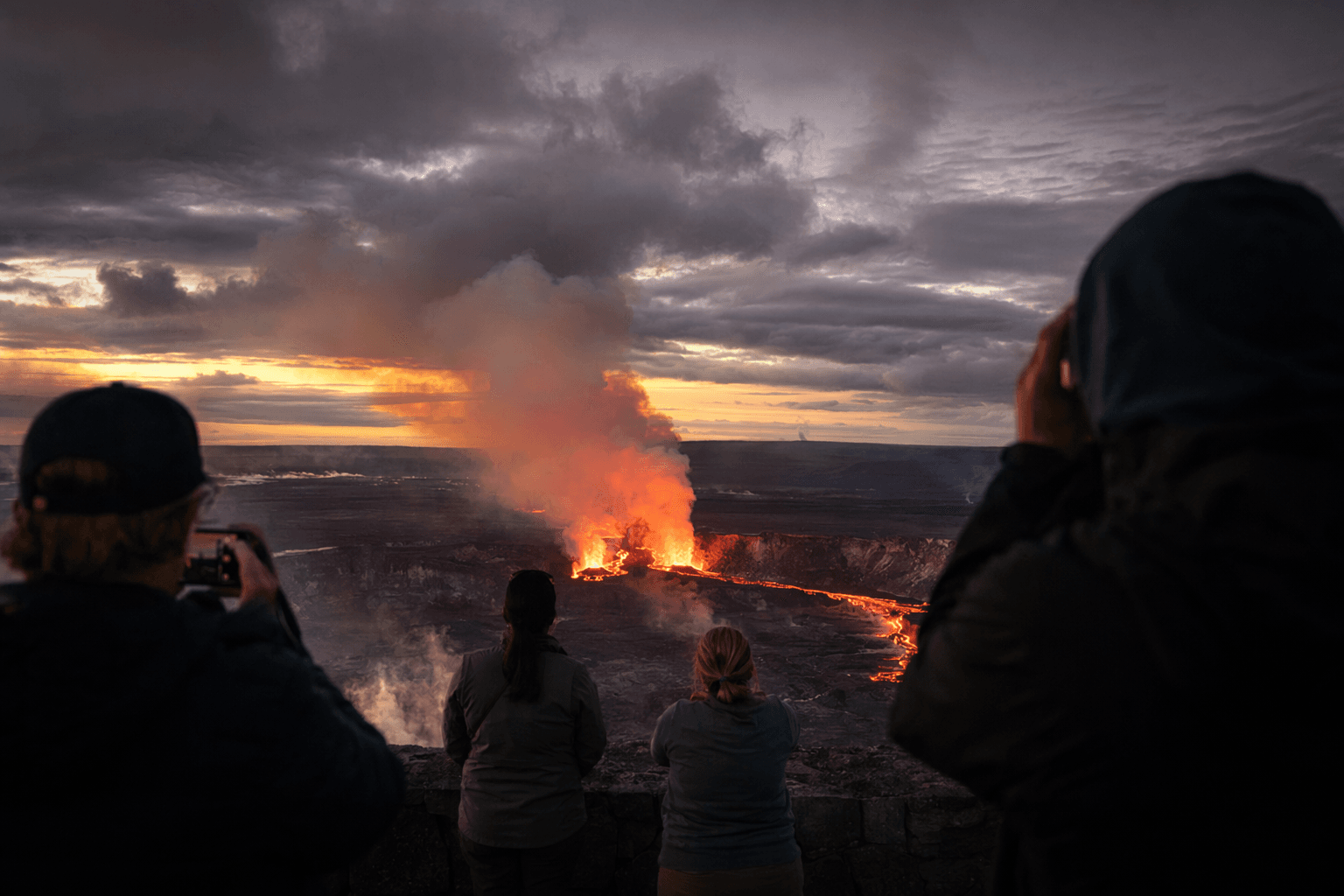
The south vent never produced fountains, but it did show periodic gas jetting and flames. The highest instantaneous effusion rate was just over 310 cubic yards per second around 9:50 a.m., a pace that helps explain how quickly the summit can go from simmering overflows to a major fountain. Even after the lava stopped, hazards remained on the crater floor and along the walls of Halemaumau Crater, where hot lava, unstable rock, cracking and rockfall can continue to threaten anyone too close.
That is the lesson for residents, park staff, tour operators and businesses that depend on safe access and credible alerts. Episode 46 unfolded inside a closed area of Hawaii Volcanoes National Park, but its effects were still visible outside the closure in Mountain View and along Highway 11, where wind carried ash and glass shards beyond the vents. Real-time monitoring by HVO, Hawaii Volcanoes National Park and Hawai‘i County Civil Defense Agency remains central because the summit can change shape, output and plume direction within hours.
The eruption sequence at Kīlauea’s summit has been underway since Dec. 23, 2024, and USGS says these lava-fountaining episodes generally last less than 12 hours and can be separated by pauses longer than three weeks. HVO said summit inflation had resumed after Episode 46 and another episode was likely, with the next forecast window later set for May 11 to 14. More than 35 eruptive episodes have now filled Halemaumau Crater over the past year, a pace of activity not seen in nearly 40 years.
This article was produced by Prism’s automated news system from verified source data, official records, and press releases, then run through automated quality and moderation checks before publishing. The system is built and supervised by the people who set the standards it runs under. Read our full AI policy.
Did this article answer your question?